Renthia Kaimbi
A cross-border investigation into alleged illegal coal mining in South Africa has resulted in the freezing of N$49.4 million in Namibian bank accounts.
The National Prosecuting Authority (NPA) said the case demonstrates the growing importance of cooperation between South African and Namibian authorities in tracking suspected proceeds of crime.
The Namibian High Court on 31 August 2026 confirmed the preservation of N$49 440 985.96 linked to South African businessman Jacobus Hosea Jordaan, his wife Elza Jordaan, Welgevonde Farming (Pty) Ltd and the Namka Trust.
The judgment, delivered by High Court judge Lotta Ambunda, confirmed a provisional preservation order obtained by Namibia’s Prosecutor-General under section 51 of the Prevention of Organised Crime Act.
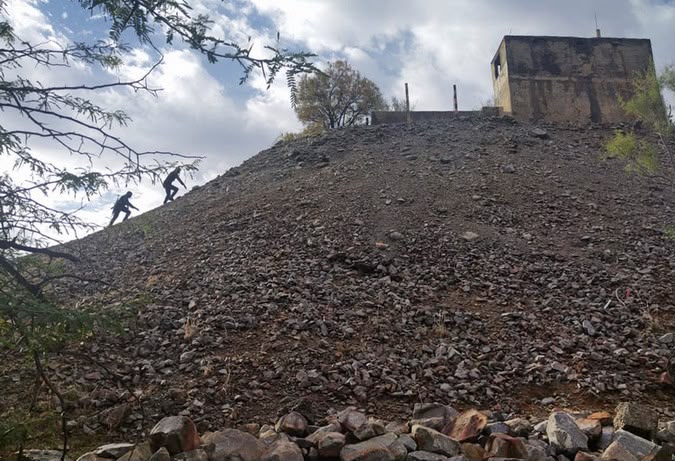
The case originated from an investigation into alleged illegal coal mining between November 2021 and September 2023 on portions of Farm Witkranz 53 IT near Carolina in Mpumalanga, South Africa.
According to evidence before the Namibian court, about 270 000 tonnes of coal, valued at approximately N$264 million, were allegedly extracted from the property during the period under investigation.
The South African investigation was initially pursued by the NPA’s Asset Forfeiture Unit in Mpumalanga in cooperation with the South African Police Service’s Special Illegal Mining Unit.
South African authorities obtained a provisional preservation order in November 2023 over the farm, coal stockpiles, heavy-duty mining equipment, vehicles and other assets allegedly linked to the illegal mining operation or representing proceeds of unlawful activities.
A further restraint order was obtained in December 2023 over assets estimated at approximately R1 billion.
The investigation subsequently moved beyond South Africa’s borders after investigators identified suspected proceeds in Namibia.
Financial analysis presented to the Namibian court showed that approximately N$66.7 million had been deposited into Namibian bank accounts associated with the respondents.
About N$49.4 million remained in the accounts and became the subject of the Namibian preservation proceedings.
The cross-border investigation brought together the South African Financial Intelligence Centre (SA-FIC) and Namibia’s Financial Intelligence Centre (NamFIC).
On 2 December 2024, the two institutions secured a temporary freeze over funds held in Namibian bank accounts linked to Jordaan and his wife.
The cooperation subsequently enabled Namibia’s Prosecutor-General’s office to approach the High Court for preservation orders.
On 30 December 2024, the Namibian court granted a preservation order over approximately N$50.2 million held in eight bank accounts.
A further order was granted on 14 January 2025 over approximately N$2.28 million held in two additional accounts.
The respondents opposed confirmation of the orders, arguing, among other things, that the money had originated from legitimate business transactions.
Jordaan denied that he, his wife or their associated entities were involved in illegal coal mining at Farm Witkranz.
He told the court that the money transferred into the Namibian accounts originated from a legitimate share-sale transaction in South Africa.
He further argued that assets belonging to him and his wife, valued at approximately N$300 million, had already been placed under restraint in South Africa and that there was therefore no basis for targeting additional assets in Namibia.
The High Court rejected the challenge.
Ambunda found that there was no evidence before the court that the coal-mining activities at Farm Witkranz had been authorised.
The court also scrutinised the movement of funds between South Africa and Namibia, including the opening of the relevant Namibian accounts between June and December 2023 and subsequent transfers between accounts held in the names of the Jordaans, Welgevonde Farming and the Namka Trust.
The timing and movement of the funds became central to the court’s assessment of their alleged origin.
The judge rejected Jordaan’s explanation that the funds were connected to a legitimate share-sale transaction, finding that his explanation regarding the source of his and his wife’s income and the money in the Namibian accounts “is not convincing.”
The court further found that “a reasonable inference can be made that the funds in the Namibian accounts are proceeds of illegal coal mining.”
Ambunda also found that the establishment and use of the Namibian accounts provided a mechanism through which alleged proceeds of unlawful activities in South Africa could be concealed.
The judgment went further, stating that the facts before the court indicated that the respondents “committed the offence of money laundering.”
However, the finding was made in the context of the preservation proceedings and does not constitute a final criminal conviction.
The Jordaans are facing criminal charges in South Africa, including allegations of fraud, theft, money laundering and contraventions of the Mineral and Petroleum Resources Development Act. They have been released on bail.
A separate money-laundering case was also registered in Namibia in December 2024.
The Namibian High Court ultimately confirmed the preservation order and ordered the respondents to pay the Prosecutor-General’s legal costs.
The NPA has welcomed the judgment, describing it as an important outcome of cooperation between law-enforcement and financial intelligence authorities in the two countries.
The South African prosecution authority said its Asset Forfeiture Unit, working with the SAPS, SA-FIC and NamFIC, was able to follow the suspected proceeds from the alleged illegal mining operation into Namibia.
“This judgment is a significant demonstration of the importance of effective cross-border cooperation in tracing, identifying, and preserving suspected proceeds of crime,” the NPA said.
The authority said asset-forfeiture mechanisms were crucial in preventing suspected illicit funds from being dissipated, transferred or placed beyond the reach of law-enforcement authorities.
They stated that the case also illustrated how financial intelligence can be used to follow the money trail when alleged criminal activity occurs in one jurisdiction while suspected proceeds are moved into another.
The NPA said it remained committed to working with the SAPS, financial intelligence authorities and international law-enforcement and prosecutorial partners to combat illegal mining, money laundering and other forms of transnational organised crime.
It said the ultimate objective was to ensure that “those involved in criminal activity do not benefit from the proceeds of unlawful conduct.”
The case placed Namibia’s financial intelligence and prosecutorial authorities at the centre of a wider regional effort to disrupt the movement of suspected criminal proceeds, demonstrating that alleged illicit funds generated in South Africa can be traced and preserved once they enter Namibia’s financial system.