Patience Makwele
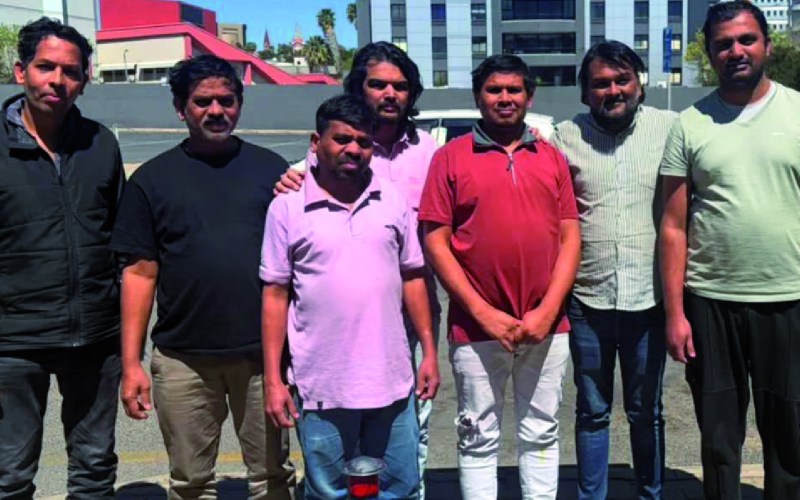
Seven Indian employees of Brilliant Star Diamonds have approached the High Court of Namibia challenging their detention after an immigration operation at the company’s Prosperita premises on September 2.
The workers and their employer are seeking their immediate release and an order reviewing and setting aside detention notices issued under section 42(2)(b) of the Immigration Control Act.
The detention notices, seen by the Windhoek Observer, state that the seven were ordered to be held at the Windhoek Police Station on grounds that they were prohibited or illegal immigrants.
The notices were issued by immigration officer Immanuel Mweshihange on September 2.
One of the notices issued to Brilliant Star director Viral Sanat Shah additionally lists “aiding” as the ground for detention.
Shah, however, denies aiding anyone to work without an employment permit and says the workers had immigration permits endorsed in their passports.
According to his founding affidavit, two immigration officials and at least four police officers arrived at the company during the lunch hour and requested employment permits from foreign employees.
Shah says the permits were endorsed in the workers’ passports, which were at their residence, but the officials instead arrested about 34 foreign employees and transported them to the Windhoek Police Station.
He says he was instructed to collect the passports and take them to the station.
The seven employees named in the High Court application are Shah, Sumitkumar Patel, Prafulbhai Mohanbahi Katharotiya, Kamleshkumar Patel, Chandrakant Yashvant Waghe, Vishwas Kashinath Rahate and Deepak Kashinath Rahate.
The affidavit, sworn before a Commissioner of Oaths in Windhoek on September 5, sets out different immigration circumstances for the seven workers.
Shah says he entered Namibia in 2023 and holds an employment permit valid until December 2027.
Patel, who entered Namibia in 2022, had applied to renew his employment permit. According to the affidavit, the renewal was approved subject to the submission of Brilliant Star’s tax clearance certificate and Affirmative Action Compliance Certificate.
Pending those documents, he was issued a visitors’ entry permit.
Katharotiya and Patel, who entered Namibia in 2024, had also applied for renewal of their employment permits and were issued visitors’ entry permits pending the outcome of their applications.
Waghe entered Namibia in December 2025 and had an employment permit, with an application for renewal submitted.
Rahate and Rahate, who entered Namibia in 2024, had their employment-permit renewal applications rejected, according to the affidavit. Appeals or requests for reconsideration were subsequently submitted.
The applicants maintain that their passports contain the relevant immigration permits and that the immigration officials inspected the documents.
“The immigration officers thus could not have reasonably suspected that we are prohibited immigrants,” Shah states.
However, under Namibia’s immigration framework, a Visitor’s Entry Permit is intended for temporary stay for purposes other than employment.
Home affairs lists activities such as holidays, visiting friends or relatives, exploring business opportunities, attending meetings or certain workshops, and medical treatment among purposes covered by visitor status.
The Immigration Control Act also provides that a Visitor’s Entry Permit does not authorise employment, business, a profession or occupation in Namibia.
This distinction is central to the dispute because the affidavit indicates that some of the workers were issued visitors’ entry permits while their employment-permit applications were pending or under reconsideration.
Shah argues that if the workers were being accused of an offence arising from employment without the required permits, they should have been charged and brought before a magistrate within 48 hours.
He says that period expired at 14:00 on September 4.
The applicants further say their lawyer wrote to the home affairs ministry on September 4 seeking information on the basis for the immigration officials’ suspicion that they were prohibited immigrants.
According to the affidavit, no response had been received by the time it was filed.
The applicants also say their lawyer offered to have each detainee provide a financial guarantee under section 42(3)(a) of the Immigration Control Act as an alternative to continued detention.
They claim the proposal received no response.
The High Court application was authorised by Brilliant Star’s board of directors at a meeting held in Antwerp, Belgium, on September 4.
The company appointed lawyer Norman Tjombe of Tjombe Inc. to act in the proceedings.
In concluding his affidavit, Shah argues that the applicants have no alternative remedy if the interim relief sought is not granted, describing continued detention as their only alternative.
The applicants are seeking an order for their immediate release and for the detention notices issued under section 42(2)(b) of the Immigration Control Act to be reviewed and set aside.
Brilliant Star, which was established in 1999, says it specialises in importing, processing and exporting diamonds to companies around the world, with markets including Southeast Asia, India, the United States and Europe.
The case comes amid separate claims by activist Michael Amushelelo that seven Indian nationals arrested at the company entered Namibia on tourist visas and were working as diamond-polishing trainers.
Amushelelo, through his social media has called for Brilliant Star to be investigated and for the workers to be re-arrested or deported if immigration violations are established.
However, the court documents refer to visitors’ entry permits rather than tourist visas and do not establish that the seven entered Namibia on tourist visas.
The central dispute before the High Court is whether the workers were entitled to work in Namibia under the immigration documents they held, and whether their detention as prohibited or illegal immigrants was lawful.
The respondents are the Minister of Home Affairs, Immigration, Safety and Security, the Chief of Immigration and the Station Commander of Windhoek Police Station.
Questions sent to both respondents including the ministry of home affairs were not answered by the time of publication