Patience Makwele
Prime minister Elijah Ngurare has warned that Namibia’s public-service recruitment system risks being undermined by tribalism, favouritism and corruption, alleging that some jobs are decided before interview panels meet.
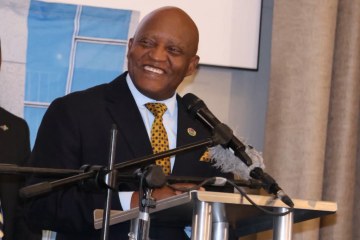
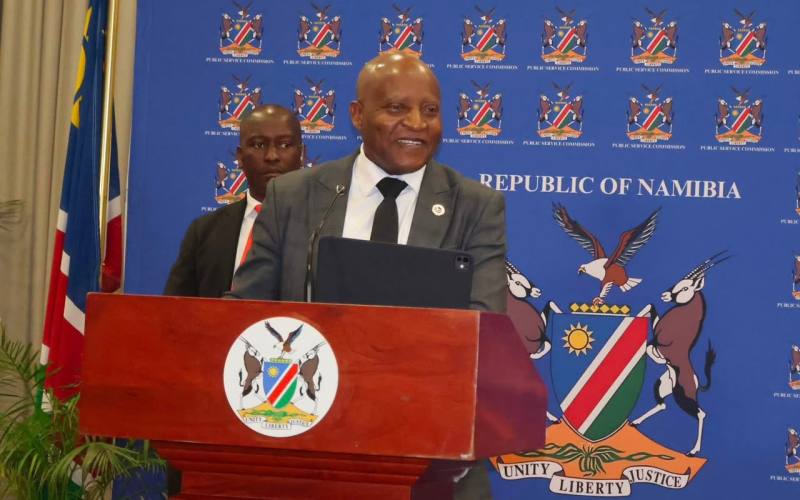
Speaking at the Government Human Resource Conference in Windhoek on Monday, Ngurare said he had received reports of applicants paying panel members for positions, while some government offices had become dominated by people from the same linguistic group.
“Some parents have to pay livestock to panelists before a position is given,” he said.
“Explain to me this magic. How is it that some divisions, some departments, some directorates, will be people from the same linguistic group? How did that happen? Is it just magic or a coincidence ?”
He also warned against predetermined interviews.
“An interview panel must not be already knowing who is the person coming out, and the questions are set and shared already,” he said, urging HR practitioners to make diversity a deliberate consideration when appointing panels and staff.
Public Service Commission chairperson Ambassador Patrick Nandago said the commission had also encountered cases where recruitment rules and its recommendations were ignored.
He said some employees had been appointed without the required PSC recommendation, while other recommendations were not implemented or were changed without following due process.
“This creates uncertainty, undermines institutional integrity and accountability, and exposes the public service to disputes and costly litigation,” Nandago said.
Human Resource Management consultant, author, career and job-founder coach, Lisa Matomola challenged HR practitioners to address perceptions that personal connections influence recruitment.
“We shouldn’t be hiring people in terms of who we know,” she said, adding that some candidates who ranked highest were not ultimately appointed.
Matomola and Ngurare also criticised excessive experience requirements that exclude young graduates.
“You saw the child walking. But today, you’re demanding for 19 years of experience. Why?” Ngurare said.
He said people under 35 make up 71% of Namibia’s population and urged public institutions to give young people opportunities to enter and advance in the public service.
Ngurare illustrated the uncertainty facing job seekers with his own experience. After returning to Namibia at the age of 23 with a degree and an offer to work as a hydrologist, he found that the position had been frozen.
“I came home. I went to Arandis. I went to Karas and I even took fat cakes on credit on my way to the new job…Because why? I now had a job,” he recalled.
He eventually spent a year unemployed before volunteering at his former school.
“You are given this commitment, you are given this promise. But sometimes, it is not always what works,” he said.
Ngurare also disclosed that nearly 15 public servants had been dismissed for misconduct since he took office. In one case, he said, an official demanded N$15,000 from a member of the public before providing a service.
“There are many instances like that. I think maybe, for now, close to 15,” he said.
Secretary to Cabinet Ambassador Emilia Mkusa said recruitment and personnel decisions directly affect the government’s ability to deliver services.
“Every vacancy that we fill, every training that we approve, every promotion that we make, every performance issue that we address, we should be able to answer the question: How will this decision improve the government’s ability to serve the Namibian people?” she said.
Ngurare urged HR practitioners to apply rules with judgement rather than relying solely on procedures.
“Human beings that make the laws have emotions,” he said. “So, therefore, there must be common sense when we applying certain laws.”
The 5 days conference, which is being held under the theme “Towards the professionalization of the public service of Namibia”, brought together HR practitioners and senior officials to examine the systems shaping the government workforce.
PSC commissioner Lidwina Ndeshimona Shapwa said the discussions should lead to practical changes across ministries, offices, agencies and regional councils. She said Ngurare had reinforced the need for a skilled, ethical and merit-based public service.
With about 118,000 public servants, excluding state-owned enterprises, Ngurare said the public service had a responsibility to safeguard Namibia’s future.
“Namibia is all that we have at stake here to ensure that we safeguard it.”
His closing message was direct:
“Therefore, common sense cannot be legislated.”