Namibia has every right to celebrate its food and rural heritage. But when a country’s aspirational class cannot imagine leisure beyond meat, fire, alcohol and “going home”, something deeper is at stake.
There is something revealing about the way Namibia has come to market itself.
Kapana has become one of the country’s great cultural calling cards. Tourists are taken to Katutura to eat grilled meat. Visitors are encouraged to experience the smoke, the chopping, the open fires, the informal market and the atmosphere surrounding it.
And there is absolutely nothing wrong with that.
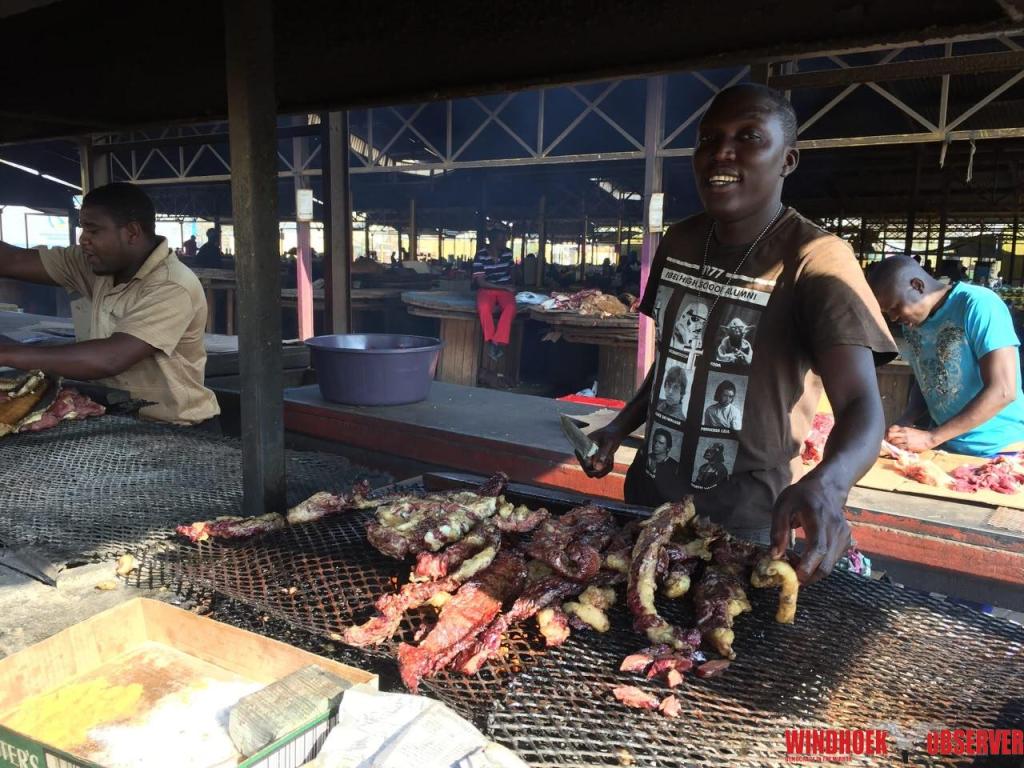
Kapana is authentic. It is accessible. It is entrepreneurial. It emerged from ordinary Namibians creating livelihoods in an informal economy and, over time, developed into a recognisable part of Windhoek’s food culture. Research has documented how deeply embedded informal food markets are in the city’s economy and how kapana provides livelihoods for vendors who might otherwise have few opportunities.
The problem is not kapana.
The problem is that Namibia increasingly seems incapable of imagining anything beyond kapana.
That distinction matters.Because what began as a vibrant expression of township food culture has gradually been elevated into something approaching a national tourism philosophy: this is who we are; this is what we eat; this is how we socialise; this is what visitors should experience.
And one is entitled to ask: Is that really the best cultural proposition a country of Namibia’s wealth, education, history and aspirations can offer?
More importantly, what does it say about the people who shape Namibia’s tastes, social spaces and cultural economy?
The Namibian elite and the village
There is an uncomfortable observation that needs to be made. Much of Namibia’s economic and political elite may be materially urban, but culturally they remain profoundly rural. This is not an insult to rural Namibia. The rural village is an important part of Namibian identity. It is where families maintain ancestral connections, where traditions are preserved and where many people still find belonging.The problem arises when a society’s elite acquires wealth and education without developing a corresponding urban culture of sophistication.

The Namibian professional can have an expensive vehicle, a substantial house, an executive position and a passport full of foreign stamps, yet when it comes to leisure, the imagination often contracts dramatically.
Where do we go?
Home.
What do we do?
Braai.
What do we drink?
Something cold.
What do we listen to?
Music loud enough for the neighbours to hear.
And if we want to get away?
We go to the farm.
And the farm, more often than not, becomes a larger, more expensive version of the village from which we supposedly escaped.
Again, there is nothing wrong with the village.
There is something wrong, however, if the village is the beginning and end of our cultural imagination.
The farm as an expensive village
Namibia’s farm culture illustrates the contradiction beautifully. A successful professional buys a farm or inherits one. There is a big house, perhaps a swimming pool, a boma, a few animals, a braai area, a bar and a television.Friends arrive.Meat goes onto the fire.Someone brings alcohol.Music plays.People sit around talking.The weekend passes.
There is nothing inherently wrong with any of this. In fact, it can be wonderful.But where is the design? Where is the architecture? Where is the landscape?Where is the library?Where is the art? Where is the culinary experience?Where is the conversation?Where is the cultural programming? Where is the attempt to create an environment that reflects a sophisticated contemporary African identity? Too often, the Namibian farm is not an escape from the village.
It is the village with better plumbing and a bigger Hilux. That may sound deliberately provocative. It is also worth considering.
We confuse wealth with sophistication
Namibia has produced people with considerable wealth. But wealth and sophistication are not the same thing. Sophistication is not about expensive clothing, imported cars or drinking expensive whisky. It is about curiosity. It is the ability to appreciate things beyond one’s immediate experience. It is understanding food, architecture, literature, music, art, design, history and conversation.MIt is creating spaces in which people can encounter ideas.
It is being comfortable at a jazz concert and a traditional ceremony; at a gallery opening and a village gathering; at a sophisticated restaurant and a street-food market.A mature elite should expand culture rather than simply consume it. And this is where Namibia’s elite has arguably fallen short.We have accumulated wealth faster than we have developed a sophisticated culture around that wealth. The result is often conspicuous consumption without cultural depth.
Look at what other African cities are doing
The comparison with other African countries is instructive. Accra, for example, has developed a cultural ecosystem in which food, fashion, music, contemporary art, design and nightlife increasingly intersect. International observers have described the city as a hub for contemporary African creativity, with galleries, fashion designers, restaurants and creative entrepreneurs shaping a distinctly modern Ghanaian identity. (
Johannesburg has its problems, but it has developed entire ecosystems around contemporary art, restaurants, theatre, design, music and fashion. Lagos has built an extraordinary cultural economy around music, film, fashion, food and nightlife.
Dakar has developed a reputation for art, fashion and intellectual culture. Kigali has positioned itself as a clean, orderly and increasingly sophisticated urban destination, with contemporary restaurants, boutique hotels, creative spaces and cultural experiences. Addis Ababa has its coffee culture, jazz, art spaces, restaurants and intellectual institutions. These cities understand something Namibia has not fully grasped:
A city is not merely a place where people work. It is a place where people create culture.
And what does Windhoek create?
Windhoek is not without culture.
That would be unfair. There are musicians, artists, designers, chefs, writers, galleries, festivals and entrepreneurs doing interesting things. The city’s cultural calendar includes events ranging from the Bank Windhoek Arts Festival to the /AE//Gams Arts Festival, Wild Cinema Festival and other cultural events. A recent assessment of Windhoek’s tourism environment noted that many of the city’s events have a strong local-cultural component.
There are also restaurants and bars that are attempting to create more sophisticated experiences. But they remain islands.The city does not yet possess the density of cultural infrastructure found in Accra, Johannesburg, Nairobi, Lagos or Kigali. And perhaps that is because there isn’t yet sufficient demand from the people with the money to sustain it.This is where the elite has to look in the mirror. If the wealthiest Namibians spend their leisure lives in private homes, farms, lodges and informal braai environments, why would an entrepreneur invest millions creating a sophisticated urban cultural venue?
If the market rewards another sports bar, another lounge, another braai restaurant or another nightclub, that is what investors will build.Markets respond to demand.
Kapana is not the problem. Our lack of imagination is.
There is a danger in criticising kapana because doing so can easily become elitist.Kapana should not be sanitised into something unrecognisable simply to make it attractive to tourists.
Nor should Namibia attempt to reproduce European restaurants or Asian luxury experiences and call that sophistication. That would miss the point entirely.The question is not why Namibia does kapana. The question is why kapana has not evolved.
Imagine a contemporary Namibian culinary movement built around local ingredients. Imagine chefs taking traditional flavours and techniques and presenting them through modern cuisine. Imagine kapana becoming a sophisticated tasting experience while retaining its soul. Imagine oshifima, mahangu, mopane worms, omagungu, venison, seafood, wild herbs and traditional sauces being interpreted by Namibian chefs in ways that could compete internationally. Imagine a Namibian food festival that attracts chefs from Accra, Nairobi, Johannesburg, Cape Town, Dakar and Kigali. That would be cultural evolution.
Instead, we often reproduce the same thing.
Fire.
Meat.
Smoke.
Plastic chairs.
Alcohol.
Loud music.
Repeat.
Even our tourism imagination is limited
There is a related problem with how Namibia markets itself. For international visitors, the country is spectacular. The Namib Desert, Etosha, Sossusvlei, the Skeleton Coast and the country’s wildlife are extraordinary assets. But Windhoek remains largely a transit point.
Research on Windhoek tourism has found that international visitors historically spend very little time in the capital, often using it primarily as the beginning or end of a wider Namibian journey. Why? Because we have not given them enough reasons to stay.
A city needs more than monuments.It needs experiences.It needs neighbourhoods.Itneeds restaurants.It needs nightlife.It needs galleries.It needs music.It needs theatre.It needs markets.It needs architecture.It needs festivals.It needs things that people cannot experience anywhere else.
Namibia has an extraordinary story to tell.But too often we tell that story through wildlife, landscapes, German colonial architecture and kapana.Where is contemporary Namibia? Where is the Namibia of young designers, filmmakers, architects, musicians, chefs, artists, writers and entrepreneurs? Where is the confident African city that says: this is who we are now?
Asia offers an even more useful lesson
Look at countries such as Japan, South Korea, Thailand and Singapore.They did not abandon their traditional cultures in the pursuit of modernity.They refined them.
Japan turned food into an art form without abandoning its culinary heritage.Thailand transformed street food into an internationally recognised culinary identity.South Korea turned music, fashion, film, beauty and cuisine into a global cultural export.Singapore created a highly sophisticated hospitality and culinary ecosystem while retaining distinctly Asian influences. The lesson is not that Namibia should become Singapore.
It is that tradition does not have to remain static to remain authentic.This is whereNamibia often gets trapped. We think preserving culture means freezing it.
It doesn’t.
Culture that does not evolve becomes folklore. Culture that evolves becomes contemporary identity.
The elite has a responsibility
The Namibian elite cannot complain that Windhoek is boring while doing nothing to make it interesting.They cannot complain that there are no sophisticated restaurants while spending every weekend at home.They cannot complain that young people leave the country while failing to create an urban culture that gives young professionals reasons to stay. They cannot complain that Namibia does not have a creative industry while treating artists, musicians, writers and designers as entertainment rather than economic contributors. And they cannot demand that government create everything.
Culture is not a ministry.
It is a society.If Namibia’s wealthy citizens want sophisticated spaces, they must patronise them. If they want contemporary art, they must buy it. If they want good restaurants, they must eat in them. If they want live jazz, theatre and classical music, they must buy tickets. If they want better architecture, they must demand it from developers. If they want their farms to become sophisticated destinations, they must invest in them as hospitality and cultural spaces rather than simply building another boma.
Perhaps the real issue is insecurity
There may be something deeper behind all of this.Perhaps Namibia’s elite has not yet become culturally confident. We have a young nation, a complicated colonial history, enormous inequality and an elite that emerged from very different social backgrounds. For many, the village remains a place of belonging.There is nothing shameful about that.
But there comes a point in the development of any society where its people have to ask what they are building beyond material success.
What does Namibian modernity look like?
What does a successful Namibian family do on a Saturday night? Where does a Namibian intellectual spend an evening? What does a Namibian billionaire collect? What does Namibian contemporary cuisine taste like? What does a Namibian farm look like when its owner has imagination? What does Windhoek feel like when its most successful citizens decide to invest not only in property, but in culture?These are not frivolous questions. They are questions about nation-building.
Let the kapana remain
So let us be clear.Keep the kapana.Keep the braai.Keep the village.Keep the farm.Keep the meat on the fire.Keep the traditions that give Namibians a sense of belonging.
But let us stop pretending that these things alone constitute a sophisticated national culture. Namibia needs to grow culturally as it has grown economically. Our elite should not be embarrassed by its rural roots.It should be confident enough to build upon them.Take the village and add the gallery.Take the braai and add the chef. Take kapana and add culinary innovation. Take the farm and add architecture, literature, music, landscape and design.Take Windhoek and make it a city rather than simply the place where government offices, shopping centres and houses happen to be located.The real indictment is not that Namibians love kapana. It is that a country with extraordinary human talent, money, history and cultural diversity has not yet developed the confidence to create a richer idea of pleasure.
A sophisticated society is not one that abandons its roots.It is one that knows its roots well enough to grow beyond them.
And perhaps that is the conversation Namibia’s elite needs to have over its next braai.