After decades of payments, grants and income-generating schemes, Namibia needs to confront a difficult question: are we measuring whether veterans’ programmes actually work?
Few issues in Namibia carry the emotional and political weight of the liberation struggle.
The men and women who participated in the struggle for independence are not simply another category of beneficiaries in the national budget. Their sacrifices are woven into the history of the Republic. For many Namibians, supporting liberation struggle veterans is therefore not merely a question of social policy. It is a question of national responsibility.
But precisely because the issue carries such moral weight, it has become increasingly difficult to ask an important economic and policy question without being accused of disrespecting the veterans themselves.
That question is this:
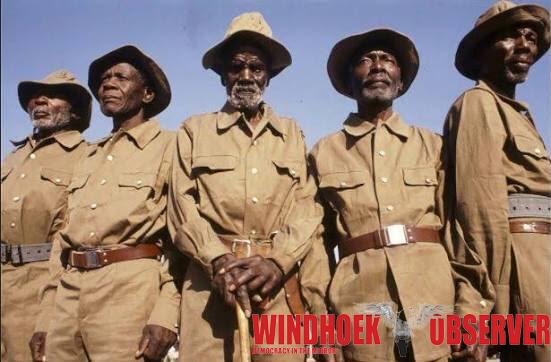
After decades of government assistance, what does success actually look like?
Namibia has tried various approaches to supporting veterans. There have been once-off payments, monthly financial assistance, individual veterans’ projects, income-generating initiatives and other forms of welfare support.
Yet the country appears to be having the same conversation repeatedly: veterans need more assistance. The question is not whether veterans deserve support. The question is whether the way Namibia has structured that support is producing the outcomes it was intended to produce. That distinction is critical.
A programme that keeps growing
The scale of the commitment is substantial. The Ministry of Defence and Veterans Affairs has confirmed that thousands of veterans and dependants receive monthly financial support. By March 2025, 22,840 veterans and dependants of deceased veterans were receiving assistance, with more than N$1 billion already spent on monthly financial assistance during that financial year. That represented approximately 71% of the relevant allocation at that point.
For 2026/27, approximately N$1.3 billion has been allocated to continue monthly grants for veterans, while the broader Veterans Affairs vote is approximately N$1.52 billion. The Veterans Welfare Programme accounts for the overwhelming majority of that amount.
The ministry’s own website currently states that an eligible veteran receives N$2,200 per month, with the purpose of the financial assistance being to help veterans meet basic necessities and sustain themselves and their families.
There is therefore no question that the state is already providing substantial and recurring support. And therein lies the bigger issue. A once-off payment is one thing.
A grant to establish a business is another.A monthly payment, however, becomes a permanent fiscal commitment.
Once thousands of people become dependent on a recurring payment, the expenditure becomes part of the structural obligations of the state. It does not disappear simply because the original political or economic circumstances have changed.
The difference between assistance and transformation
This is where Namibia’s veterans policy deserves much deeper scrutiny.
There is a fundamental difference between relief, compensation, social protection and economic empowerment.
If the purpose of a monthly payment is social protection, then its success should be measured in terms of whether it reduces poverty, prevents destitution and provides a basic standard of living. If the purpose of a business grant is economic empowerment, the measurement should be entirely different. Did the business survive?
Did it generate income? Did it create employment? Did the beneficiary become less dependent on the state? Was the capital preserved? Did the enterprise grow sufficiently to become sustainable? Did it pay taxes? Did the project produce an economic return greater than the original investment?
These are not insensitive questions. They are basic questions of public-sector accountability. Yet it is difficult to find evidence that Namibia has consistently evaluated veterans’ economic empowerment interventions against a rigorous set of measurable outcomes. The Individual Veterans’ Project, for example, has been in existence since the 2011/12 financial year. Deputy Minister of Defence and Veterans Affairs Charles Mubita clarified aspects of the programme in Parliament in July 2025, including misconceptions surrounding its implementation.
That programme has now existed for well over a decade. That should be long enough to ask a straightforward question: What has it achieved, Not how much money was allocated or not how many applications were received.Not how many projects were approved, but how many sustainable businesses exist today because of the programme?
The N$170,000 question
The same question becomes even more important when looking at the large lump-sum payments.
Government has been making payments of N$50,000 or N$20,000 to qualifying veterans under existing arrangements. By May 2025, 29,552 veterans had received such payments. (
Separately, the government has been implementing a N$170,000 payment programme. Of 33,500 registered veterans, 13,398 had received the N$170,000 payout by 2025, amounting to more than N$2 billion, while thousands remained on the waiting list.
The policy question is not whether N$170,000 is meaningful to a household.It certainly is. For a struggling family, it can pay school fees, settle debts, improve a house, purchase equipment or provide temporary breathing room.
But if government presents such payments as part of a broader strategy to improve the socio-economic position of veterans, then the country needs to know what happens after the money is spent.mDoes the household become more financially secure? Does the money become an asset? Does it generate income? Does it reduce dependence on monthly assistance? Or does the beneficiary eventually return to precisely the same financial position?
If the latter is happening on a significant scale, then Namibia may be treating a structural problem with a succession of once-off interventions. That is expensive.
And it is ultimately unsustainable.
The uncomfortable truth about “income-generating projects”
For years, governments across Africa have attempted to use small business grants to transform unemployed and vulnerable people into entrepreneurs. The logic is appealing. Give someone capital, provide training, establish a small enterprise and create a pathway away from dependency. Unfortunately, entrepreneurship does not work simply because someone receives money. A business needs customers. It needs management. It needs financial discipline. It needs procurement opportunities.It needs market access. It needs skills. It needs infrastructure.
And sometimes, most importantly, it needs an entrepreneur with the capacity and desire to run it. This raises a difficult question about veterans’ projects.
Are we trying to turn everyone into an entrepreneur when some beneficiaries may simply need social protection?
There is nothing wrong with acknowledging that. A 60-year-old veteran with limited formal education, poor health and no previous business experience may not become a successful entrepreneur simply because the government gives him or her N$170,000. Forcing a business model onto such a beneficiary could actually be bad policy. The better approach may be to provide adequate social protection while reserving economic empowerment programmes for beneficiaries who have the capacity, interest and circumstances to participate successfully. That would be more honest.
Social protection is not failure
There is an important distinction that Namibia should not lose sight of.
If a veteran receives a monthly allowance for the rest of his or her life, that does not necessarily mean government policy has failed. If the objective is to honour a commitment to people who sacrificed for independence and to protect them from poverty, then the monthly grant may be doing exactly what it is supposed to do.The mistake is to confuse welfare with economic transformation. A social grant is not an economic empowerment programme. It is social protection. There is nothing inherently wrong with that.
In fact, a responsible state should provide social protection to vulnerable citizens. But Namibia should be honest about the nature of the expenditure. If N$1.3 billion is being spent annually to support veterans through recurring grants, then the country should describe it accurately as part of its social protection architecture rather than continually presenting each new intervention as a route towards economic independence. That matters because social protection has a different fiscal logic. It is a long-term obligation.
The generational issue
There is another question that Namibia has largely avoided. What happens as the veteran population ages? The number of beneficiaries may change over time, but dependants and qualifying beneficiaries can also enter the system. The ministry has itself indicated that expenditure on monthly grants has been increasing as more veterans retire or lose gainful employment.
This creates a potential intergenerational fiscal challenge. Government must simultaneously fund education, healthcare, pensions, housing, unemployment interventions, infrastructure, public servants and other social programmes. Every recurring obligation reduces the fiscal space available for something else. This is not an argument against veterans.It is an argument for fiscal honesty. The country needs to know what its total long-term obligations are.If veterans’ monthly support continues indefinitely, what will that cost over the next 10, 20 or 30 years?
What happens if the allowance increases?
There is already pressure for higher payments. In March 2026, Deputy Minister Mubita proposed increasing veterans’ monthly allowances to N$5,000, citing the cost of living and the fact that grants had remained unchanged for many years.
Such an increase would be understandable from the perspective of beneficiaries. But it would also have a substantial fiscal implication. Every additional N$1,000 per month across 20,000 beneficiaries represents roughly N$240 million a year. At N$5,000 per month, 20,000 beneficiaries would cost N$1.2 billion annually before accounting for dependants or changes in beneficiary numbers. The arithmetic matters.
Namibia needs a veterans’ policy that measures outcomes
Perhaps the most important reform Namibia needs is not another payment.It is a comprehensive veterans’ policy review. Government should commission an independent assessment of every major veterans’ programme since independence.
How much has been spent? How many people benefited? What were the stated objectives? How many projects survived? How many generated employment? How many generated income? How much capital was lost? What lessons were learned?
Which programmes worked? Which failed?And why?
The results should be made public. There should also be a distinction between three categories of support.
First, recognition and compensation. These are obligations arising from the liberation struggle and historical sacrifice. Second, social protection.
This is assistance provided because a beneficiary is vulnerable, elderly, disabled or unable to support themselves. Third, economic empowerment. This should be competitive, professionally managed and measured against outcomes. Mixing these three categories creates confusion.
A veteran should not have to pretend to be an entrepreneur to justify receiving support.And government should not have to pretend that every grant has created a sustainable business to justify its expenditure.
The question Namibia should now ask
The liberation struggle created the Namibia that exists today. The country therefore has a moral responsibility to ensure that those who sacrificed for independence are not abandoned. But honouring veterans cannot mean suspending the principles of public accountability. Indeed, the best way to honour them may be to build a system that is transparent enough to demonstrate that their sacrifices are being respected through meaningful, sustainable support. The central question should no longer be: How much more can government give?It should be: What form of support produces the best outcome for veterans and the Namibian taxpayer? Sometimes that may be a monthly grant. Sometimes it may be healthcare. Sometimes it may be housing. Sometimes it may be a once-off payment. And for a smaller group, it may be capital and professional support to build a viable business.But these interventions should not be treated as interchangeable.
Namibia has spent decades trying to support its liberation struggle veterans. It now needs to spend considerably more time measuring whether the system is actually achieving what it promises. Because the biggest danger is not necessarily that government is spending too much on veterans. The bigger danger is that government may be spending substantial amounts without knowing which interventions genuinely work. That is a governance problem. It is a fiscal problem.
And ultimately, it is a veterans’ welfare problem.The country owes its veterans more than money.It owes them a policy that works.