Patience Makwele
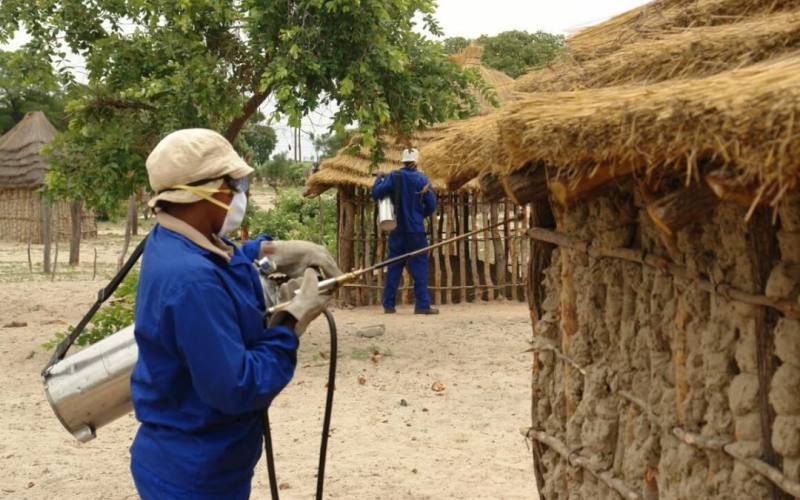
Zambezi has recorded more than 32 000 malaria cases and 21 deaths this year, with health authorities battling low participation in indoor residual spraying as thousands of households refuse or fail to give health workers access to spray their homes.
The figures were highlighted by Zambezi governor Dorothy Kabula-Simushi during the 45th Lusata Cultural Festival at Chinchimane on Sunday, when she urged residents to open their homes to spraying teams.
The governor said ministry of health and social services statistics showed that the region had recorded 21 malaria deaths this year, compared with 19 deaths last year.
“This is a very serious concern, which needs to be addressed,” Kabula-Simushi said.
The latest figures put Zambezi’s malaria cases at 32 730 this year, with the region accounting for a significant share of the country’s 122 127 confirmed cases at the time.
The region is also struggling to reach the national indoor residual spraying target.
Of 9 640 households targeted for spraying in Zambezi, only 2 710 had been sprayed, while 2 644 households had refused health officials entry, according to figures reported by NBC.
This translated to 33% coverage against a target of 85%.
Kabula-Simushi said some residents were still refusing to have their homes sprayed.
“Sometimes when spray operators come to our villages, our rooms, our houses are locked. I therefore appeal to each and everyone to open their houses and be sprayed,” she said.
She urged communities to cooperate with health officials and allow indoor residual spraying teams into their homes.
“Let us, together, fight this common enemy. At least 100% of these houses should be sprayed during this period,” she said.
The ministry of health has described indoor residual spraying as one of its key malaria-prevention measures, while officials have warned that low coverage is undermining efforts to protect communities.
MoHSS director for special programmes Idah Mendai recently said the ministry was targeting 85% IRS coverage, compared with only 40% achieved nationally in the previous year.
Community members in Zambezi have previously raised concerns about allowing unfamiliar people into their homes, inadequate communication about spraying schedules and uncertainty about the effectiveness of the chemicals, according to NBC.
Malaria has made a significant resurgence in Namibia this year, with the health ministry reporting 122 612 confirmed cases and 122 deaths nationally by early September.
Of the confirmed cases, 99 078 were locally transmitted and 23 354 imported, while 9 956 malaria-related hospital admissions had been recorded.
Zambezi was already reporting 24 194 cases by the end of May, including 212 imported cases, making it one of the country’s major malaria hotspots.
The ministry launched its 2026 indoor residual spraying campaign in September, targeting 1.2 million households across malaria-endemic regions. The campaign is scheduled to run until 27 November.
Kabula-Simushi called on residents to take the spraying programme seriously and work with the government to reduce malaria infections and deaths.
“I therefore appeal to each and everyone to open their houses and be sprayed,” she said.