Patience Makwele
President Netumbo Nandi-Ndaitwah has called on traditional authorities to work with government in advancing the country’s development agenda, including making communal land available for agricultural ventures and ecotourism.
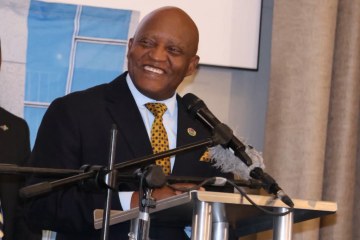
Nandi-Ndaitwah made the call in a speech delivered on her behalf by urban and rural development minister James Sankwasa at the 45th Lusata Cultural Festival at Chinchimane in the Zambezi Region on Sunday.
She said traditional authorities remained important institutions in Namibia and had a role to play in ensuring that development reaches communities.
“Traditional authorities are not relics of a bygone era, nor are they sentimental remnants preserved for cultural display. They remain indispensable pillars of grassroots governance, custodians of peace, fostering stability and unity, and the main bridge between citizens and central government,” she said.
Nandi-Ndaitwah said traditional institutions must adapt to changing social and economic realities without abandoning the cultural values on which they were built.
She said modernising traditional governance could include improved record-keeping, engagement with regional development agencies and the adoption of sustainable agricultural practices.
“Evolution must never mean assimilation into traditional anonymity. Adaptation of traditional governance to contemporary administrative needs must strengthen, not dilute, our moral and cultural foundation,” she said.
The president linked the role of traditional authorities to the implementation of the country’s sixth National Development Plan (NDP6), particularly its focus on human capital development.
She said economic growth, industrial expansion and development would mean little if young people lacked the skills, discipline and opportunities needed to sustain them.
Nandi-Ndaitwah therefore called on the Mafwe Traditional Authority to work with government in advancing NDP6’s human capital objectives.
She specifically urged the authority to make communal land available for enterprises involved in agricultural ventures and ecotourism, while using its moral authority to strengthen community accountability.
She also called for the preservation and commercialisation of cultural heritage where appropriate.
“When our young people are grounded in their cultural identity, they carry a sense of duty that prevents them from engaging in self-destructive behaviours. A young person who understands their heritage is a young person who approaches national development with pride,” she said.
The president also warned against allowing Namibia’s diversity to become a source of division.
She said differences in political affiliations, regional perspectives and opinions were natural in a democracy, but warned against turning such differences into tribalism and factionalism.
“Tribalism is a corrosive force that undermines national cohesion. These divisions rob our children of a shared future,” Nandi-Ndaitwah said.
Zambezi governor Dorothy Kabula-Simushi echoed the call for unity, saying cooperation among traditional leaders was important to development in the region.
“When our traditional authorities speak with one voice, they articulate the needs of their people and create a powerful channel for advocacy and development in the region,” Kabula-Simushi said.
She urged communities not to allow their diversity to become a tool for division or discrimination.
Mafwe Traditional Authority chief Litunga George Simasiku Mamili VII, through Ngambela Borniface Maemeko, also called for unity while urging young people to preserve their cultural heritage.
Maemeko said Lusata provided an opportunity for the younger generation to learn and promote values passed down by their forefathers while embracing opportunities in the modern world.
Senior Chief Anang’anga Imwiko of Zambia said cultural ties should similarly be used to create opportunities for communities rather than merely commemorate their shared past.
“Our traditional and cultural ties should therefore not only be reminders of our shared past, but should also help us create opportunities for people in the present and in the future,” Imwiko said.
He urged young people to value their heritage while pursuing education, embracing technology and using innovation to create opportunities for themselves and their communities.
“We should not see culture and development as competing priorities. We can preserve our traditions while embracing education, technology and innovation,” he said.