Sostenus Wilherm
The country’s fisheries sector has been given a demand that the time for talking is over, and that the National Fisheries Indaba must deliver a roadmap for reform, accountability and action.
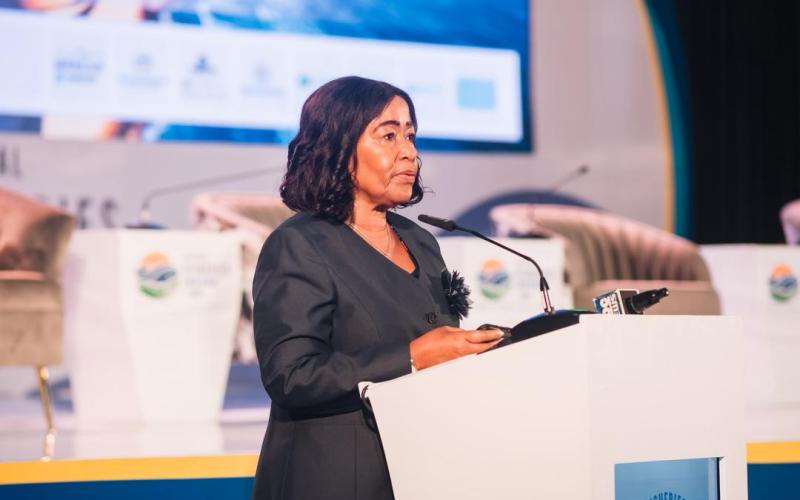
Opening the three-day National Fisheries Indaba in Walvis Bay on Wednesday, agriculture, fisheries, water and land reform minister Inge Zaamwani warned stakeholders against allowing the gathering to become another talking platform.
She said the country could no longer afford to repeatedly discuss the challenges facing the industry without implementing solutions.
“This Indaba is not intended to be another talking platform. We spoke extensively about these challenges in April. We are now convened for the next three days in Walvis Bay, the home of the fishing industry, to consider our options on how to collectively fix the challenges identified already and turn them into opportunities,” Zaamwani said.
Her remarks placed pressure on government, industry, labour, communities and other stakeholders to use the gathering to produce practical outcomes rather than another record of discussions.
Zaamwani said the socio-economic challenges facing Namibia require urgent action and that reforms must be based on the country’s realities, particularly the livelihoods of people who depend on fisheries resources.
“This is not about us; it is about the men and women who work every day to transform our marine resources into livelihoods for Namibians. It is about young people who want to benefit from their country’s fisheries resources,” she said.
She added that the future of coastal communities must also be protected while ensuring that benefits derived from Namibia’s marine resources are distributed fairly among citizens.
“These are the main issues we have to address and assign clear responsibilities and timelines for implementation. This is not about methodologies or speeches. We have been there before. Let us not return to April. We do not have time. We must move forward with urgency,” Zaamwani said.
The minister said the indaba, held in the heart of Namibia’s fishing industry, is intended to help determine how the country’s strategic marine resources should be governed, protected and utilised to generate sustainable and equitable benefits.
She said the process must deliberately move “from evidence to reform”, with technical and stakeholder consultations already undertaken in preparation for the discussions.
The indaba is examining Namibia’s fisheries system from the health of marine resources and the science informing their management to fishing rights, harvesting, value addition, employment, investment and economic contribution.
Zaamwani said the government must be prepared to distinguish between areas of the sector that are working and should be strengthened, those that are failing and require reform, as well as areas where difficult policy choices need to be made.
“We all know too well that without healthy and sustainably managed fish stocks, there can be no enduring fisheries economy,” she said, stressing the need to strengthen science, data, monitoring, control and surveillance to safeguard marine resources for future generations.
Another key issue is how access to Namibia’s fisheries resources is allocated and governed.
The minister said stakeholders must examine who receives access, the basis on which such access is granted, the obligations attached to it and whether sufficient transparency, accountability and institutional integrity exist.
She said measuring the success of the sector should go beyond the volume of fish landed or exported and instead consider jobs created and maintained, incomes, value addition, investment, industrial development, public revenue, skills development and opportunities for Namibians throughout the fisheries value chain.
The government is also looking to expand investment in aquaculture, mariculture, small-scale fisheries, technology, digitalisation, skills development and diversification to strengthen the sector and reduce its vulnerabilities.
Zaamwani said the indaba must answer five fundamental questions including how Namibia can sustainably manage its fisheries resources, how access to the national resource should be governed, how the country can maximise the economic and social value derived from fisheries; how the sector can contribute to jobs, livelihoods and food security and what legal, institutional, technological and policy reforms are required to create a resilient and globally competitive fisheries and aquaculture economy.
She stressed that the government cannot answer these questions alone, with industry expected to contribute operational and investment experience, workers and organised labour bringing perspectives on employment and livelihoods, while communities, scientists, researchers and development partners provide additional expertise.
Zaamwani clarified that the evidence and reform proposals presented at the Indaba do not yet constitute final government policy but are intended to provide a basis for deliberation and decision-making.
“By the conclusion of this Indaba, the government expects more than a record of discussions. We require clear priorities for reform, practical recommendations, an understanding of institutional responsibilities and a credible pathway from recommendations to implementation, monitoring and accountability,” she said.
The three-day programme has been divided into three stages, with the first day focusing on evidence, the second on direction, and the third day on decision and commitment.
Zaamwani said stakeholders may not agree on every issue but urged them to confront difficult questions honestly and ensure that their recommendations are grounded in sustainability, fairness and transparency.
“Let the evidence guide the discussion, let the discussion clarify the choices and let those choices provide the foundation for credible and implementable reform,” she said.