Renthia Kaimbi
Namibia’s response to Angolans fleeing devastating drought conditions has come under scrutiny, with Amnesty International accusing the country of leaving vulnerable women and children in a legal and humanitarian protection gap.
Rather than receiving adequate protection and access to basic services, many drought-displaced Angolans reportedly face the threat of arrest and deportation, while struggling to access healthcare, education, shelter, water and documentation in Namibia.
The report released on Wednesday, titled “The Drier It Gets, the Longer You Have to Walk, the Deeper You Have to Dig” – The Human Rights Impacts of Drought-Induced Displacement on Angolan Women & Children in Namibia, says drought-driven cross-border movement from southern Angola has exposed thousands of vulnerable people to a protection gap because Namibia’s existing immigration and refugee frameworks do not adequately address displacement caused by climate-related disasters.
Amnesty International said the situation should not simply be viewed as irregular migration, but as a human rights crisis involving people forced to leave their communities after drought destroyed crops, livestock and livelihoods.
Southern Angola, particularly Cunene, Huíla and Namibe provinces, has been severely affected by recurring droughts worsened by El Niño and climate change.
The resulting deterioration of pastoral and farming systems has reportedly pushed people towards Namibia in search of food, water, work, healthcare, family support and safety.
“The drier it gets, the longer you have to walk, the deeper you have to dig,” an Angolan climate activist allegedly told Amnesty, describing the increasingly desperate search for water and livelihoods.
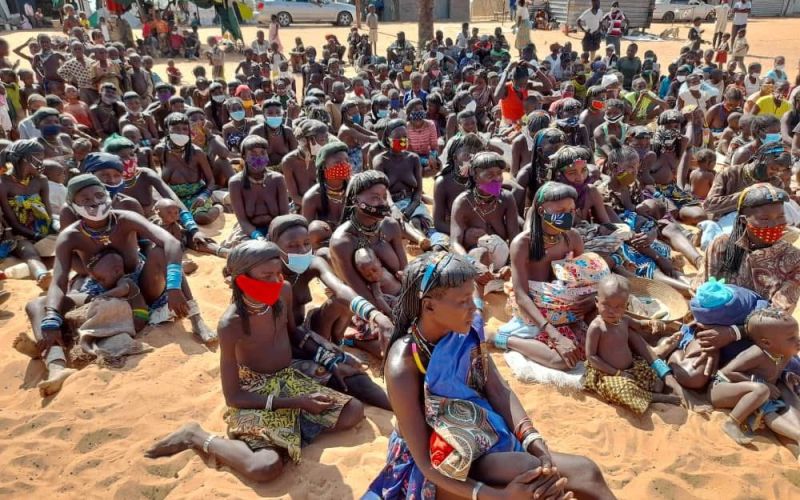
Between January and July 2021, more than 7 000 Angolans, mainly women, including pregnant and lactating women, children and older people, crossed into northern Namibia following consecutive years of severe drought and food insecurity, the report found.
Amnesty said cross-border movement continued during renewed drought conditions in 2023 and 2024, but the actual scale remains unknown because there are no comprehensive reception, registration and data-collection systems.
Between May 2024 and May 2026, Amnesty said it interviewed at least 167 people, including displaced people, community leaders, government officials, civil society representatives, academics and members of the UN Country Team.
The report says many Angolans enter Namibia through informal routes without passports, identity documents or border resident cards, leaving them without regular immigration status and with few options to legalize their stay.
Although Angolan passport holders can enter Namibia visa-free through official border posts for limited periods, this does not provide a right to work, longer-term residence or a dedicated protection mechanism for people displaced by drought.
The resulting legal uncertainty has allegedly left many Angolans living in northern Namibia in persistent fear of arrest, detention and deportation, influencing decisions about whether to seek healthcare, education and other essential services.
In 2026, the ministry of home affairs, immigration, safety and security immigration control programme supposedly announced that more than 1 000 Angolan nationals had been returned to Angola after being found in the country without regular immigration status.
Amnesty also documented a 4 June 2025 incident in which it claims it witnessed Namibian authorities round up about 40 Angolan nationals, including women and children, at a community centre in Opuwo and transported them more than 100 kilometres to Ruacana for handover to Angolan authorities.
According to Amnesty, the group was returned without individual screening, information about asylum or protection options, or an assessment of the risks they could face upon return.
The organisation said the absence of individual examination raised concerns regarding the prohibition of collective expulsion and the principle of non-refoulement, which prohibits returning people to places where they could face serious human rights violations.
“The protection of already marginalized Angolans who are forced to move to Namibia in search of livelihoods is not just a humanitarian concern. This is a human rights crisis that demands international solidarity, including legal protection against refoulement,” said Tigere Chagutah, Amnesty International’s Regional Director for East and Southern Africa.
The report highlights the disproportionate burden carried by women, who are often responsible for collecting water and firewood, caring for children and older relatives and securing food, including while pregnant or breastfeeding.
Many families were found to be living in shelters made from branches, plastic and cardboard, while others have no shelter.
Severe overcrowding and inadequate sanitation are also reported, while access to communal water points can require people to queue before dawn.
Women collecting firewood in isolated areas, the report states, are exposed to increased risks of sexual and gender-based violence.
Healthcare access was another major concern. Amnesty found that undocumented Angolans were charged higher fees at hospitals than Namibian nationals, while fear of immigration enforcement discouraged some from visiting health facilities.
“We only go when the pain is too much; otherwise, we just lie down and wait,” one woman allegedly told Amnesty.
Children also face barriers to education because of missing documentation, household survival responsibilities, language difficulties and discrimination. Some are allegedly forced to collect or sell firewood, work on farms or care for younger siblings.
Amnesty also raised concerns about trafficking and exploitation, including reports of Angolan children being trafficked into Namibia for forced labour in agriculture, domestic work and cattle herding.
A further concern was the lack of birth registration among displaced children, leaving them vulnerable to exclusion from essential services and the risk of statelessness.
Amnesty is calling on Namibia to establish accessible protection and regularisation mechanisms for people displaced by drought and climate-related disasters; end collective expulsions; conduct individual assessments before returns; and ensure displaced Angolans can access healthcare, education, documentation and social services without discrimination.
“Namibian authorities must establish a rights-based approach to migration, ensuring that people displaced by drought and other natural disasters can access basic rights, including registration and documentation,” Chagutah said.
The organisation is also urging Namibia and Angola to develop a bilateral framework covering cross-border mobility, early-warning systems, humanitarian admission, registration, child protection and safeguards against unlawful returns.
Amnesty said Angola must strengthen drought preparedness, climate adaptation, water infrastructure, early-warning systems and social protection to protect communities at risk of displacement.
“Drought and the increasing risks posed by climate change cannot absolve the government from its legal obligation to protect people’s rights to life, food, water, health, a healthy environment and an adequate standard of living,” Chagutah said.
The report argues that the crisis requires more than emergency humanitarian assistance; it requires legal recognition, protection from unlawful returns, access to basic rights and durable solutions that allow drought-displaced people to live with dignity.
“This reality underscores the need for the international community to recognize the injustice faced by these communities and respond with robust cooperation and support. It cannot wait,” Chagutah said.
At the time of publication, Amnesty International said Namibian government officials had not responded to its request for comment.