Patience Makwele
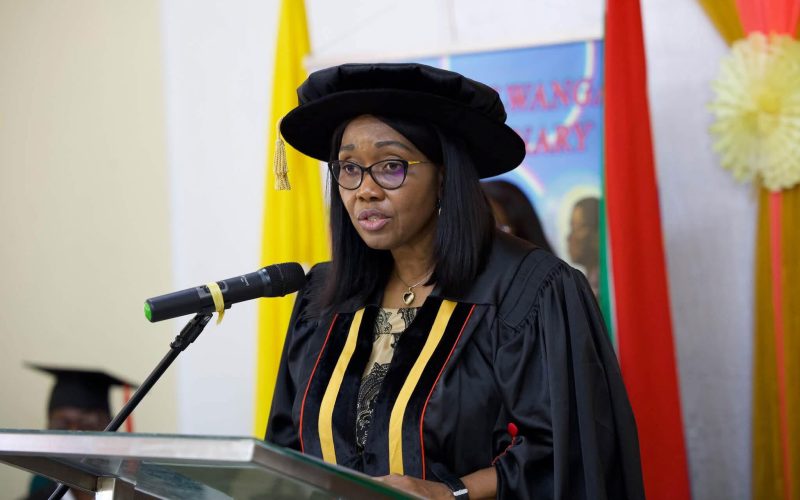
Speaker of the National Assembly Saara Kuugongelwa-Amadhila has called on the Church to play an active role in addressing youth unemployment and other social challenges facing Namibian communities, saying government policies and legislation alone cannot resolve the problems.
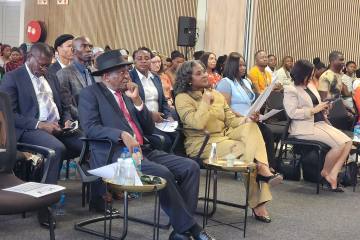
Addressing the 13th graduation ceremony of St. Charles Lwanga Major Seminary in Klein Windhoek on Thursday, Kuugongelwa-Amadhila said families across rural villages and urban townships continued to grapple with unemployment, substance abuse, gender-based violence and mental health struggles.
“Across our rural villages and urban townships, many families continue to grapple with youth unemployment, substance abuse, gender-based violence, mental health struggles and the lingering wounds of historical inequalities,” she said.
She said that while parliament continued to debate laws, policies and national budgets aimed at addressing poverty, inequality and access to education, healthcare and employment, institutional interventions could not address every difficulty experienced by communities.
“Legislation and institutional frameworks alone cannot heal a wounded heart or restore a broken spirit,” she said.
The Speaker said young priests and pastoral workers were often the first point of refuge for people experiencing distress, adding that the Church and State shared responsibility for supporting communities affected by these challenges.
“Both the Church and the State share a solemn responsibility to walk alongside our people in addressing these realities,” she said.
She urged the graduating priests and pastoral leaders to support families affected by violence and addiction, advocate for peace and mutual respect in troubled homes, and champion the safety and dignity of women and children.
She also called on them to comfort grieving communities and remind young Namibians of their worth and potential.
Kuugongelwa-Amadhila said the graduates were entering ministry and public leadership at a time of rapid technological, cultural and social transformation, with digitalisation, artificial intelligence and globalised cultural influences presenting new challenges.
She said their training in Philosophy and Theology had equipped them to think critically, question assumptions, seek truth and engage in respectful dialogue.
“In an age of instant judgment and polarization on digital platforms, Namibia needs thoughtful spiritual and community leaders who can listen with patience, weigh evidence carefully and build consensus across diverse communities,” she said.
She added that Theology grounded intellectual development in empathy, respect for human dignity, social justice and solidarity with vulnerable people.
The Speaker further urged the graduates to practise accountable leadership, saying young people were drawn not only to words from leaders but also to credibility, transparency and actions that reflected their convictions.
“True leadership, whether exercised in a parish, a classroom, a community centre or the chambers of Parliament is never about status, privilege or authority over others,” she said.
“As your Seminary’s mission reminds us, it is about shepherding: walking alongside the people, understanding their daily struggles, defending the voiceless and serving with humility and fairness.”
She encouraged the graduates to remain connected to ordinary citizens, maintain their integrity and commit themselves to lifelong learning.
Seminary rector Reverend Father Dr Taiju Thaliath said the institution’s responsibility extended beyond preparing candidates for academic qualifications or positions within the Church.
He said the seminary sought to produce people who were intellectually competent, spiritually grounded, emotionally mature and pastorally committed.
“Our vision is to form candidates for priesthood, who become agents of transformation in the Church and society, where people who truly live as the light of the world and salt of the earth,” he said, referring to Matthew 5:13-14.
Thaliath said education and formation needed to go hand in hand, particularly in Namibia, where ethical leadership, social responsibility, justice and respect for human dignity were essential to building a peaceful and prosperous society.
He said the seminary sought to bring Philosophy and Theology into meaningful dialogue with Namibian society, its traditions and contemporary challenges.
“We want our students to understand the world in which they live, and to respond to its needs with faith, intelligence, and compassion,” he said.
He challenged the graduates to use their qualifications to make a difference in the lives of others rather than treating their certificates as personal achievements.
“Do not allow your certificates to become decorations on your walls. Let them become instruments of transformation in the world,” he said.
He added that the value of education should also be measured by the opportunities graduates created and the number of people they helped along the way.
“The measure of your education will ultimately not be how high you rise, but how many people you have helped rise with you,” he said.
Thaliath congratulated the graduating class, describing the ceremony as the culmination of years of study, examinations, research, assignments and personal sacrifice.
He also acknowledged the contribution of lecturers, formators, administrative staff, parents and guardians in supporting the graduates throughout their studies.
The ceremony was held under the theme, “Young Priests, New Challenges: Preserving Faith and Hope in a Changing World.”