Patience Makwele
One in eight women aged 18 to 24 in Namibia has experienced sexual violence before turning 18, but questions remain over whether survivors receive adequate support after disclosing abuse.
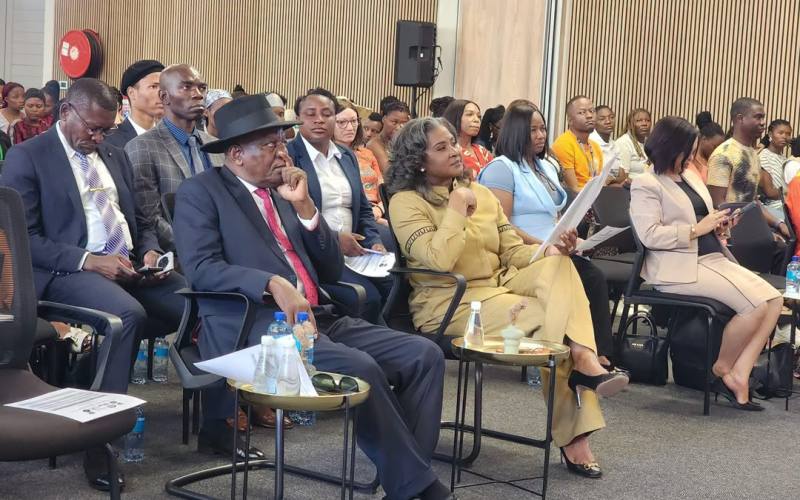
The finding from the 2019 Violence Against Children and Youth Survey was raised during the launch of the 16 Days of Activism Against Gender-Based Violence campaign in Windhoek on Wednesday.
Elizabeth Vial, a control social worker at the One Economy Foundation, questioned why survivors who speak out do not always receive the help they need.
“The 2019 violence against children and youth survey reported that 12% of women aged 18 to 24 experienced sexual violence before they turned 18. Half of those told someone, and one-third of those received help,” Vial said.
“So where is the gap between the different aspects of intersectionality? Between asking for help and actually receiving help? So like that you said, we have systems in place, and we have laws in place. Where are the challenges?”
Her questions came as survivor Florence Beukes shared how she kept her experiences hidden for years and did not seek assistance from social workers or attend counselling.
“We hid for all those years. I didn’t go to social workers. I didn’t go for sessions or counselling. I didn’t even try to move forward,” Beukes said.
She said survivors sometimes have to take the first step themselves rather than wait for others to pull them out of difficult situations.
“Sometimes, you have to stop trying to get people to drag you out of the gutter and pull you from behind the veil. Sometimes, you just have to take that first step yourself,” she said.
Beukes also spoke about the difficulty of making her experiences public through a book.
“Do you think it was easy for me to put my life into a book? Now everybody knows,” she said.
She called on frontline workers who handle gender-based violence cases to treat survivors with compassion.
First Gentleman General Epaphras Ndaitwah said efforts to address gender-based violence should focus on the causes of the problem rather than only its effects.
“In most cases, we deal with the symptoms instead of root causes. You can deal with the symptoms, but as long as you don’t kill the root causes, the problem will not go away,” he said.
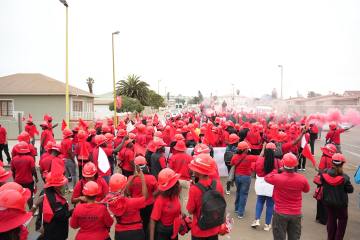
The campaign, held under the theme “Unite to End Violence Against Women and Girls: Ensure Justice, Protect Survivors, End Impunity,” calls for collective action to address gender-based violence against women and girls, both online and offline.
The 16 Days of Activism campaign runs from 25 November to 10 December.
It is supported by the ministry of gender equality, the office of the First Spouse, DEN Impact Foundation, UNFPA, Lifeline/Childline, the Salvation Army Namibia, the 4×4 Initiative and the AFM of Namibia National Men’s Fellowship.