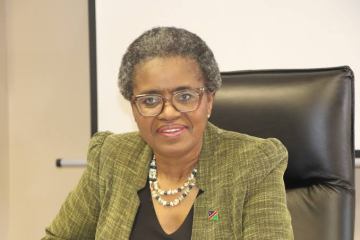
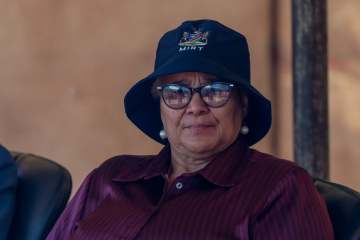
Renthia Kaimbi
A coalition of small miners and community members in Uis has formally petitioned the ministry of industries, mines and energy to remove three directors from the board of the Small Miners of Uis (SMU), alleging that the three women have held their positions since approximately 2010 without meaningful mandate renewal, financial transparency, or proper accountability to the mining communities they were meant to serve.
The petition names Helena Itamba, Aune Andreas, and Anna Daniels as the directors whose continued tenure, according to the signatories, has blocked governance reform and left small miners without representation or support.
The petitioners argue that the three directors have remained on the board for well over a decade while failing to convene Annual General Meetings, produce audited financial statements, or implement key provisions in SMU’s own founding documents.
They are now calling on the mines minister, Modestus Amutse, to initiate the immediate removal of the three named directors and to oversee a transparent process for appointing new representatives capable of advancing the SMU’s original objectives.
The push to remove the three directors forms part of wider discontent that has allegedly been building for years.
The petitioners note that the SMU was originally established as a collaborative effort between the line ministry, the Daure Daman Traditional Authority, the Uis Village Council, and the Brandberg Small Miners Cooperative, with the aim to advance the interests of small‑scale miners and their communities.
Yet the signatories say that under the long tenure of the current board, the SMU has failed to employ any support staff to assist miners with applications for exclusive prospecting licences and mining licences, leaving individual miners to navigate a complex system on their own.
The petition further states that no meaningful stakeholder consultations have taken place, and that the board has operated without any of the accountability mechanisms required by the SMU’s memorandum and articles of association.
Beyond governance failures, the petition levels a series of additional allegations against the broader management of SMU and its related entities.
The signatories are demanding a full account of the relationship between SMU and Brandberg Tantalite Mine, including any dividends, royalties, profits, or asset transfers that have occurred.
They also raised serious concerns about Mining Licence ML129, which they say was specifically earmarked for small‑scale mining and community participation, and not for extensive industrial operations.
The petitioners point out that ML129 sits directly on active farmland and settlement areas containing houses, roads, boreholes, grazing lands, livestock, and ancestral graves, yet residents have not been meaningfully consulted about any development plans.
They insist that no major decisions affecting ML129 should proceed without proper consultation that recognises and protects existing livelihoods and cultural heritage.
The petition further alleges that community assets originally built for small miners in Uis, including an office and related infrastructure, are now being used by a tin mine.
The signatories are calling for full disclosure regarding ownership transfers, occupation arrangements, leases, compensation, and the current status of any assets acquired for SMU.
They stated that numerous previous letters and requests for engagement have gone unanswered by both SMU leadership and the ministry.
“We, the undersigned, seek formal written responses to all matters raised in this petition. Many letters, submissions, concerns, and requests for engagement from our communities have not received adequate responses,” said Lydia Skrywer, vice chairperson of the Brandberg Small Miners Cooperative.
“Our objective is not confrontation but accountability, transparency, meaningful engagement, community participation, and the advancement of small-scale mining for the benefit of present and future generations.”
Deputy minister of industries, mines and energy Gaudentia Khröhne previously stated that small‑scale miners in Namibia continue to struggle with limited access to markets, financing, and suitable land.
Speaking at the Rural Women’s Parliament with Men as Partners in Windhoek in September 2025, Kröhne explained that financial institutions often view small‑scale mining as too risky, making it difficult for miners to secure loans.
She added that access to land remains a major obstacle, since most mining occurs on privately owned commercial farmland, forcing miners into unfavourable contracts with landowners that frequently deter them from proceeding with operations.
The Dâures‑Brandberg area was recently approved for inclusion on the Unesco World Heritage list, after which officials removed small-scale miners and farmers from the mountain zone.
Community activist Jimmy //Areseb warned that their removal could trigger a rise in gender‑based violence and other social problems.
He urged authorities to provide alternative livelihoods for displaced miners.