Patience Makwele
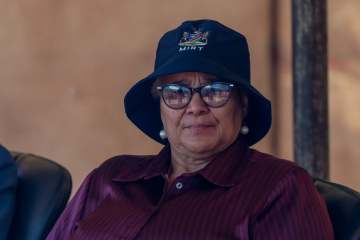
President Netumbo Nandi-Ndaitwah says Namibia’s deepening socio-economic challenges cannot be resolved by the government alone, warning that unemployment, poverty and inequality require collective action from citizens, businesses and communities.
Speaking at the launch of the book, ‘Building Namibia’s Future: President Netumbo Nandi-Ndaitwah’s Roadmap to Unity, Prosperity and Transformation’ in Windhoek on Saturday, the Head of State called on Namibians to become active participants in nation-building and development.
“Namibia’s future will not be constructed by the government alone. It will require the collective efforts of all citizens. Nation-building demands active participation from people who believe in their country’s future,” she said.
The President said while Namibia has maintained peace, democratic governance and recorded socio-economic progress since independence, the country continues to grapple with serious structural challenges.
“Nevertheless, we are mindful of the ongoing challenges we face, such as unemployment, poverty, inequality and the need for accelerated growth. These issues compel us to act with urgency and determination,” she said.
Nandi-Ndaitwah urged citizens to participate actively in community development, national dialogue and policy implementation, saying the country’s future depends on harnessing the collective strengths and diverse perspectives of its people.
She further stressed that young people should not merely be viewed as future leaders but as development partners whose innovation and resilience are essential to Namibia’s growth.
“We must invest in education, skills development, entrepreneurship and innovation. Young people are not just the leaders of tomorrow; they are development partners of today,” she said.
The President also called for an economy that creates jobs, promotes investment and supports local enterprises while ensuring that Namibia’s natural resources contribute meaningfully to the well-being of all citizens.
The message was echoed throughout the launch event.
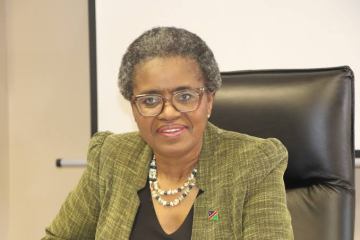
Author Ndahafa Mutongolume said Namibia’s future would be built through shared responsibility rather than government action alone.
“The central message of this book is simple. Namibia’s future will not be built by the government alone, nor by the private sector. It will be built by all of us working together,” she said.
Mutongolume said every sector of society has a role to play, from teachers shaping young minds and farmers feeding the nation to entrepreneurs creating jobs and young people daring to dream beyond their limitations.
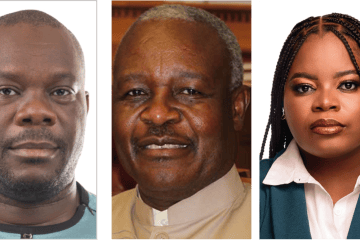
Capricorn Group chief executive officer David Nuyoma also emphasised the importance of collective ownership in driving national development.
“The future of Namibia is not something that belongs to a select few. It belongs to all of us,” he said.
Nuyoma said development does not happen in isolation and should not be measured solely by large-scale economic outcomes.
“We think about it in terms of whether people are actually feeling the impact in their daily lives. Are entrepreneurs getting the chance to grow? Can small businesses step into new opportunities? Most importantly, are ordinary Namibians able to participate meaningfully in the economy?” he asked.
Political analyst and commentator Joubert Harushando said the President’s remarks amount to an acknowledgement that government interventions alone have been insufficient to tackle the country’s socio-economic problems.
“The President is essentially saying that Namibia’s development model requires a societal partnership. The government can create policies and provide an enabling environment, but sustainable development also requires an active private sector, stronger community initiatives and citizens who are willing to participate in economic activities and hold institutions accountable,” Harushando said.
However, he warned that calls for collective responsibility must be accompanied by practical opportunities.
“People cannot be asked to become development partners while unemployment remains high and economic opportunities remain limited. The challenge for the government now is translating this vision into policies that genuinely empower citizens to participate meaningfully in the economy,” he said.
Harushando said Namibia’s socio-economic challenges have become too complex for public expenditure alone to solve.
“Poverty and inequality are deeply structural issues. They require investment, entrepreneurship, skills development and partnerships that extend beyond the public sector. The government can coordinate and facilitate development, but economic transformation ultimately requires contributions from multiple stakeholders,” he said.
He added that greater collaboration between government and the private sector could unlock opportunities, particularly for young people who continue to face high levels of unemployment.
“The urgency now lies in ensuring that citizens, particularly the youth, have access to the skills, financing and opportunities necessary to become active participants in economic growth rather than passive recipients of state interventions,” he said.
The President also used the occasion to advocate for greater investment in Namibia’s creative industries, saying writers, artists and innovators have an important role to play in shaping national consciousness and advancing national development.
“We must invest in platforms and opportunities that elevate Namibian writers, artists and innovators, ensuring their work is celebrated both locally and globally,” Nandi-Ndaitwah said.