Allexer Namundjembo
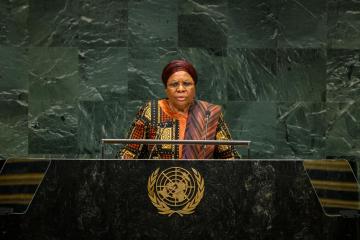
Minister of urban and rural development, James Sankwasa, has raised alarm over what he described as an “underground capture” of Namibia’s traditional authorities, warning that certain individuals are attempting to destabilise customary leadership structures.
Sankwasa made the remarks during the commemoration of 130 years of Chief Kahimemua Nguvauva at Okahandja on Sunday..
He said the alleged attempts to interfere with traditional authorities are aimed at weakening unity within communities.
“There is an underground capturing of the country, particularly targeting traditional authorities. These capturers are using individuals to destabilise traditional setups. The more we become disunited, the weaker we become as a people,” Sankwasa said.
The minister stressed that under his leadership, the recognition of traditional leaders will strictly follow customary laws and long-standing cultural practices.
“Tradition and the criteria for choosing a chief will be based on tradition and nothing else. As Africans, we have norms and cultural practices that have held our people together. These systems enabled us to resist colonial domination,” he said.
Sankwasa further argued that historical struggles in Namibia were primarily about land, rather than democratic ideals.
“None of those who died did so for democracy; they died for land,” he said.
He cautioned against what he termed the “over-democratisation” of traditional authorities, warning that it could undermine customary governance systems.
“We must interrogate whether over-democratising traditional authorities will achieve what we intended. Anyone who wants to be a chief must prove their lineage, who their ancestors were and whom they are succeeding. If they cannot, they should not approach my office,” Sankwasa said.
The minister revealed that since assuming office, he has received numerous applications for chieftainship from various communities, including four from members of the Mbanderu community.
Sankwasa also linked many chieftainship disputes to internal divisions, controversially suggesting that education may, in some cases, contribute to conflict.
“When I studied these disputes, I found that historically, many chiefs were not university graduates, yet they maintained unity. Today, we have educated individuals bringing disunity into communities,” he said.
He added: “It raises a serious question: if those without formal education could hold communities together, but now disputes are increasing among the educated, what is the cause?”
Disputes over traditional leadership in Namibia have increasingly found their way into the courts, reflecting deep divisions within some communities over succession and recognition.
In recent years, several traditional authorities have approached the High Court to challenge the appointment or recognition of chiefs, often citing concerns over lineage, legitimacy, and adherence to customary law.
Communities such as the Ovaherero, Nama, and others have experienced prolonged disputes, sometimes resulting in parallel leadership claims.
Recent succession disputes within traditional authorities have increasingly played out in the courts, highlighting deep divisions over customary leadership.
The Ovaherero Traditional Authority (OTA) remains locked in a protracted and costly legal battle at the Windhoek High Court following the death of Paramount Chief Vekuii Rukoro in 2021.
The dispute, with legal costs reportedly reaching around N$10 million, involves rival claimants including Vipuira Kapuuo, who maintains that as Chairperson of the Ovaherero Chiefs’ Council he is the rightful acting Paramount Chief in line with tradition; Professor Mutjinde Katjiua, endorsed by a faction of the council during a December 2021 meeting; and Dr. Hoze Riruako, who was separately crowned by another faction.
While Kapuuo challenges the legality of the meeting that endorsed Katjiua, describing it as an unlawful takeover, Katjiua’s supporters argue that his recognition followed proper procedures backed by a majority of traditional leaders.
The courts have already dismissed urgent applications aimed at restraining Kapuuo, and proceedings have included testimony from cultural and religious experts, although efforts toward an out-of-court settlement continue.
In contrast, a similar dispute within the Ondonga Traditional Authority following the death of King Immanuel Kauluma Elifas in 2019 was ultimately resolved through legal processes.
A rival faction had backed Konisa Eino Kalenga, while gazetted councillors and a prior nomination supported Fillemon Shuumbwa Nangolo.
The Windhoek High Court dismissed attempts to block Nangolo’s coronation, after which the minister officially gazetted him as Omukwaniilwa, bringing the matter to a close.