CHAMWE KAIRA
Namibia needs an integrated approach combining infrastructure investment, policy reform, regulation and commercial restructuring to unlock the full potential of its railway and logistics systems, according to World Bank transport infrastructure and logistics specialist Bernard Aritua.
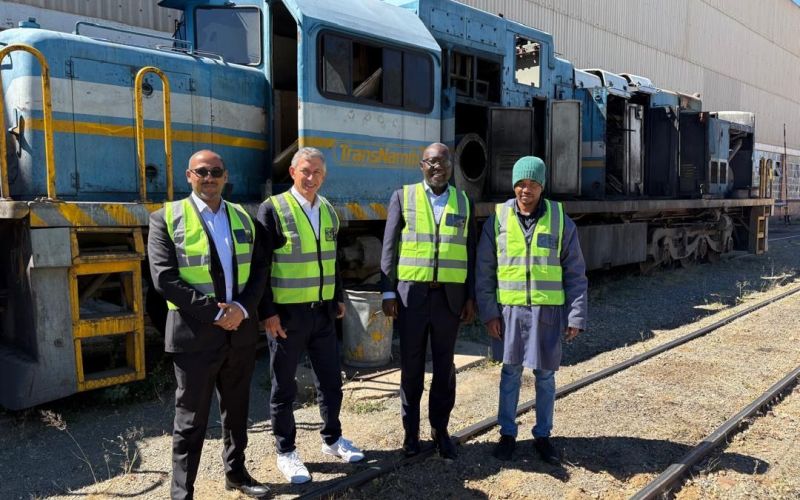
Aritua, who recently visited Namibia with World Bank director Satu Kahkonen, incoming country manager Stefano Mocci and transport specialists Ibrahim Dajani and Yehualaeshet Jemere Sharew, said the country’s rail sector has significant potential but remains constrained by underinvestment, institutional challenges and competition from road transport.
During the visit, the World Bank team engaged the ministers of finance and works and transport, the Trans-Kalahari Corridor Project management office and the leadership of TransNamib.
Aritua said Namibia’s railway challenges reflected broader problems facing rail systems across Africa, despite the country’s strategic advantages, including its location, the port of Walvis Bay and access to landlocked neighbouring markets.
“Underinvestment, institutional drift, and unequal competition with road transport have left rail far below its potential,” he said.
He warned that infrastructure rehabilitation alone would not be sufficient to transform the sector.
According to Aritua, rehabilitated railway lines without a viable commercial strategy risk becoming stranded assets, while institutional reforms without coherent policy and regulation could fail to deliver meaningful change. He said reforms should also remove barriers to private-sector investment.
Aritua said TransNamib would need to evolve into a customer-focused and commercially independent enterprise capable of winning freight volumes back from road transport.
He identified uranium, copper, zinc, manganese, grains, livestock products and citrus as commodities that could naturally be transported by rail.
He also highlighted the potential for Walvis Bay to strengthen its role as a regional gateway for Zambia, Botswana, Zimbabwe and the Democratic Republic of Congo.
A greater shift of freight from road to rail could also support Namibia’s climate commitments by reducing the transport sector’s environmental footprint, he said.
Aritua said reviving Namibia’s railways would require political commitment, effective regulation, appropriate incentives, sustained investment and blended financing.
He also called for a change in the way the railway sector is viewed, from infrastructure ownership towards an integrated logistics partnership focused on customers and regional trade.
“The opportunity is real, ambition is growing, and the journey is only beginning,” he said.