Sostenus Wilherm
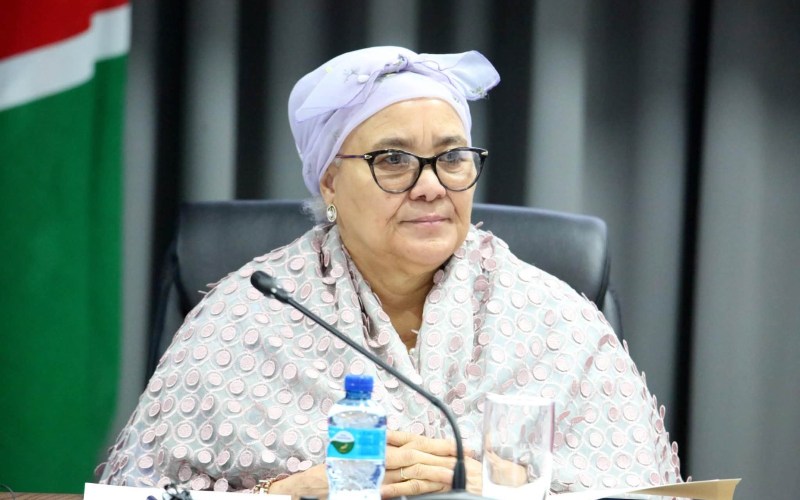
The government has moved to overhaul a disability assessment system that has been plagued by delays, inconsistent criteria and administrative hurdles, with Vice President Lucia Witbooi warning that the process meant to unlock social protection must never become a barrier to those who need it most.
Witbooi made the remarks in Windhoek on Friday while launching the Namibian Guideline for the Medical Assessment of Functionality and Degree of Disability and the Digital Programme for Medical Assessment of Persons with Disabilities.
She described the reforms as a major step towards creating a fairer, faster and more accountable system.
The intervention comes as Namibia records a significant increase in the number of persons with disabilities, with the 2023 Population and Housing Census estimating that 152 790 people live with disabilities, compared with 98 413 in 2011.
Witbooi said the growing number of people requiring disability-related support makes an effective assessment system increasingly urgent, particularly because the outcome of an assessment can determine access to social protection and other critical services.
“The need for a fair, reliable, transparent and timely assessment system is clear,” Witbooi said.
She acknowledged that the previous disability assessment framework had failed to consistently provide the clarity and efficiency required, leaving applicants and health professionals facing uncertainty and administrative complications.
She said the old system was characterised by a “lack of clear detail, inconsistent application of assessment criteria and administrative complexities”, resulting in delays and inequities.
“These challenges resulted in delays and inequities that affected not only access to social protection, but also the livelihoods, well-being and dignity of persons with disabilities and their families,” she said.
The new guideline is intended to address these shortcomings by establishing clearer and more consistent standards for medical professionals assessing the functionality and degree of disability of applicants.
The reform is also closely linked to the country’s social protection system, particularly the disability pension established under the National Pensions Act of 1992.
The monthly disability grant has increased from N$300 at independence to N$1 700 as of April 2026.
According to the 2023 Census, approximately 8% of Namibia’s population receives the pension, making the integrity and efficiency of the assessment process critical to ensuring that beneficiaries are treated fairly.
Witbooi said the new guideline should therefore not be viewed merely as a technical document, but as an instrument capable of restoring confidence in the assessment process.
“This guideline is far more than a technical document. It is a practical instrument intended to promote consistency, strengthen accountability, improve the quality of assessments and ensure that every assessment is undertaken professionally, objectively and with respect for the dignity of the individual,” she said.
A major component of the reform is the digitalisation of medical assessments, which the government believes could reduce paperwork, duplication and delays while strengthening record-keeping and information management.
Witbooi, however, cautioned against treating digitalisation as an end in itself.
“Digitalisation should not simply mean replacing paper with computers. It must mean better, faster and more accountable service delivery,” she said.
The digital programme is also expected to improve access for persons living in rural and underserved areas, where distance and cumbersome administrative procedures can create additional barriers to government services.
“No Namibian should be disadvantaged because of geographical distance, cumbersome paperwork or unnecessary administrative barriers,” Witbooi said.
She stressed that the system must remain accessible, secure, confidential and user-friendly while protecting personal information and maintaining professional and ethical medical standards.
The reforms come as Namibia seeks to advance Universal Health Coverage, the Sustainable Development Goals and the implementation of the Sixth National Development Plan.
Witbooi said disability inclusion must therefore be treated as a national development priority rather than merely a social welfare issue.
“Disability inclusion is not merely a social responsibility; it is a national development priority,” she said.
She further warned that the launch alone would not determine whether the reforms succeed, saying the government must ensure that the system is properly implemented, funded, monitored, evaluated and sustained.
“Technology alone cannot deliver inclusion. People, institutions, resources, accountability and sustained political commitment must work together,” Witbooi said.
The Vice President challenged ministries, regional and local authorities, healthcare professionals, civil society, development partners and the private sector to strengthen coordination and eliminate institutional barriers that prevent persons with disabilities from accessing services.
She also called on persons with disabilities, families, caregivers and representative organisations to actively participate in shaping the system by sharing their experiences and identifying shortcomings.
“Your lived experiences must continue to inform how this system evolves,” Witbooi said, adding the principle: “Nothing about us, without us.”
She said the ultimate test of the new system would be whether it makes a tangible difference in the lives of persons with disabilities.
The government’s objective, she said, should be to create a system where disability is not associated with exclusion or administrative barriers, but where persons with disabilities are recognised for their rights, abilities, contributions and aspirations.
“Let us ensure that disability is never a reason for exclusion and that no person with a disability is left behind in our nation’s development,” Witbooi said.