Renthia Kaimbi
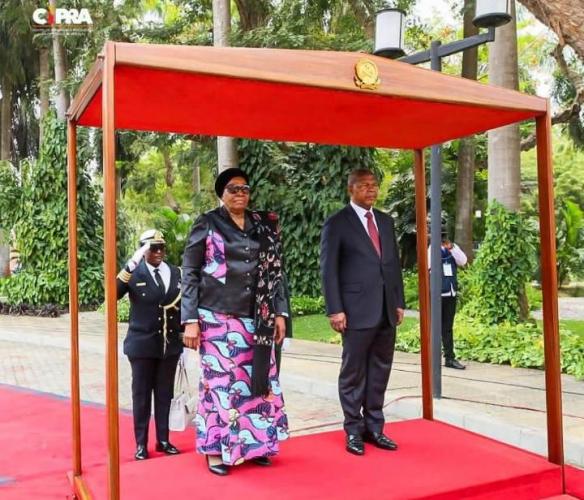
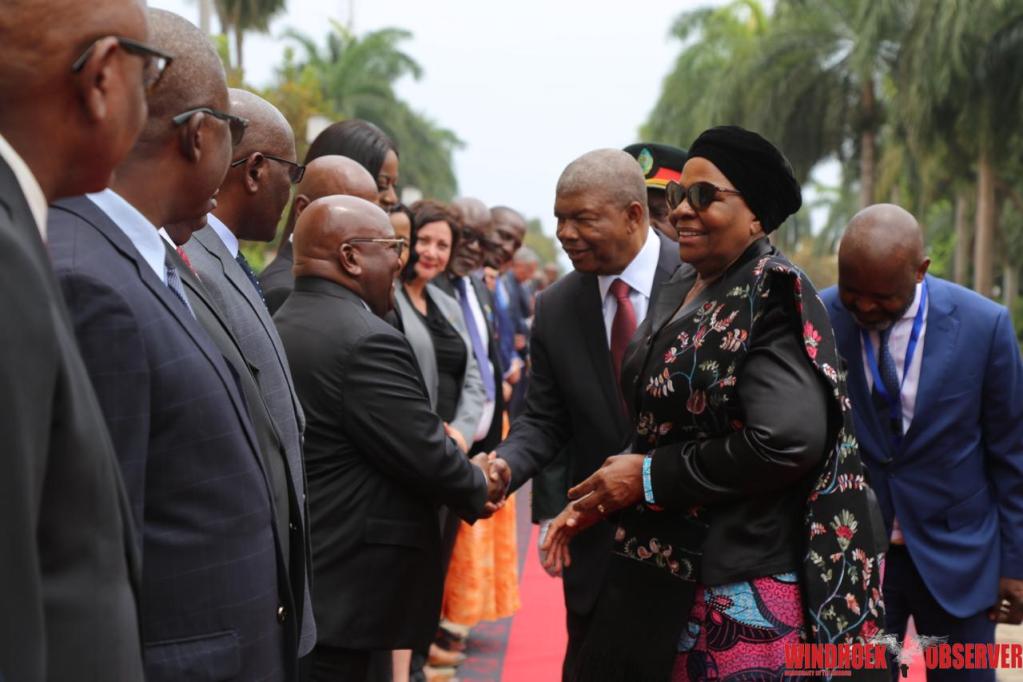
President Netumbo Nandi-Ndaitwah has urged Namibia and Angola to translate more than 60 bilateral agreements into tangible economic and social benefits, as the two countries formally elevate their cooperation to a Bi-National Commission (BNC).
Speaking at the inaugural BNC session in Luanda on Monday, alongside Angolan President João Manuel Gonçalves Lourenço, Nandi-Ndaitwah said the success of bilateral relations should be measured by improvements in citizens’ lives rather than the number of agreements signed.
“Our people will not be impressed by the number of agreements we signed; they want to see a positive impact in their day-to-day lives,” she said, urging ministers and officials to “take charge to ensure full implementation.”
Nandi-Ndaitwah said a 2024 legal audit identified more than 60 agreements covering political, diplomatic, economic, social, defence and security cooperation.
Additional agreements are expected to be signed during the session.
She called for faster implementation of joint infrastructure projects, particularly those relating to water supply, rail connectivity and energy security, which she said could strengthen economic integration and improve livelihoods in both countries.
She identified the extension of the Cafu Canal infrastructure into Namibia and the commissioning of permanent pumping stations at Calueque as urgent priorities.
She said the projects were particularly important for Namibia, which faces persistent water challenges as one of the driest countries in sub-Saharan Africa.
The proposed railway extension from Oshikango to Santa Clara was also highlighted as a strategic investment that could improve connectivity, lower transport costs and facilitate the movement of goods between the neighbouring countries.
On cross-border trade, Nandi-Ndaitwah called for stronger coordination among customs, immigration and border authorities to address delays and administrative bottlenecks that increase the cost of doing business.
She said small-scale traders were among those affected by transport constraints and cumbersome border procedures.
“Our common border should serve as a bridge to economic opportunity rather than a barrier to commerce,” she said.
Energy cooperation also featured prominently, with Nandi-Ndaitwah welcoming the conclusion of agreements relating to the Angola-Namibia Inter-connector (ANNA) Project in 2026.
She described the project as an important step towards strengthening energy security and supporting sustainable economic development in the region.
The President urged implementing institutions in both countries to meet agreed timelines and obligations, stressing that commitments must be followed by practical action.
She also commended cooperation under the 2022 Memorandum of Understanding on Bilateral Cooperation in the Oil and Natural Gas Sector, saying Namibia had benefited from Angola’s experience and institutional capacity as it develops its emerging petroleum industry.
Nandi-Ndaitwah further identified the Lobito Refinery as a potential avenue for cooperation in petroleum products, logistics, storage and distribution, provided such ventures are commercially viable.
She said the proposed Beynes Hydropower project could also contribute to regional industrialisation once implemented.
The President called for a shift in how the two countries manage their natural resources, arguing that Namibia and Angola should move beyond exporting raw materials to developing domestic industries that create value, jobs and economic opportunities.
She said value addition would help mobilise resources for development and ensure that the benefits of natural wealth are shared more widely across the region.
Nandi-Ndaitwah also emphasised the historical ties between Namibia and Angola, recalling Angola’s support for Namibian exiles during the liberation struggle and its role in helping Namibia gain international recognition.
She cited the Cassinga Massacre of 4 May 1978 and the Battle of Cuito Cuanavale as pivotal events in the region’s liberation history, linking the sacrifices made by both countries to the implementation of United Nations Security Council Resolution 435 and Namibia’s eventual independence.
“It is these immense sacrifices made by our two peoples that underscore our shared responsibility to continue translating the longstanding historical ties of friendship, solidarity and mutual support between our two countries into tangible and sustainable socio-economic benefits,” she said.
The President said the decision taken in 2019 to elevate bilateral relations to a BNC reflected a strategic commitment to stronger political oversight and coordination of joint programmes.
She said the framework was intended to advance industrialisation, improve the quality of education and expand economic opportunities, building on the foundations laid by the Angola-Namibia Joint Commission of Cooperation.
On international affairs, Nandi-Ndaitwah reaffirmed Namibia’s support for the right to self-determination of the peoples of Western Sahara and Palestine, citing continued violations of international human rights law.
She also commended Lourenço’s role in continental diplomacy and mediation efforts, calling for stronger African cooperation to address conflicts and promote stability.
“Peace is a prerequisite for development, and we need to work together to silence the guns in Africa,” she said.
She called for collective action to safeguard the continent’s economic future, protect women and children, and ensure equitable access to services.
The BNC session is expected to consider recommendations from ministers who met on Sunday ahead of the presidential meeting.
Nandi-Ndaitwah said she expected the discussions to produce practical and realistic proposals to address challenges facing citizens in both countries, expressing hope for “a constructive outcome”.