…bank lends over N$250m annually as treasury support averages just N$99m
Patience Makwele
Agribank is facing a funding squeeze, with the agricultural lender advancing more than N$250 million in new loans each year while receiving an average of only about N$99 million annually from the national treasury.
The figures, disclosed in parliament on Thursday, reveal a gap of approximately N$151 million between the bank’s annual lending activity and direct treasury support, forcing Agribank to rely heavily on other funding channels to keep its lending programme going.
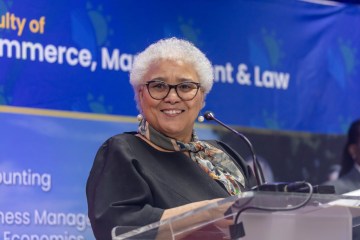
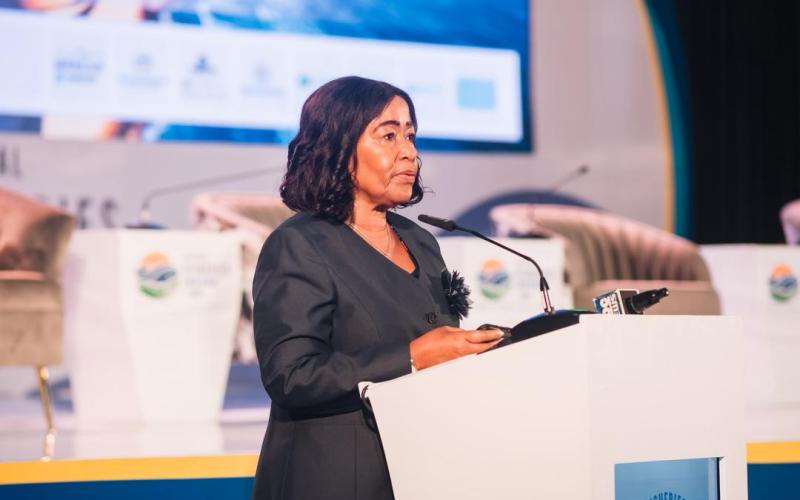
Agriculture, fisheries, water and land reform minister Inge Zaamwani revealed the figures while responding to questions from NUDO member of parliament Vetaruhe Kandorozu on Agribank’s access to finance, lending policies and governance.
Zaamwani said Agribank’s lending programme was financed through a combination of government allocations and money raised from the domestic capital market.

According to the minister, the bank has issued more than N$250 million in new loans annually over the past three financial years, while treasury support during the same period averaged approximately N$99 million a year.
This means treasury funding alone does not come close to covering the scale of Agribank’s annual lending operations.
“The treasury support alone is insufficient to finance Agribank’s annual lending programme,” Zaamwani told parliament.
However, the N$151 million difference represents a calculation based on the figures provided by the minister and does not constitute a government-declared funding deficit at Agribank.
Instead, the bank has increasingly turned to the domestic capital market to raise the funds needed to sustain its lending activities.
Zaamwani said Agribank obtains most of its funding from domestic capital markets, borrowing at prime or near-prime rates before providing loans to clients at interest rates ranging between 4% and 9%, depending on the type of facility and the borrower.
The funding pressure has also prompted government to explore alternative sources of cheaper finance.
Zaamwani said government was pursuing green climate financing for Agribank, which could potentially provide the bank with more affordable funding while lowering its cost of borrowing.
“Government is actively pursuing green climate financing for Agribank, which could provide more affordable funding and help reduce the cost of borrowing,” she said.
The minister also clarified the conditions surrounding Agribank’s much-discussed 4% concessional lending rate for communal farmers.
The preferential rate does not apply indefinitely to all facilities taken out by a qualifying farmer.
Zaamwani said it is limited to the first qualifying short-term loan, with subsequent facilities subject to Agribank’s standard lending rates.
She further disclosed that Agribank considers clients with a net worth exceeding N$10 million to be high-net-worth clients.
This classification also applies to jointly assessed spouses, with additional pricing arrangements applicable to such borrowers.
Insurance requirements also form part of the bank’s lending conditions.
According to Zaamwani, Agribank requires life insurance on its lending facilities, while credit life insurance can provide cover up to the age of 75.
However, exceptions may be considered where a borrower’s age, medical circumstances or financial position makes insurance difficult to obtain, provided there is a strong business justification.
On concerns surrounding Agribank’s leadership and recruitment processes, Zaamwani said the appointment of the bank’s chief executive is handled through an independent external recruitment firm.
“The recruitment process is conducted through an independent external recruitment firm, with the Board responsible for conducting the interviews and the ministry of finance providing final approval,” she said.
The parliamentary disclosure highlighted the extent to which Agribank’s lending operations depend on funding beyond direct government support.
While treasury allocations remain an important component of the bank’s funding structure, the figures indicate that domestic capital markets are carrying much of the burden of financing its lending programme.
The funding dynamics come at a time when farmers continue to depend on Agribank for affordable financing to acquire livestock and equipment, sustain production, expand agricultural operations and invest in their businesses.