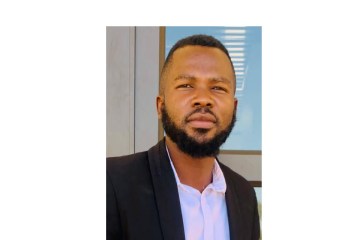
Paul T. Shipale (with inputs by Folito Nghitongovali Diawara Gaspar)
When Eduardo Chivambo Mondlane (1920-1969), who was one of the founders of the Mozambique Liberation Front (Frelimo) and its second president until his assassination in Tanzania in 1969, declared his slogan “ A Luta Continua”, it was later popularized and expanded by Samora Machel who declared “A Luta Continua” (“The Struggle Continues”), and asked “against what?”, he was not calling Africans to prepare for endless war.
He was issuing a warning to future generations. He understood that defeating colonialism would be difficult, but building prosperous, just, self reliant and dignified nations would prove even harder.
More than fifty years after many African countries gained independence, one uncomfortable question confronts the continent:
Have we preserved the meaning of Samora Machel’s words, or have we merely inherited his slogan?
Across Africa, “A Luta Continua” echoes during independence celebrations, political rallies, party congresses and election campaigns. It remains one of the continent’s most recognisable political expressions. Yet it is too often repeated as ceremonial rhetoric rather than examined as a philosophy of governance and nation building.
For Samora Machel, liberation was never intended to end with the lowering of a colonial flag. Independence marked the beginning of a far more demanding struggle transforming political sovereignty into economic prosperity, institutional strength and social justice.
Independence Is an Event. Liberation Is a Process.
One of post-colonial Africa’s greatest misconceptions has been treating independence and liberation as though they were synonymous.
They are not.
Independence is a constitutional and political achievement. It marks the end of foreign rule and the birth of sovereign states.
Liberation is far deeper than the continuous process of ensuring that sovereignty improves the daily lives of citizens through justice, accountable institutions, quality education, accessible healthcare, economic opportunity and the rule of law.
A country may possess its own constitution, flag and anthem while remaining economically dependent, technologically vulnerable and institutionally fragile.
Political independence without meaningful transformation risks becoming symbolic rather than substantive.
That was the essence of Samora Machel’s warning.
Even Samora Machel understood liberation was difficult
To appreciate the depth of Machel’s vision, one must also recognise the complexities of Mozambique’s own experience after independence.
The country inherited colonial inequalities, faced regional destabilisation, endured a devastating civil war and struggled with the immense challenges of rebuilding institutions while pursuing ambitious social and economic reforms.
These realities do not diminish Machel’s legacy. They reinforce it.
Mozambique demonstrated that defeating colonialism was only the first chapter. Building an effective state capable of delivering prosperity proved infinitely more difficult.
“A Luta Continua” therefore remains not a declaration of victory but a permanent warning against complacency.
The Enemy Changed. The Struggle Did Not.
Africa defeated colonial administrations.
That historic achievement should never be underestimated.
Yet history rarely leaves a vacuum.
The adversaries confronting African nations today no longer wear colonial uniforms.
They appear as corruption, state capture, weak institutions, youth unemployment, capital flight, poor governance, technological exclusion and climate vulnerability.
Or educational systems that produce certificates but not innovation.
Healthcare systems unable to retain public confidence.
The export of raw materials without industrial transformation.
But to suggest that colonialism simply disappeared would also be misleading.
Kwame Nkrumah warned that political independence could coexist with new forms of domination. Today, many African countries continue to navigate unequal trade relationships, external debt, illicit financial flows, multinational corporate influence, technology monopolies and financial systems largely designed outside the continent.
Colonial rule may have ended but structural dependency has not.
The battlefield has changed.
The responsibility remains.
From revolutionary leadership to developmental leadership
The generation that fought for independence earned immense historical legitimacy.
Their sacrifices deserve lasting respect.
Yet governing a modern state requires different capabilities from leading a liberation movement.
Winning a revolution does not automatically prepare governments to diversify economies, regulate artificial intelligence, manage public finances, strengthen judicial independence, build research institutions or compete in the global knowledge economy.
Yesterday’s defining question was:
How do we liberate our country?
Today’s defining question is far more demanding:
How do we develop our country?
Modern Africa still requires visionary political leadership.
But it also requires competent economists, scientists, engineers, entrepreneurs, educators, judges, technologists and professional public administrators. Leaders such as Nyerere and Nujoma understood this. Hence, their emphasis on education.
Development is no longer measured by revolutionary speeches.
It is measured by institutional performance.
Liberation movements must become democratic institutions
Across Africa, many liberation movements continue to derive political legitimacy from their historic sacrifices.
History deserves respect.
But democratic legitimacy cannot remain permanently anchored in the past.
It must continually be renewed through performance, constitutionalism and public trust.
Governments are temporary.
The State endures.
Political parties govern for limited periods.
National institutions must serve generations.
Liberation movements therefore face an historic responsibility to transform themselves from revolutionary organisations into democratic institutions capable of tolerating competition, renewing leadership and strengthening rather than personalising state institutions.
Liberation history explains how power was obtained.
Good governance explains why citizens should continue entrusting it.
Historical legitimacy cannot replace democratic legitimacy
The young African born decades after independence judges the government differently from previous generations.
Their questions are practical.
Can I find meaningful employment?
Will my children receive quality education?
Can my parents access reliable healthcare?
Can public institutions treat citizens equally?
Can I build a future without emigrating?
Can innovation succeed without political patronage?
For this generation, liberation is measured less by historical memory than by present opportunity.
Institutions build nations
Many discussions about African development conclude that “institutions matter.”
That observation is correct but incomplete.
Which institutions?
Independent courts that uphold constitutional rights.
Professional civil services that survive changes in government.
Credible electoral commissions that protect democratic legitimacy.
Independent central banks that safeguard monetary stability.
Universities that produce knowledge rather than merely graduates.
Research institutions capable of generating innovation.
Anti-corruption agencies are empowered to investigate without political interference.
Local governments capable of delivering services efficiently.
Strong institutions transform political promises into measurable outcomes.
Weak institutions transform even the best political visions into disappointment.
Namibia and Africa’s new test
Namibia remains one of Africa’s more stable constitutional democracies.
Its liberation history continues to inspire national identity.
Yet Namibia now confronts the same challenge facing many post-liberation societies.
The question is no longer whether independence was achieved.
The question is whether liberation ideals are being translated into institutions capable of creating prosperity, industrialisation, innovation and equal opportunity.
This challenge extends far beyond Namibia.
It belongs to the entire continent.
Africa’s diversity is its greatest classroom
Africa’s development journey cannot be reduced to a single model.
Different countries demonstrate different lessons.
Botswana illustrates prudent resource governance and institutional continuity.
Mauritius demonstrates how investment in education and economic diversification can overcome geographical limitations.
Rwanda highlights the importance of state capacity and efficient public administration, even as debates about political pluralism continue.
Ghana shows how peaceful democratic alternation strengthens constitutional legitimacy and how Pan Africanism should work.
Morocco’s investments in renewable energy reveal how long term strategic planning can reshape national competitiveness.
Ethiopia’s industrialisation efforts illustrate both the opportunities and challenges of manufacturing-led development.
These experiences remind us that natural resources alone never create prosperity.
Institutions do.
Leadership does.
Knowledge does.
The unfinished struggle for economic sovereignty
Perhaps Africa’s greatest unfinished liberation project is economic sovereignty.
Many countries export crude oil while importing refined fuel.
Export diamonds while importing jewellery.
Export cocoa while importing chocolate.
Export lithium, cobalt and rare earth minerals while importing the advanced technologies those resources make possible.
Political sovereignty without productive transformation remains incomplete.
Economic sovereignty extends beyond industrialisation.
It also includes financial sovereignty, digital sovereignty, food security, energy security and technological independence.
The African Continental Free Trade Area offers perhaps the greatest opportunity since political independence to deepen regional integration, strengthen African value chains and expand intra-African trade.
Yet its success will depend on infrastructure, political commitment, industrial capacity and the willingness of African states to move beyond fragmented national markets toward a genuinely integrated continental economy.
Africa must no longer compete merely as a supplier of raw materials.
It must compete as a producer of knowledge, technology and value added products. Africa must learn from China!
Digital and intellectual sovereignty the new frontier
In the twenty-first century, sovereignty is increasingly defined by technological capability.
Artificial intelligence.
Semiconductors.
Cybersecurity.
Cloud computing.
Biotechnology.
Data governance.
Scientific research.
Countries that consume technology without producing knowledge risk replacing one form of dependency with another.
Africa’s next liberation is therefore intellectual as much as economic.
Its most valuable natural resource may no longer lie beneath its soil.
It may reside within the creativity and intelligence of its young people.
Africa’s greatest resource is its youth
By the middle of this century, Africa will possess the world’s youngest and fastest growing workforce.
This demographic reality represents either the continent’s greatest opportunity or its greatest risk.
Without quality education, industrialisation and job creation, youthful populations may become engines of frustration.
With strategic investment, they can become the foundation of unprecedented innovation and economic growth.
Africa’s future will ultimately depend less on the minerals beneath its ground than on the minds it develops above it.
Citizens must continue the struggle
Governments alone cannot complete Africa’s liberation.
Citizens remain indispensable participants.
Voting based on patronage rather than competence weakens democracy.
Accepting corruption because it benefits political allies destroys public trust.
Remaining silent in the face of institutional failure allows mediocrity to flourish.
Patriotism is not blind loyalty even to bad or poor governance.
Nor is it unconditional loyalty to even political parties with undefined ideological compass and recalibrations.
It is loyalty to constitutional principles, national institutions and future generations.
Independence gave citizens rights.
Liberation imposes responsibilities including the moral responsibility to remember those whose blood waters our freedom.
Africa and the global system
Africa’s future will be determined not only by domestic reforms but also by its position within the international political and economic order.
The continent continues to lose significant resources through illicit financial flows, unequal trade relationships and limited participation in global value chains.
Climate change, largely driven by industrialised economies, imposes disproportionate costs on African societies, while access to finance and advanced technologies often remains unequal.
Acknowledging these structural realities should never become an excuse for poor governance.
Nor should internal governance failures obscure the need to reform international systems that continue to disadvantage developing economies.
The struggle for African liberation therefore remains both domestic and global.
A second liberation
The twenty-first century demands a Second African Liberation.
Not from colonial administrations.
But from structural dependency.
This liberation will not be won through armed struggle.
It will be achieved in classrooms, universities, factories, research laboratories, technology parks, competitive industries, transparent institutions, independent courts, professional public administration, regional economic integration, scientific discovery.
The next liberation will belong not only to politicians.
It will belong to teachers, scientists, engineers, entrepreneurs, artists, innovators and citizens determined to transform knowledge into national prosperity.
“A Luta Continua” But Do We Still Recognise the Enemy?
Perhaps Africa’s greatest tragedy is not that it has forgotten Samora Machel’s words.
Perhaps it is that it continues repeating them without asking whether it still understands their meaning.
Yesterday the enemy wore the uniform of colonialism.
Today it may wear the suit of corruption.
Or the language of debt.
Or the contracts of unequal trade.
Or the algorithms that control digital dependence.
Or the institutions weakened from within by incompetence and impunity.
The struggle unquestionably continues.
The question is whether Africa still recognises the enemy in all its modern forms.
If Samora Machel were able to address Africa today, he might not ask whether the continent remains politically independent.
He would ask something far more demanding.
Has Africa become truly free?
Until governance consistently delivers dignity, opportunity, justice and accountability; until natural wealth is transformed into human development; until institutions serve citizens rather than political interests; until Africa becomes a producer of knowledge rather than merely a supplier of raw materials; and until every young African believes that the future can be built at home rather than sought abroad, “A Luta Continua” will remain more than a historic slogan.
The first liberation gave Africa its flags.
The second must give Africa its future.
Until that day arrives, Samora Machel’s words remain not a celebration of what Africa has already achieved, but a reminder of what it still owes its people.
Disclaimer: The opinions expressed here do not necessarily reflect those of our employers or this newspaper. They represent our personal views as citizens and Pan-Africanists.