
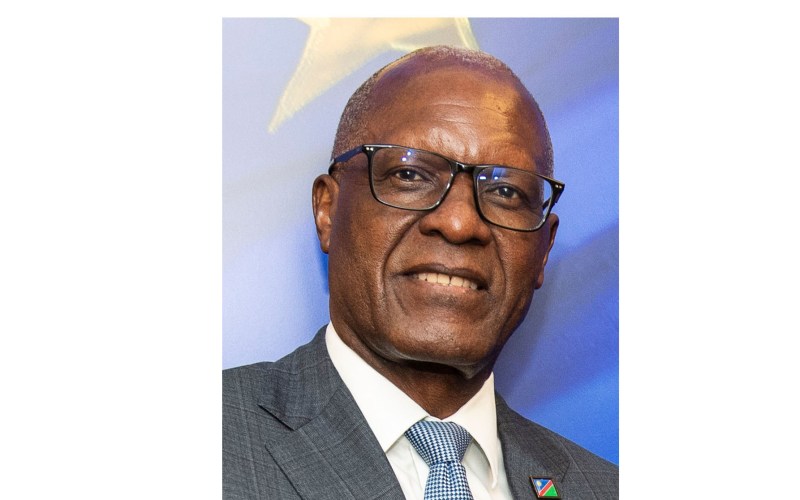
TOM ALWEENDO
The hardest test of shared ownership of De Beers will come when a decision that strengthens the company imposes an immediate cost on one of its producer countries.
A mine may need to reduce output, an investment may have to wait, or a dividend may fall short of government expectations.
The proposed partnership will succeed if its owners can make those decisions together and explain them credibly at home.
Botswana’s President Duma Boko announced on 9 November that the proposed transaction would increase his country’s stake to 30%, with Namibia and Angola also participating. Angola subsequently confirmed that it was seeking 10%.
Namibia’s allocation remains unconfirmed, and the transaction is still being negotiated. This gives the prospective owners an opportunity to agree how they will exercise their influence before commercial pressures test their relationship.
There is a credible case for cooperation. Producer governments have a lasting interest in the communities, skills and public revenues sustained by diamond mining.
They can support investment over periods longer than an election or a commodity cycle. Together with private investors, they could give De Beers the stability to rebuild consumer demand and develop its assets.
However, shared dependence on diamonds can produce competing priorities. A government facing a revenue shortfall may favour an immediate dividend. Another may want cash retained for mine development.
Workers facing reduced shifts will judge the company through household income, while a lender will examine whether it can service its debt. Good governance must provide a way to reconcile these legitimate concerns.
The market leaves limited room to postpone such choices. Anglo American’s third-quarter report recorded De Beers’ consolidated rough diamond sales volumes almost doubling from a year earlier, while revenue rose only 4%. Its rough diamond price index fell 20%.
The company reported some stabilisation in trading conditions, alongside continuing pressure from laboratory grown stones.
The gap between volume and revenue growth shows how strongly prices and the mix of diamonds sold affect the business.
The shareholders need a common view of what they expect De Beers to achieve. An agreed business plan should connect profitable production and future investment with employment, skills and supplier development.
It should identify the cost of those commitments and who is responsible for meeting them. Management can then be held accountable against objectives that all owners have accepted.
For Namibia, this requires particular care about decisions at group and operating-company level. The government already owns half of Namdeb Holdings alongside De Beers.
A future interest in the wider group would add another relationship. Namibia would have an interest both in the performance of the group and in the benefits delivered by its domestic operations.
Investment and sales decisions must be considered through the rights and obligations at each level.
That places considerable responsibility on directors. Governments should nominate people able to interrogate mine plans, finance and markets, supported by capable teams within their ownership institutions.
Independent directors need sufficient authority to challenge management and powerful shareholders.
The OECD’s guidance supports professional boards and operational autonomy. Applied here, ministers would agree ownership objectives and hold directors accountable, while management executes the approved plan.
Private shareholders will also need confidence that the same rules apply to everyone. Transactions with businesses linked to any shareholder should face independent scrutiny, particularly where a shareholder also buys the company’s diamonds.
The agreement must give the board room to decide. Major borrowing, changes to ownership rights and substantial asset disposals may justify higher shareholder approval thresholds.
A veto for every government over ordinary budgets would make delay an instrument of negotiation.
Disputes need deadlines and a route to resolution, with essential operations protected while shareholders work through their differences.
Investment allocation will test this arrangement. A project in one country may offer stronger returns while another country’s mine supports a particularly vulnerable town.
The board needs consistent assessments of geology, costs, risk and closure obligations. Where shareholders choose a socially important investment with a weaker commercial return, they should identify who will fund the difference.
Partners are more likely to accept a difficult choice when its costs and benefits are visible.
Production decisions bring the same tension directly into people’s lives. A temporary reduction can conserve cash during weak demand but leave employees and contractors with less income.
Management should assess each operation’s economics and restart costs, consult workers early and budget for adjustment.
Governments need an agreed basis for evaluating these proposals before every reduction becomes a contest over whose country bears the burden. Decisions must respect competition rules and existing operating agreements.
Dividends are another likely source of friction. A clear policy would relate distributions to cash available after essential investment, debt service and prudent reserves.
Shareholders should also agree how further funding will be raised and what happens if one cannot contribute.
Finance ministries would then have a firmer basis for planning than an expectation that the company will accommodate each national budget.
Supporters may reasonably argue that common dependence on natural diamonds already gives these governments enough reason to cooperate. That shared interest is valuable.
Yet it offers little guidance when a decision benefits the group over five years and reduces one country’s revenues tomorrow.
Agreed rules give leaders a basis for explaining why accepting a short-term cost may protect a larger national interest.
Citizens are entitled to judge that explanation against results. Each government should report its dividends, capital contributions and guarantees to parliament, alongside progress against its ownership objectives.
Licensing, tax and environmental authorities should apply their requirements consistently, including to companies in which the government has an interest.
Before completing the transaction, the prospective shareholders should settle these arrangements and publish their principal governance commitments.
Shared ownership will demand a willingness to accept decisions whose benefits reach different countries at different times.
The leadership test will be whether governments can honour that bargain when the immediate political cost falls at home.


