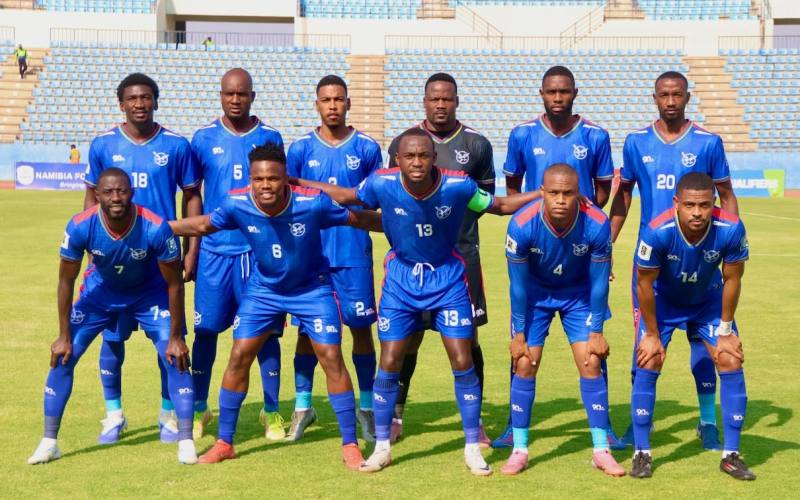
There is something profoundly wrong with a country that can send its national football across its borders to represent the nation, but cannot guarantee that the players will have a hotel room, a meal or the money they have earned.
Namibia’s team Brave Warriors deserve better. Much better.
The latest embarrassment in Cameroon, where the team faced an unpaid N$320 000 hotel bill and players threatened to boycott an Africa Cup of Nations qualifier over N$620 000 in outstanding allowances and bonuses, is not an isolated incident.
It is another chapter in a troubling history of administrative dysfunction, financial instability and governance controversies surrounding Namibian football.
What makes this particularly infuriating is that we have been here before.
In March 2019, the Brave Warriors demanded written assurances that their Africa Cup of Nations qualifying bonuses would be honoured before travelling to Zambia.
The government had to intervene to resolve the standoff. At the time, the then football normalisation committee acknowledged that previous maladministration had left players uncertain about their payments.
In April 2020, former and serving members of the national team’s technical staff were claiming millions in outstanding remuneration.
The dispute involved payments for competitions dating back to 2017. The NFA acknowledged that it was not in a financial position to settle the amounts.
Then came the allegations that should have forced a serious institutional reckoning.
The Anti-Corruption Commission opened an investigation in 2018 into alleged corrupt practices and self-enrichment involving football officials and other role players.
The investigation, reported as ongoing in September 2022, implicated several prominent figures, including former NFA secretary general Barry Rukoro and former national team coach Ricardo Mannetti.
Both denied wrongdoing. The allegations were serious enough to demand answers, transparency and institutional reform.
A FIFA-appointed normalisation committee had already been necessary to take over the NFA’s affairs in 2019 amid governance concerns.
Yet here we are, years later, still discussing unpaid obligations, financial emergencies and questions about the management of football.
The stadium situation is another national disgrace.
Since 2021, Namibia’s national teams have been forced to play their supposed home matches in neighbouring South Africa after CAF and FIFA declared Sam Nujoma and Independence stadiums unsuitable for international football.
Namibia lost the privilege of hosting international matches on home soil, with all the financial, commercial and sporting disadvantages that accompany it.
In December 2024, the public was told that national teams would continue playing abroad until at least 2026, partly because of administrative delays in getting the Independence Stadium renovation process moving.
As recently as February 2026, Namibia still had no internationally approved stadium.
Think about the absurdity. Namibia’s footballers have to travel to another country to enjoy home advantage.
Namibian supporters must watch their national team play home fixtures on foreign soil. Local businesses lose the economic opportunities associated with match days.
And the country continues spending money hosting matches elsewhere because it cannot provide suitable facilities at home.
This is not simply an infrastructure problem. It is a failure of planning, coordination and accountability involving both football administrators and those responsible for public sporting infrastructure.
Now the NFA says it received N$7.5 million against a funding request of N$18 million. Its president says N$5 million was immediately swallowed by existing travel debts.
That may explain the immediate cash crisis, but it raises a bigger question: how did an association responsible for the country’s most visible football teams arrive at a position where it cannot meet basic obligations?
Government funding has declined, the NFA says. That is a legitimate concern.
But public funding cannot become an excuse for weak financial planning, nor should taxpayers be expected to repeatedly rescue an institution without demanding measurable accountability.
The recent suspension of the NFA’s finance director amid allegations surrounding World Cup ticket transactions has only added to the questions hanging over the association.
Allegations are not proof of wrongdoing, but they reinforce the need for transparent governance.
The reported N$90 million Namport sponsorship should also be treated as an opportunity to rebuild trust, not merely another source of money to plug financial holes.