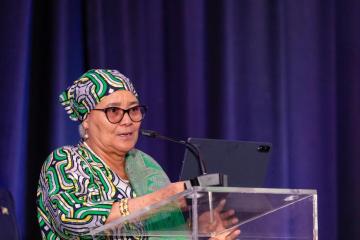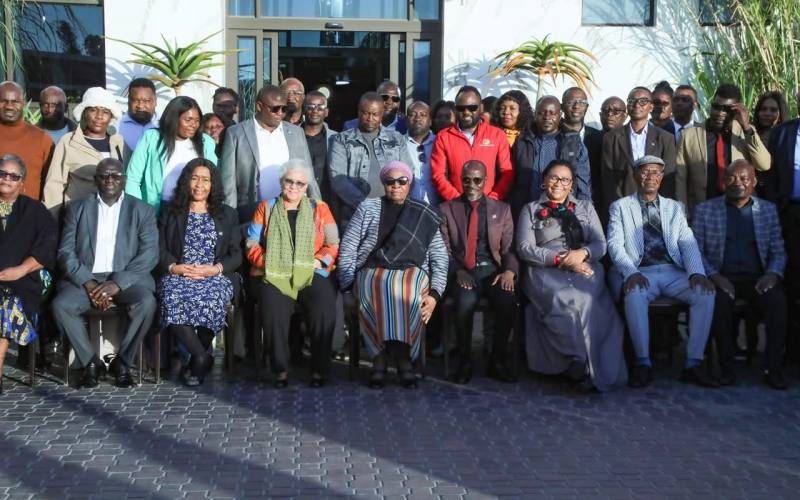
The Swakopmund town hall meeting, facilitated by Erongo Governor Natalia /Goagoses, is a timely demonstration of responsive leadership. Its success, however, will ultimately be measured by whether the concerns raised translate into decisions, accountability and tangible improvements in people’s lives.
There are few more important demonstrations of democratic leadership than a President who is willing to listen to ordinary citizens.
Not merely to those who occupy positions of influence, sit in boardrooms or enjoy direct access to the corridors of power, but to the people whose daily experiences often provide the most honest assessment of how the government is performing.
President Netumbo Nandi-Ndaitwah’s decision to engage residents of Swakopmund and surrounding communities through a town hall meeting on Friday is therefore a welcome development.
Indeed, it could hardly have come at a better time.

Namibia is navigating difficult economic circumstances, persistent unemployment, growing expectations around the country’s emerging oil and gas industry and longstanding concerns about housing, land, public services and economic opportunity.
Against this backdrop, direct engagement between the Head of State and citizens is not simply good public relations. It is an important instrument of responsive governance.
The initiative also deserves recognition of Erongo Governor Natalia /Goagoses, whose office has facilitated the engagement and extended the invitation to residents.
Governors should be more than ceremonial representatives of the national government.
They should serve as active bridges between national leadership and the communities they represent, ensuring that local concerns find their way into national decision-making.
By bringing the President directly into conversation with the people of Erongo, Governor /Goagoses is demonstrating the kind of provincial leadership that makes decentralisation meaningful.
The timing is particularly significant for President Nandi-Ndaitwah. As Namibia’s first female Head of State, she assumed office with considerable expectations and the opportunity to shape a distinct leadership legacy.
Her presidency will ultimately be judged not by the promises made at its beginning, but by its ability to respond to the aspirations and frustrations of ordinary Namibians.
A town hall meeting provides an opportunity to demonstrate that the government is accessible and that the President is interested in understanding the realities beyond the State House.
Swakopmund and its surrounding communities occupy an important position in Namibia’s economic landscape.
Erongo is central to the country’s mining, tourism, fishing, logistics and emerging energy ambitions.
Yet economic activity and major investment announcements do not automatically translate into prosperity for surrounding communities.
The President should therefore expect frank conversations about unemployment, housing, land delivery, municipal services, the future of the fishing industry, opportunities for young people, education, healthcare and the distribution of economic benefits arising from investment.
These are not peripheral issues. They go to the heart of the social contract between government and citizens.
Former President Hage Geingob understood the importance of direct citizen engagement and held town hall meetings during his presidency.
These engagements provided platforms for citizens to question leadership, express frustrations and communicate their expectations.
However, the experience also offers an important lesson: the success of public engagements cannot be measured by attendance, the quality of speeches or the number of questions answered. The real test is what happens after the meeting.
There is a danger that town halls become ceremonial political events, generating headlines and creating an impression of accessibility without establishing a mechanism for addressing the concerns raised.
Citizens have grown accustomed to making representations, receiving assurances and subsequently hearing very little about what became of their concerns.