
Patience Makwele
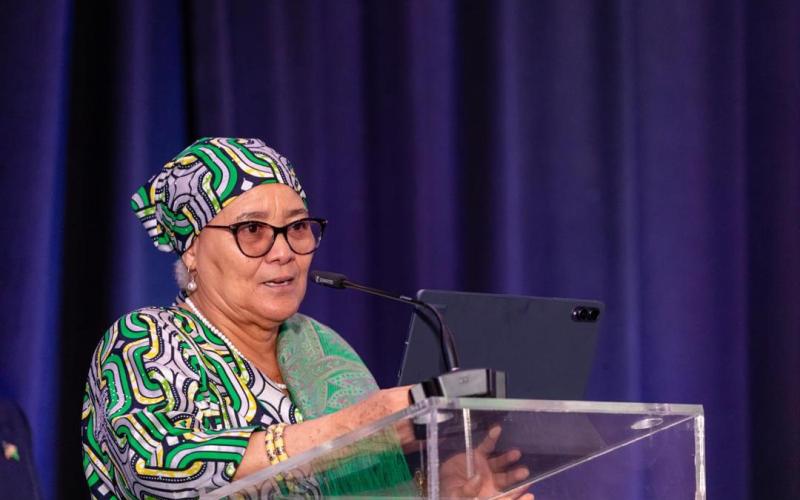
Vice President Lucia Witbooi has called for greater inclusion of autistic young people, saying their disability should not prevent them from accessing education, pursuing their ambitions or participating in society.
Speaking at the official opening of the 6th World Autism Organisation Congress in Windhoek, Witbooi said Namibia must move away from stigma and discrimination towards recognising the abilities and potential of autistic persons.
“We must build communities where autistic children can access quality education without discrimination; where parents and caregivers receive the support they deserve; where young people can pursue their ambitions; and where adults can participate meaningfully in employment, economic activities and the broader life of society,” she said.
Namibia hosted the international congress for the first time under the theme, “Transforming the Narrative about Autism”.
Witbooi said autism had for too long been viewed through limitations and stereotypes, contributing to stigma, discrimination, social isolation and the exclusion of autistic persons from opportunities.
“Autism must never diminish an individual’s worth, dignity or potential. Every autistic person has a unique identity, abilities, experiences and aspirations and deserves to be recognised, respected and afforded equal opportunities to thrive,” she said.
She said the country’s commitment to disability inclusion must be reflected through inclusive education, accessible healthcare, early identification and intervention, specialised support services and equitable employment opportunities.
She also stressed that autistic persons must be involved in decisions affecting their lives.
“Most importantly, autistic persons must be at the centre of decisions affecting their lives,” Witbooi said.
The call for autistic people to have a stronger voice in decisions affecting them was also raised by World Autism Organisation president and Autism Association of Namibia founder Petra Dillmann.
“Now the time has come to empower the younger generation. We must give the autistic community a platform to advocate and speak for themselves,” Dillmann said.
Namibia has limited national data on autism. The 2011 Population and Housing Census recorded 1 146 people with autism among 98 413 people identified as having disabilities.
The ministry of education’s 2023 Education Management Information System recorded 224 learners with autism spectrum disorder in schools, comprising 159 boys and 65 girls.
The ministry recorded 132 learners with autism spectrum disorder in its 2021 report.
The congress programme included discussions on the educational experiences of young autistic adults, communication between autistic children and teachers, and independent living for young adults.
Witbooi said the work of changing perceptions about autism should continue beyond the congress and be reflected in government policies, institutions, investment and everyday treatment of autistic persons.
“The true measure of an inclusive society is not how well it accommodates those who require the least support, but how effectively it recognises the dignity, protects the rights and creates opportunities for every individual, particularly those whose needs are too often overlooked,” she said.


