CHAMWE KAIRA
The government has identified an estimated US$14 billion investment pathway through 2035 under its Third Nationally Determined Contribution (NDC 3.0), positioning its climate commitments as an investment opportunity for renewable energy, green hydrogen, climate-resilient agriculture and other sustainable development projects.
Environment, forestry and tourism minister Indileni Daniel said the investment pathway comprises 72 measures and 216 actions across 13 sectors, aimed at translating the country’s climate mitigation and adaptation priorities into projects, infrastructure, jobs and more resilient communities.
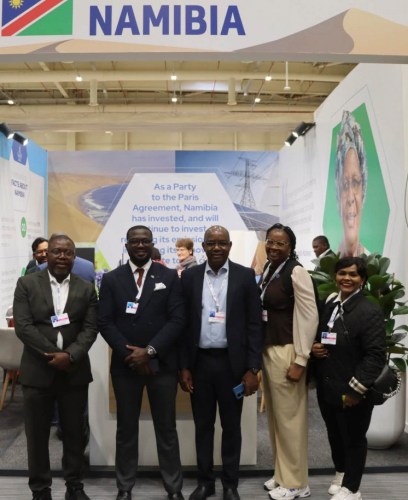
Speaking at the official opening of the Namibia Pavilion at the 31st Conference of the Parties (COP31) in Antalya, Türkiye, on 10 November, Daniel said Namibia wanted to use the international climate conference to attract investors, development finance institutions, climate funds and technology providers.
She said the country’s climate commitments represented both a development priority and an investment proposition, with opportunities to diversify the economy, establish new industries and create employment.
She said Namibia was pursuing renewable energy and green hydrogen while investing in climate-resilient agriculture, water security, biodiversity conservation, sustainable land management and community-based natural resource management.
The minister said the country wanted these transitions to generate local economic value through stronger domestic businesses, skills and technology transfer, opportunities for young people and women, and decent jobs.
She emphasised that investments should be environmentally and socially responsible, inclusive and aligned with community needs.
Daniel said Namibia’s participation at COP31 was intended to move beyond discussions towards practical partnerships and investment commitments.
Daniel said the international climate discussions in Antalya presented an opportunity to mobilise climate finance, strengthen adaptation, advance a just transition, accelerate emissions reductions and improve access to technology and capacity.
She said these priorities were closely linked to Namibia’s national development agenda, particularly food security, clean energy, green industrialisation, circular economy initiatives, resilient cities, oceans, biodiversity and ecosystem restoration.
The minister noted that although Namibia was a relatively small contributor to global greenhouse gas emissions, it faced significant climate-related development challenges.
Recurring droughts, floods, rising temperatures and mounting pressure on water resources, food systems and livelihoods were already affecting communities, particularly those in rural areas dependent on land and natural resources.
Daniel said Namibia’s natural advantages, including abundant sunshine, strong wind resources, biodiversity and extensive landscapes, provided opportunities to advance the energy transition and develop new industries.
The Namibia Green Hydrogen Programme (NGH2P) is leveraging COP31 in Antalya, Türkiye, to showcase Namibia’s emerging green hydrogen and clean energy project portfolio, while engaging international investors and development partners on financing and strategic partnerships.
NGH2P interim head of programme, Joseph Mukendwa, said that platforms such as COP are critical to advancing Namibia’s green hydrogen ambitions, particularly as the sector directly contributes to global commitments to reduce carbon emissions in hard-to-abate industries.
Mukendwa added that Namibia’s participation goes beyond climate discussions, focusing on attracting investment, advancing environmentally responsible projects and unlocking opportunities for green industrialisation, economic growth and job creation.