CHAMWE KAIRA
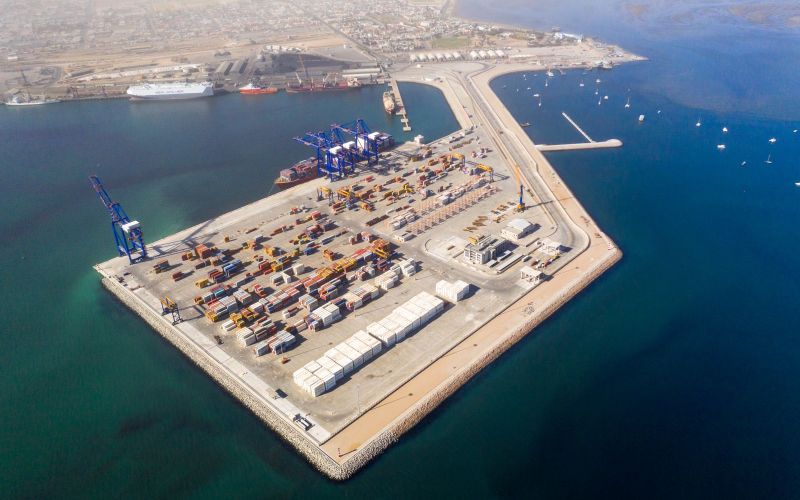
The port of Walvis Bay cemented its position as Namibia’s primary trade gateway in September, facilitating a combined N$13.2 billion in imports and exports as maritime and road corridors moved the bulk of the nation’s merchandise, according to the latest International Merchandise Trade Statistics Bulletin released by the Namibia Statistics Agency (NSA).
Namibia recorded total exports valued at N$12.2 billion and imports amounting to N$16.9 billion, resulting in a trade deficit of N$4.7 billion in September.
Data on trade by main border posts and offices shows that the Walvis Bay harbour handled the largest share of both incoming and outgoing goods by value.
On the export side, Walvis Bay facilitated outbound cargo worth N$6.3 billion (N$6,329 million).
Inland, the Katima Mulilo border post ranked as the second-busiest exit point, clearing N$2 billion (N$1,959 million) in exports destined for regional markets.
Eros Airport placed third at N$1.4 billion (N$1,415 million), followed by the Trans-Kalahari border post (N$779 million) and Hosea Kutako International Airport (N$661 million).
On the import side, the Walvis Bay harbour received cargo valued at N$6.9 billion (N$6,920 million).
Southern and eastern overland checkpoints also processed substantial volumes of incoming goods, led by the Ariamsvlei border post at N$3.2 billion, and the Trans-Kalahari border post at N$2.4 billion.
The Noordoewer border post recorded N$1.6 billion in imports, which was led by alcoholic beverages, plastics, and fertilizers, while Katima Mulilo processed N$1.2 billion.
Sea transport accounted for 53.5% of total export value, moving N$6.5 billion (215 317 tons) of goods, primarily uranium, nickel ores and concentrates, and base metal ores.
Road transport carried 29.6% of export value but moved the largest physical volume at 221 415 tons, consisting mainly of petroleum oils, sulphur, unroasted iron pyrites, and fish.
Air transport accounted for 16.9% of export value across just 171 tons, driven by high-value shipments of non-monetary gold and diamonds.
Road transport led on the demand side, accounting for 53.4% of total import value at N$9 billion (252 304 tons).
Sea transport followed at 42.8% of import value, bringing in the heaviest physical tonnage at 314 914 tons.
Air transport represented 3.8%of import value across 215 tons, carrying diamonds, plastic films, and telecommunications equipment.
Overall trade performance in September was shaped by strong mineral exports and sustained domestic demand for fuel and industrial inputs.
China emerged as Namibia’s largest export destination, absorbing 36.2% of total export revenue, largely driven by maritime uranium shipments, followed by South Africa at 19.6%.
South Africa remained Namibia’s top import supplier, accounting for 30.7% of the import bill, ahead of China at 12.2%.