Staff Writer
Namibia is seeking to diversify its economy beyond traditional extractive industries by expanding agricultural production, promoting downstream value addition, developing renewable energy and strengthening the services sector, finance minister Ericah Shafudah has said.
Speaking at the official opening of the 2026 Joint Session of the Intergovernmental Committee of Senior Officials and Experts (ICSOE) for Eastern and Southern Africa, Shafudah said regional cooperation, investment partnerships and access to larger markets would be essential to building competitive industries and creating employment.
She said Namibia’s diversification ambitions could not be achieved through domestic markets alone, making stronger regional integration and cross-border investment increasingly important.
“Our development priorities include expanding agricultural production, promoting downstream value addition, developing renewable energy industries and strengthening the services sector,” Shafudah said.
She said Namibia wanted to attract investment into productive sectors, including industrial development, renewable energy, logistics, tourism and agriculture, while strengthening its position as a gateway to regional and international markets.
The minister said Namibia was also undertaking reforms to improve its investment climate and ease of doing business.
These include a new visa regime, legislative reforms relating to investment promotion and international trade, strengthening the One-Stop Centre and reducing administrative turnaround times for regulatory processes.
Shafudah said the reforms were intended to create a predictable and competitive investment environment.
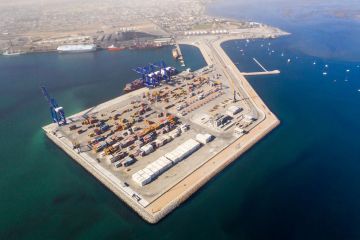
She highlighted the expansion and modernisation of the port of Walvis Bay and the Walvis Bay corridor network as important components of Namibia’s regional trade ambitions.
The Walvis Bay-Ndola-Lubumbashi development corridor connects Namibia with Botswana, Zambia and the Democratic Republic of Congo, providing transport links that can facilitate regional trade and investment.
She said infrastructure development alone would not deliver the intended economic benefits unless goods could move efficiently across borders, customs procedures were predictable and transport costs remained competitive.
Small and medium enterprises would also need opportunities to participate in regional value chains.
Shafudah said Africa needed to move away from relying primarily on exporting raw materials and importing finished products.
Stronger regional value chains and investment in productive capacity could enable African countries to develop industries, expand business opportunities and generate sustainable employment, particularly for young entrepreneurs.
She said regional trade remained below its potential despite progress through regional economic communities and the African Continental Free Trade Area.
Trade between Eastern and Southern Africa remained concentrated in a limited number of countries and products, while high transport costs, non-tariff barriers and inadequate connectivity continued to constrain the movement of goods and services.
The minister called for improved transport infrastructure, harmonised customs procedures, the removal of unnecessary trade barriers and stronger energy and digital connectivity.
She also highlighted the importance of regional electricity cooperation, saying collaboration between the Southern African Power Pool and Eastern Africa Power Pool, supported by investment in transmission infrastructure, could strengthen energy security and support industrialisation.