Staff Writer
Africa must brace for a powerful El Niño that could bring punishing heat and drought to the south, while triggering excessive rainfall and flooding in parts of the east.
A severe El Niño could threaten harvests, water supplies, household budgets, public health and electricity generation across Africa.
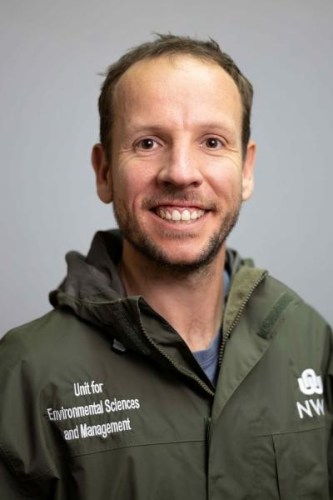
Drought does not announce itself with a single catastrophic moment. North-West University’s (NWU) climatologist Dr Henno Havenga warns that its slow progression can catch countries dangerously unprepared.
For subsistence farmers, crop failure can mean losing both the food that sustains a household and the produce that provides its income.
The warnings have been issued. Havenga says governments must repair leaking water infrastructure, prepare food-security programmes and strengthen disaster-response systems before the crisis takes hold.
Africa could face a season of punishing heat, drought, flooding and disrupted rainfall as an unusually powerful El Niño gathers strength in the Pacific Ocean.
The latest outlook from the United States’ National Oceanic and Atmospheric Administration (NOAA) indicates that El Niño is strengthening and has a greater than 90% chance of becoming a very strong event during the Northern Hemisphere autumn and winter of 2026/27.
It places the probability of an event exceeding the strength of any El Niño recorded since 1950 at 69% between October and December.
For Africa, however, the threat will not take a single form. Southern Africa is likely to face a heightened risk of drought and extreme heat, while parts of East Africa could experience excessive rainfall and flooding.
Havenga says the term “super El Niño” is widely used but is not a formal scientific classification.
“It describes an exceptionally strong El Niño event,” he says. “El Niño develops when the central and eastern equatorial Pacific Ocean becomes unusually warm and the atmospheric circulation above it changes. These changes can influence weather patterns far beyond the Pacific through what we call teleconnections.”
The strength of the developing event does not mean that every country or region will experience disaster. El Niño shifts the odds, but it does not dictate the weather from one district to the next.
For much of Southern Africa, those conditions include reduced rainfall, drought and unusually high temperatures.
Heat compounds the damage because it increases evaporation and the amount of water required by crops, livestock and people at precisely the time when supplies may be declining.
The picture is different in parts of East Africa, where El Niño can bring above-normal rainfall.
There, the danger may come from flooded settlements, damaged roads and bridges, contaminated water supplies and the displacement of communities.
Even within the same country, rainfall may arrive too late, fall in the wrong places or come in short, destructive bursts rather than the well-timed and evenly distributed rain needed by crops.
Agriculture is among the most exposed sectors, but the consequences will extend far beyond the farm gate. Poor harvests can reduce food availability, weaken rural incomes and push prices higher.
International trade may help countries compensate for local crop failures, but imports do not provide complete protection.
Countries remain vulnerable to global commodity prices, exchange-rate movements, transport costs and disruptions to supply chains.
Water security is an equally urgent concern. Hot, dry weather increases demand while reducing the water available in rivers, dams and boreholes.
Havenga says local governments cannot afford to lose treated water through leaking and poorly maintained infrastructure during such a period.
Hydropower-dependent countries could face reduced electricity generation if rainfall declines and reservoir levels fall. At the same time, higher temperatures may drive up demand for cooling.
Africa is not powerless in the face of El Niño. Forecasting has improved substantially, and governments can draw on their experience of previous droughts and floods.
The danger lies in failing to act before the consequences become unavoidable.
Havenga says farmers should review their planting plans, cultivar choices, water use, production targets and input expenditure in light of the increased risk.
Expanding production on the assumption that good rains will arrive could leave already vulnerable producers dangerously exposed.
Governments and municipalities should repair water infrastructure, prepare food-security programmes and ensure that disaster-response systems can be activated quickly.
Financial assistance, agricultural support and drought-relief mechanisms should be designed before farmers and communities are already in distress.