The National Assembly this week passed the petroleum (exploration and production) amendment bill.
Observer Money explains what the bill is all about.
Namibia’s oil and gas industry attracted N$4.4 billion in Foreign Direct Investment (FDI) between 2021 and 2025, accounting for about 56% of total FDI inflows, according to the Bank of Namibia.
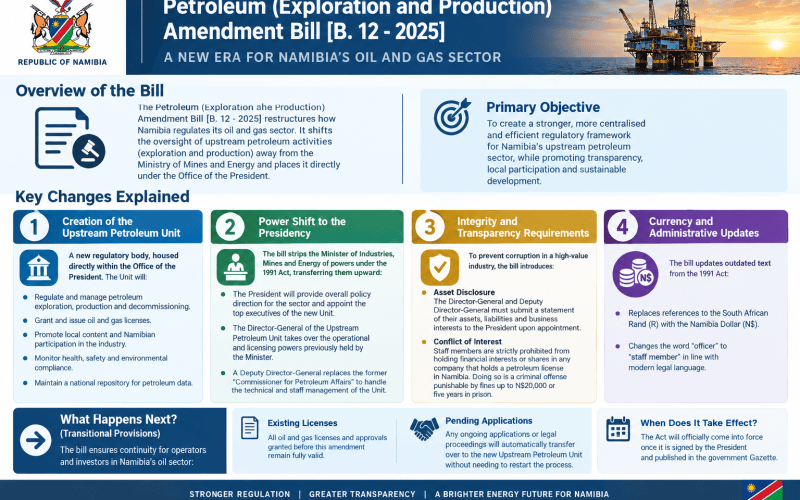
The primary objective of this bill is to restructure how Namibia regulates its oil and gas sector. It shifts the oversight of upstream petroleum activities (exploration and production) away from the ministry of industries, mines and energy and places it directly under the Office of the President.
Key changes explained
1. Creation of the Upstream Petroleum Unit
The bill establishes a brand-new regulatory body called the Upstream Petroleum Unit, housed directly within the Office of the President.
Its main responsibilities include:
• Regulating and managing petroleum exploration, production, and decommissioning.
• Granting and issuing oil and gas licenses.
• Promoting local content and Namibian participation in the industry.
• Monitoring health, safety, and environmental compliance.
• Maintaining a national repository for petroleum data.
2. Power shift to the Presidency
The bill strips the minister of industries, mines, and energy of powers originally granted under the 1991 Act, transferring them upward:
• The President will now provide overall policy direction for the sector and appoint the top executives of the new Unit.
• A newly created role, the Director-General of the Upstream Petroleum Unit, takes over the operational and licensing powers previously held by the minister.
• A deputy Director-General replaces the former role of “Commissioner for Petroleum Affairs” to handle the technical and staff management of the Unit.
3. Integrity and transparency requirements
To prevent corruption in a high-value industry, the bill introduces specific ethical restrictions:
• Asset Disclosure: The Director-General and deputy Director-General must submit a statement of their assets, liabilities, and business interests to the President upon appointment.
• Conflict of Interest: Staff members are strictly prohibited from holding financial interests or shares in any company that holds a petroleum license in Namibia. Doing so is a criminal offense punishable by fines up to N$20 000 or five years in prison.
4. Currency and administrative updates
The bill updates outdated text from the original 1991 Act:
• It officially replaces references to the South African Rand (R) with the Namibia Dollar (N$).
• It updates standard legal language, changing the word “officer” to “staff member”.
What happens next? (Transitional Provisions)
If you are an operator or investor in Namibia’s oil sector, the bill ensures continuity:
• Existing Licenses: All oil and gas licenses and approvals granted before this amendment remains fully valid.
• Pending Applications: Any ongoing applications or legal proceedings will automatically transfer over to the new Upstream Petroleum Unit without needing to restart the process.
The Act will officially come into force once it is signed by the President and published in the government gazette.