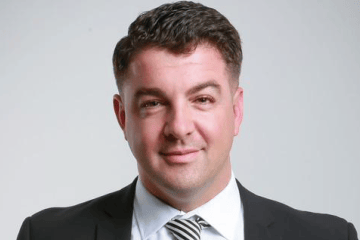
Patience Makwele
Namibia’s young people have been challenged to move beyond social media popularity and use their influence to create meaningful change in their communities.
The call was made by National Council vice-chairperson Emma Muteka during the opening of the fourth junior National Council session in Windhoek on Monday, where 42 school-going learners from all 14 regions gathered to debate issues affecting young Namibians.
Addressing the junior members of parliament, Muteka described them as “Generation TikTok” and urged them to recognise the power they already hold through social media and other digital platforms.
She said social media should not only be used for entertainment, but can serve as a classroom, marketplace, newsroom and platform for change.

“You are not the leaders of tomorrow. You are the leaders of today,” Muteka told the young legislators.
She encouraged young people to use digital platforms to promote businesses, showcase talent, build brands, educate others and advocate for issues affecting their communities.
According to Muteka, having a large following should not be mistaken for having influence that creates real change.
“Followers are not the same as leadership, and going viral is not the same as making an impact,” she said.
Her message comes at a time when social media has become an increasingly important part of how young people communicate, express themselves and engage with public issues.
However, Muteka cautioned that visibility alone is not enough.
She challenged the junior MPs to identify problems in their communities and think about what they could do to address them, rather than simply pointing out what is wrong.
“Namibia does not need a generation that only tells us what is wrong. We need a generation brave enough to say, ‘Here is the problem, and here is what we are going to do about it,’” she said.
The junior National Council provides a platform for school-going children from across the country to engage with national issues and develop their leadership and civic participation skills.
National Council chairperson Lukas Muha said the council was established to give young Namibians a voice on issues affecting their lives and communities.
The current council consists of three learners from each of Namibia’s 14 regions, giving 42 young people an opportunity to participate in national-level discussions.
The council was formalised through a National Council motion in 2013 and inaugurated in 2017.
This year’s session is being held under the theme “Towards Universal Access to Water, Sanitation and Hygiene for Every Namibian Child,” placing the experiences and concerns of young people at the centre of discussions on access to basic services.
Prime minister Tjitunga Elijah Ngurare similarly reminded the junior MPs that young people should not be viewed merely as future leaders.
“You are citizens of Namibia now,” he said.
Ngurare urged the young delegates to consider how their ideas could translate into tangible improvements in their communities, particularly on issues such as water, sanitation, education and climate change.
He encouraged them to ask a simple question when developing proposals: “Whose life will this improve?”
For junior National Council chairperson Fritz Hangue, leadership also means creating space for others to be heard.
He said his role would be to facilitate discussions, listen to different perspectives and ensure that the voices of young Namibians are taken seriously.
The challenge facing the junior MPs, therefore, extends beyond their week in parliament.
They have been tasked to take the issues discussed in the council back to their schools and communities and, in the words of Muteka, to “clock the problem, clock the opportunity, clock your responsibility, and then do something about it.”
The fourth junior National Council session runs until 4 September.