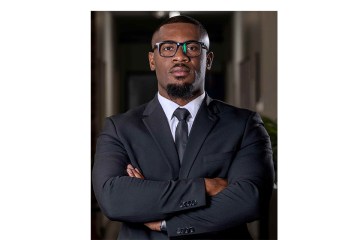
Dino Ballotti
As a bona fide member of the mighty Swapo Party, elected on the ticket of the majority of Namibians who entrusted us to lead this country, the same movement that Honourable Job Amupanda once embraced and emerged from, one cannot help but wonder whether, in departing from the movement, you also departed from some of the political consciousness and values it instilled in you.
For years, we have been lectured by the Professor; the most learned, the most righteous among us all.
The very same mayor who, in an extraordinary display of municipal experimentation, chose to litter Windhoek’s streets with orange cycling cones, a grand experiment that became a subject of ridicule rather than a lasting solution to the city’s problems.
The same mayor who, during his 2019 mayoral campaign, promised 76 500 housing units. The same Affirmative Repositioning manifesto that proposed a municipal construction company to self-build houses.
Fast-forward to his assumption of the mayoral office in 2020, when the Professor spoke at a land and housing seminar about 7 000 erven in informal settlements, 3 000 erven in formal areas, 600 houses by December 2021 and the establishment of Nova Actus as the city’s commercial vehicle for accelerating land and housing delivery.
There is a progression here; stay with me.
First 76 500 houses promised. Then 10 000 erven targeted. Then a 600-house pilot target. Finally, Nova Actus.
And yet, as of today, the fully registered Nova Actus remains non-operational.
Professor, you promised tens of thousands of houses and, when questioned, you said, “Allow us to implement our plan.”
Big promises; little delivery.
You also promised to reduce municipal rates and taxes by 12%; reopen Ramatex; provide police housing; establish a bicycle-production factory; and, importantly, take council meetings and governance into communities.
When you ascended to the mayoralty, you brought vigour, albeit short-lived.
You had spent years telling Namibians that the old political order was incapable of solving their problems. Yet when you sought the mayoral office, you promised us big things, just like those big billboards.
At what point do ambitious political promises become a question of delivery rather than rhetoric?
Honourable Professor, you were exceptionally good at diagnosing Windhoek’s problems. The question history now asks is whether you were equally effective at solving them.
A politician cannot campaign as the man who will break the system and then, after occupying the mayoral chair, explain why the same system prevented him from doing so.
You have fashioned yourself as Namibia’s political prosecutor-in-chief. Almost every passing day brings another accusation; corrupt ministers, incompetent officials, captured institutions, a failing parliament and, it seems, everyone being guilty of something.
But what happens when Namibians stop asking what Job Amupanda says about everybody else and begin asking the much more uncomfortable question: What exactly did Job Amupanda deliver?
Your political brand has been built around confrontation, disruption, selective outrage and a basket of promises of transformation.
A serious politician should occasionally undertake some introspection. But in the world of bright orange cycling cones, there is always somebody else to blame.
Namibians must distinguish between political activism and political achievement.
Activism rewards visibility; government rewards delivery.
You have become a prominent political voice on social media, where views, likes and viral moments can easily become a barometer of influence. But surely a country cannot be governed through Facebook posts.
There is a distinction between being a political social-media influencer, where someone can tell Kalola to record proceedings in the chambers, and being a political leader who respects the rules that elected representatives swore to uphold.
The same standard you demand from others must be applied to yourself.
The resignations of comrades Dimbulkeni, Simon Amunime and Paulus Paulus, who have publicly raised serious concerns about your conduct, including allegations of character assassination and bullying, also deserve consideration.
Job Amupanda is AR and, increasingly, AR has become synonymous with Job Amupanda. It is difficult to separate the political movement from the personality at its centre.
Your doctorate does not make you infallible. Your intellectual ability does not give you the right to degrade others. And being the most academically qualified person in a room does not make everyone else intellectually irrelevant.
Then there is the Jade Lennon article published on 2 June 2021, titled “Here is the proof: How Dr Job Amupanda plagiarises Wikipedia and distorts the work of other writers.” The article presented textual comparisons and allegations concerning Amupanda’s academic work.
Those are serious allegations; they should either be properly answered or put to rest through credible evidence. Academic qualifications, like political power, do not place anyone beyond scrutiny.
Politics requires something that cannot simply be obtained from a university: humility.
You appear remarkably comfortable dishing out criticism, but considerably less comfortable receiving it.
Namibians must resist the temptation to judge Amupanda by the volume of his accusations. They should judge him by the same standard he applies to everyone else.
What did you promise?
What did you deliver?
What changed in Windhoek when you wore the mayoral chain?
And what happened inside your own movement when people dared to disagree with you?
The idea that because someone is permanently angry with the government, he must therefore be a better alternative to government is false.
A politician can correctly identify the failures of the establishment and still be wrong for the country.
You can expose weaknesses in other people’s leadership while failing to demonstrate effective leadership yourself.
Your political strategy of remaining permanently in opposition, even after briefly occupying a position of executive authority, cannot substitute for governance.
The self-styled righteous one who led the mixed-vegetables coalition must not assume that Namibians will simply turn the other cheek indefinitely.
For far too long, we have remained silent while you launched attack after attack. That silence may have been interpreted as tolerance, but it should not be mistaken for acceptance.
The same confrontational conduct that has repeatedly generated controversy at the City of Windhoek cannot simply be transferred to the National Assembly.
Parliament cannot be rendered dysfunctional by one individual.
Political points cannot be scored at the expense of parliamentary order. Allegations must be supported by evidence; criticism must remain within the boundaries of democratic discourse; and political opponents must not be reduced to targets of personal attacks.
Politics of slander, intimidation and harassment have no place in a constitutional democracy.
Neither should academic credentials be treated as a monopoly on wisdom. Education should deepen humility, not produce arrogance.
And being an educator once respected by many should not shield anyone from accountability when their political conduct becomes questionable.
The lesson is simple.
The Professor may have the microphone, the doctorate and the political stage; but Namibia still deserves to ask the most basic question of all: beyond the rhetoric, where are the results?
Because leadership is not measured by how loudly one condemns everyone else.
It is measured by what one builds when given the opportunity to lead.