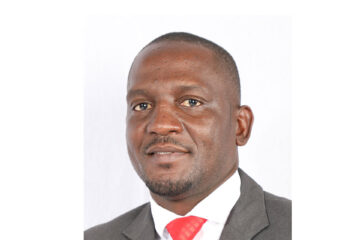
Allexer Namundjembo
The recent announcement by the City of Windhoek (CoW) that its debt has been reduced from N$888 million to N$869 million has sparked criticism from residents, who say the municipality spends more money on salaries while service delivery remains poor.
The reduction means CoW has lowered its debt by N$19 million, with N$869 million still outstanding.
Windhoek mayor Sackaria Uunona announced the figures on Thursday during an ordinary council meeting.
“These figures demonstrate gradual but meaningful progress in strengthening financial discipline, improving revenue management and restoring the municipality’s fiscal sustainability,” Uunona said.
Reacting to the announcement, Windhoek resident Mather Lukas, who lives in Babylon, said senior CoW officials are paid more than what they deliver to residents.
He told the Windhoek Observer on Saturday that many residential areas remain dirty because waste collection is not handled properly.
“If you go around these locations and see how dirty they are, you will not understand what the funds are used for. Even if we try to clean up and gather the dirt for pickup, it’ll stay here for two weeks and start scattering due to wind and other factors,” he said.
Lukas also questioned the municipality’s spending priorities, saying roads damaged by rain have remained unrepaired for almost two years.
Community activist Sem David welcomed the municipality’s efforts to work with central government on a N$716 million debt relief arrangement and land swap.
“Every effort aimed at improving revenue collection and stabilising the finances of the municipality must be commended and appreciated,” he said.
David, however, said questions about transparency and accountability remain unanswered.
“The people of Windhoek deserve transparency. What exactly is the CoW’s debt clearance plan? Who are the beneficiaries or entities included in this debt relief package?” he asked.
He also demanded that the municipality disclose who owes the city money.
“I demand that the City of Windhoek publicly disclose who owes the municipality and how much is owed by different sectors, including councillors, departmental staff and general city employees, State House and government ministries; GRN parastatals and government institutions; NGOs and private companies, residents, ordinary residents and informal traders,” he said.
David questioned whether government institutions, politicians and salaried officials are included in the debt recovery process.
“If not, what special arrangements or exemptions are being applied? What continues to concern many residents is the unequal treatment in revenue collection. The city aggressively pressures ordinary residents and small informal traders, people surviving through small businesses like kapana sales, to keep their accounts up-to-date, while institutions and individuals with salaries, budgets, and resources appear untouched and unbothered,” he said.
Windhoek community-based activist Shaun Gariseb said former City of Windhoek head of finance Jenny Commalie claimed she left the municipality in a better financial position and left money in the city’s accounts.
Gariseb said the 2025/2026 Electrification Project aims to connect more than 1,300 households in informal settlements, including Okahandja Park, Mix, Babylon, Otjomuise and Havana, to the electricity grid at a cost of N$33 million.
He said the project is funded jointly with the Ministry of Urban and Rural Development and the Ministry of Mines and Energy.
Gariseb also referred to the solar initiative linked to the partnership between Windhoek and Berlin, established under a cooperation agreement signed in 2000.
The project is funded by Germany’s Federal Ministry for Economic Cooperation and Development at a cost of around N$4.3 million.
“Meaning all the outstanding projects or initiatives are funded or supported, but where does the ratepayers’ money go? Potholes are not fixed. The city is dirtier. Recently the city represented to the court that they are not in a position to afford benefits for their general workers. The city has appealed the ECB/CoW ruling. The city is only justifying things that require them to spend money in the interest of service delivery, but travelling to Europe, the CEO has already travelled twice this year. Last year, N$20 million on unjustified travelling was demanded back by Sankwasa. The CEO is sitting on that report,” he said.
Gariseb questioned whether the debt situation is as serious as described.
“I don’t think the debt level is that high. The debt level is deliberately described as ‘unsustainable’, justifying the city to use external debt collectors (RedForce) apparently to prevent service disruption,” he said.
He added that the municipality should operate more as a public service institution than a profit-driven entity.
“The performance of the City is solely based on money-making and salary increments for top executives,” he said.
Gariseb also called for improvements to the city’s billing system and wider installation of prepaid meters.
“Let’s have an honest report of the defective billing system and fix that damn thing, it’s a problem. And let’s procure prepaid meters and have a debt ceiling so that debt can be managed. Sitting with artificial debt will never be better than having people with active accounts. If 200 000 account holders are making monthly payments, it’s better than having debts that will never be paid because they are just too high and accumulating while all services are illegally suspended,” he said.
He also urged the municipality to stop suspending electricity accounts because of unpaid water bills.
The City of Windhoek has faced debt-related challenges for years.
Earlier this year, residents owed the municipality more than N$800 million for water, electricity, rates and taxes accumulated over several years.
In November 2023, the Windhoek City Council approved a debt write-off of N$524 million covering registered pensioners, a 50% reduction on interest for account holders and communal water point accounts.
In November 2025, the council approved another N$200 million debt write-off targeting registered pensioners, people with disabilities, orphan-headed households, NGOs and charitable organisations.