CHAMWE KAIRA
The country’s new vehicle sales fell 6.2% year-on-year to 1 188 units in October 2026, ending an 18-month period of annual growth, as supply shortages at Toyota weighed on overall registrations.
According to vehicle sales data released by Simonis Storm Securities, October registrations declined from 1 267 units recorded in October 2025. Sales also fell 20.7% compared with September, when 1498 vehicles were registered.
Despite the decline, October recorded the second-highest sales figure for the month in a decade. Cumulative sales for the first ten months of 2026 reached 13 453 units, representing growth of 10.6% compared with the corresponding period last year.
Toyota accounted for most of the October contraction, with sales falling 14.3% to 637 units from 743 units a year earlier.
The decline was particularly pronounced in its Indian-built entry-level passenger vehicle range, with combined sales of the Urban Cruiser, Starlet and Vitz falling from 111 to 46 units.
Toyota’s market share consequently declined from 58.6% in October 2025 to 53.6%.
Simonis Storm said the decline was driven by stock shortages rather than a broad-based weakening in demand. Excluding Toyota, sales by other manufacturers increased by 5.2% year-on-year to 551 units.
The research firm noted that South Africa’s new vehicle market grew by 10.4% in October, supported by strong small-car sales, suggesting that Namibia’s decline was linked to regional vehicle supply and stock allocation constraints.
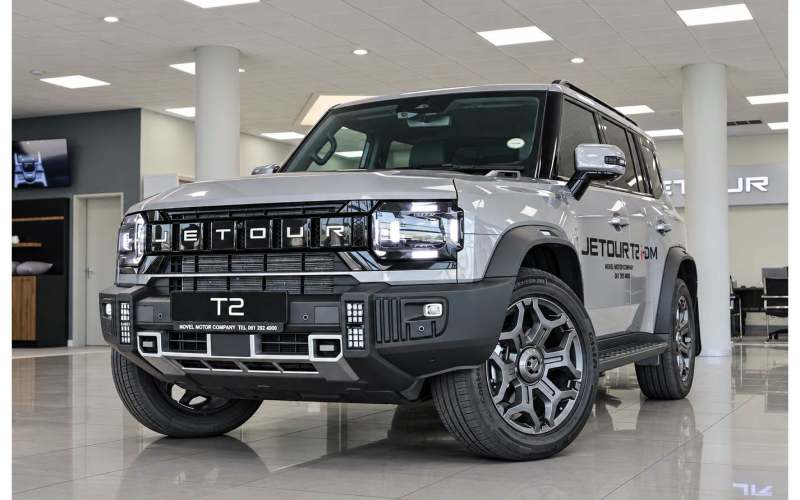
Chinese vehicle manufacturers benefited from the shortage of entry-level vehicles, recording a combined 188 sales during October, an increase of 29.7% year-on-year.
Their combined market share reached a record 15.8% of Namibia’s total vehicle market. Chinese brands accounted for 20.8% of passenger vehicle sales and 11.1% of light commercial vehicle sales.
Over the first ten months of the year, Toyota and Chinese manufacturers accounted for all the net growth in the new vehicle market.
Toyota added 622 units to its year-to-date sales, while Chinese brands contributed another 676 units, against total market growth of 1 284 vehicles.
Several established mid-tier manufacturers recorded declines over the same period. Kia sales fell by 164 units, Suzuki by 95 units and Renault by 42 units.
Vehicle sales outside Windhoek grew faster than those in the capital during the first ten months of 2026.
Registrations outside Windhoek increased by 18.4% to 5 030 units, compared with growth of 7% in Windhoek, where 8 423 vehicles were sold.
Simonis Storm attributed the stronger regional performance to economic activity linked to mining, logistics and early-stage offshore oil and gas support activities along the coast and in southern Namibia.
Medium and heavy commercial vehicles, together with buses, reached 995 registrations between January and October, an increase of 25.5%. This was the segment’s strongest performance since 2015.
Chinese truck manufacturers, particularly Powerstar and Shacman, increased their combined share of the truck and bus market to 37%, from 15% in 2025.
Simonis Storm estimates that the combined monthly financing and fuel cost of an average new passenger vehicle has increased by 10.9% over the past year to approximately N$12 690.
The research firm consequently revised its 2026 vehicle sales forecast downwards from 16 300 units to 16 050 units, with a projected range of between 15 800 and 16 300 units.
To reach its central forecast, Namibia would need to register 2597 new vehicles during November and December.