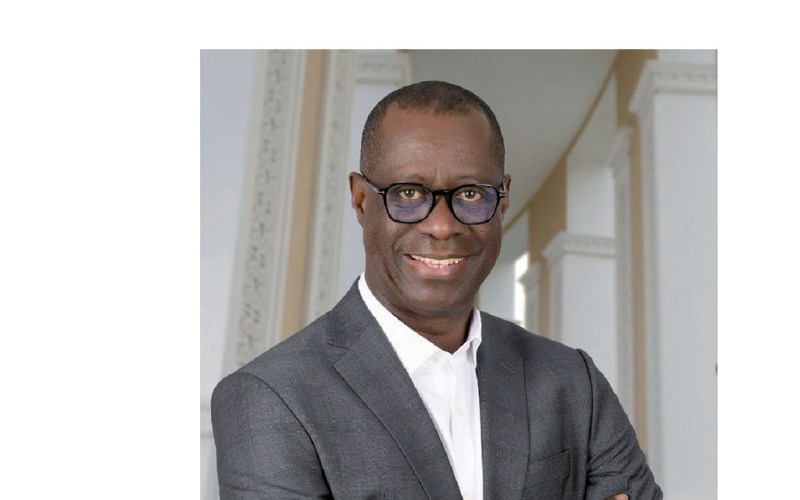
Stanley Nick Katzao
The foundational text of modern international relations, the 1961 Vienna Convention on Diplomatic Relations, explicitly mandates that foreign envoys have a sacred duty not to interfere in the internal affairs of their host states.
This principle is not a mere bureaucratic formality; it is the vital shield that protects the sovereignty of post-colonial nations from the overreaching whims of global superpowers.
Yet, across Southern Africa, a deeply disturbing trend of “diplomacy through the media,” public ultimatums, and systemic overreach is unravelling decades of hard-won bilateral respect.
The recent conduct of United States Ambassadors in both Namibia and South Africa has crossed the line from standard, vigorous diplomatic engagement into outright geopolitical bullying—a coercive campaign designed to punish independent nations for daring to prioritize their own domestic laws and sovereign foreign policies.
Here in Namibia, a brand of economic heavy-handedness is playing out under the guise of commercial strategy.
US Ambassador John Giordano, a political appointee openly focused on extracting Namibia’s critical minerals, uranium, and recently discovered offshore oil to satisfy American tech and security supply chains, has consistently tested the boundaries of local diplomatic protocol.
This systemic overreach culminated in a stark and highly symbolic public rejection when Giordano was flatly turned away at the doors of Namibia’s National Fisheries Indaba in Walvis Bay.
The ambassador had attempted to gain entry to a closed-door, domestic policy forum without an official invitation or prior clearance.
The message from Windhoek was sharp and uncompromising: diplomatic status does not grant a superpower an automatic pass to ignore local rules, nor does it allow them to barge uninvited into a sovereign nation’s regulatory decision-making space.
Meanwhile in neighbouring South Africa, the diplomatic relationship with Washington has rapidly deteriorated to an unprecedented low.
Ambassador Leo Brent Bozell III has been formally reprimanded, or démarched, by Pretoria an astonishing three times in a mere nine months.
Bypassing quiet, established diplomatic channels, Bozell has repeatedly taken to the airwaves and public forums to chastise the South African government, declaring with corporate arrogance that the United States has “run out of patience” regarding a series of local economic and legislative policies.
When an ambassador issues public threats—covertly backed by unilateral US visa restrictions targeting South African policymakers over domestic land reform and Black Economic Empowerment transformation laws—it is no longer diplomacy; it is extortion.
Washington’s heavy-handed attempts to dictate South Africa’s internal legislative efforts to correct historical, apartheid-era structural inequalities represent an egregious violation of national self-determination.
This aggressive, synchronized posturing by US envoys in both countries cannot be viewed in isolation. It is a direct, reactionary retaliation to the principled, independent foreign policies maintained by both Windhoek and Pretoria.
Namibia’s steadfast diplomatic, moral, and humanitarian support for Cuba—rooted in a deep, unbreakable history of liberation struggle solidarity when Havana supported African freedom fighters against colonialism—remains a persistent, decades-long thorn in Washington’s side.
So too is South Africa’s refusal to surrender its global moral authority, most notably leading the charge for international humanitarian law by hauling US-ally Israel before the International Court of Justice (ICJ) in The Hague.
Both Windhoek and Pretoria have consistently championed a democratic, multipolar world order, stubbornly refusing to be pulled into the toxic vortex of Washington’s contemporary “with-us-or-against-us” global rivalries.
This persistent Western expectation of blind compliance completely ignores the deep, shared history that binds Windhoek and Pretoria.
For nearly a century, the destinies of Namibia and South Africa were explicitly intertwined—first through decades of complex, cross-border administration, and later through a shared baptism of fire in the struggle against apartheid oppression.
The very liberation movements that now govern both states fought in the same trenches, confronted the same state machinery, and emerged together to build a free Southern Africa.
This foundational history forged a unique, unbreakable bond of blood and brotherhood between the two nations. When Washington tries to wedge a divide between them or corner them individually, it ignores the reality that their collective geopolitical DNA was formed in absolute resistance to outside dictates.
Washington would do well to revisit Nelson Mandela’s famous 1990 town hall exchange with American journalist Ted Koppel as well as the equally widely published rebuke of a visiting German politician by late President Dr. Hage Geingob’s on the so-called influx of Chinese in Namibia.
When aggressively grilled over his refusal to abandon global allies who had supported the anti-apartheid struggle but were deemed adversaries by the West, Mandela delivered a timeless lesson in sovereignty: “One of the mistakes which some political analysts make is to think that their enemies should be our enemies.”
This exact sentiment was echoed in a widely circulated diplomatic exchange by the late Namibian President, Dr. Hage Geingob, when he firmly shut down a visiting German politician who attempted to lecture Windhoek over the presence of Chinese nationals in the country.
Geingob’s unscripted retort cut to the heart of the region’s frustration: “Every time a Westerner comes, it’s about the Chinese… Do not be sorry for us. It shows disrespect—that we are children.”
Decades apart, both Mandela and Geingob outlined the same non-negotiable reality: Windhoek and Pretoria refuse to be patronized or inherit the self-serving narrow interest of the Global North or turn their backs on historical allies to satisfy the immediate security anxieties of the Global North.
Superpowers often struggle to accept that developing nations can possess absolute strategic autonomy and intellectual independence. When diplomatic browbeating fails, Washington quickly resorts to its financial arsenal.
By leveraging trade mechanisms like the African Growth and Opportunity Act (AGOA) as geopolitical weapons, or abruptly scaling down critical humanitarian funding—such as the sudden, punitive reductions in US support for Namibian public health initiatives—the United States is reverting to an outdated, Cold War-era playbook of economic intimidation.
Southern Africa knows the devastating pain of foreign interference and puppet regimes all too well. The refusal of Windhoek and Pretoria to bow their heads to these undiplomatic tantrums is not an act of hostility toward the American people; it is a fundamental act of national self-preservation.
If the United States genuinely wishes to remain a valued, long-term partner in Africa, its envoys must quickly learn to trade public arrogance for quiet, mutual respect.
Until Washington commands its ambassadors to stop treating sovereign African states like colonial fiefdoms, Southern Africa’s collective message will remain completely unequivocal: our sovereignty is not up for negotiation, and we will not be bullied.
Stanley Nick Katzao is an independent commentator and thought leader. This opinion is written in his personal capacity.