
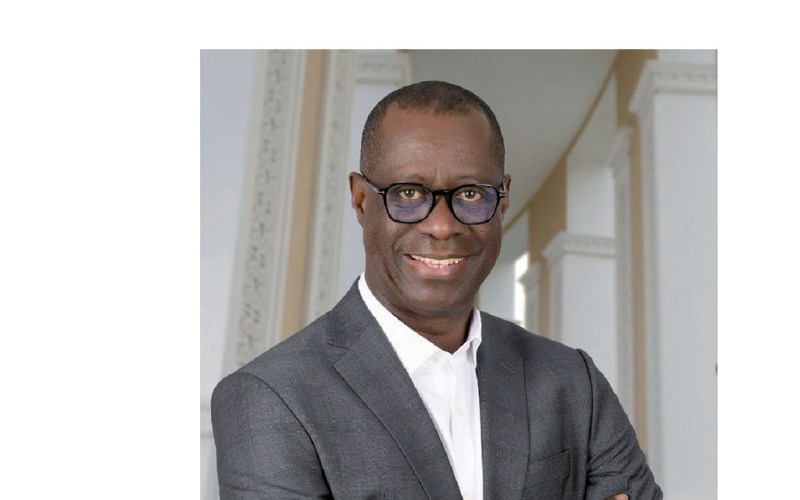
Stanley Nick Katzao
When United Nations Secretary-General António Guterres delivered his final address to the General Assembly, he offered a sobering truth: “The United Nations exists because power requires rules—and humanity needs a place where power answers to principle.”
It was a profound appeal for multilateral sanity in an era fractured by unilateral aggression. Yet, for the nations of Southern Africa, and particularly Namibia, this statement diagnoses a historic wound.
For decades, the horseshoe chamber of the UN Security Council (UNSC) has served as the exact antithesis of Guterres’s vision: a place where principle has repeatedly yielded to the interests of a select few.
For most of us, nowhere is the devastating cost of this imbalance clearer than in Namibia’s liberation struggle. Following World War I, the League of Nations placed Namibia under a South African mandate.
Decades later, as decolonization swept the continent, the UN General Assembly overwhelmingly recognized the illegality of South Africa’s apartheid occupation. The moral and legal principles were absolute: occupation could not take precedence over self-determination.
Yet, when the global majority sought to enforce those principles through the binding mechanisms of the Security Council—attempting to implement mandatory arms embargoes and economic sanctions—the machinery of global peace ground to a halt.
Western permanent members, specifically the United States, Great Britain, and France, repeatedly deployed their veto power to shield the Pretoria regime from international accountability.
This infamous “triple veto” of the 1970s and 1980s did not protect peace; it protected a racist status quo. By blocking international pressure, these powers prolonged Namibia’s subjugation, delaying independence until 1990.
The lesson remains stark: when the veto protects narrow geopolitical interests, human lives pay the ultimate price.
Eighty-one years after the UN’s founding, the structural flaw that allowed the triple veto to stall Namibia’s independence remains intact.
The world has changed dramatically since 1945, yet the architecture of its premier security body remains frozen in a colonial time capsule.
Africa—a continent of 54 sovereign nations, 1.4 billion people, and the geographic focus of most Security Council mandates—is still locked out of permanent membership.
This frozen paradigm faced a fierce, unified challenge at the recent UN General Debate.
South African Minister of International Relations Ronald Lamola firmly reasserted that a permanent seat for Africa, endowed with all structural privileges, is “long overdue.”
He emphasized that global governance must reflect modern realities rather than a post-WWII settlement.
Namibian President Netumbo Nandi-Ndaitwah echoed this sentiment with urgent moral clarity.
Delivering her address, she issued a stern warning: “Confidence in the international system is increasingly declining,” as “political and economic impunity is being entrenched.”
For Namibia, a nation whose very birth was chaperoned by the UN after decades of veto-induced delay, the paralysis of the modern Security Council is a dangerous regression toward a world governed by raw might.
To understand why this inequality matters today, one needs only to look at the catastrophic humanitarian crisis in Palestine.
The paralyzing gridlock hobbling the council over Gaza is the direct architectural descendant of the gridlock that stalled Namibia’s independence for decades.
President Nandi-Ndaitwah drew a direct line between Africa’s historical struggle against structural oppression and the ongoing plight of the Palestinian people, calling for an immediate ceasefire and an independent Palestinian state.
Her appeal underscored a painful double standard: just as the veto shielded apartheid in Southern Africa, it is utilized today to block the enforcement of international humanitarian law in the Middle East.
When permanent members use unilateral power to block resolutions aimed at stopping mass civilian casualties, the council ceases to act as an instrument of peace. It becomes an enabler of impunity.
Crucially, making power to answer the principle extends to the leadership of the UN itself. In a historic moment, President Nandi-Ndaitwah—Namibia’s first female head of state—challenged the international system: “Namibia believes it is time that a woman is elected as Secretary-General of our organisation.”
Her message targets a glaring institutional hypocrisy. For over eight decades, the UN has promoted gender equality worldwide, yet all nine Secretaries-General since 1945 have been men.
As Guterres prepares to step down at the end of 2026, selecting the 10th Secretary-General represents the ultimate test of the UN’s integrity.
True reform means ensuring that both the Security Council’s permanent seats and the Secretary-General’s office reflect the diverse humanity they claim to serve.
Through the African Union’s Ezulwini Consensus, Africa demands at least two permanent seats with full veto privileges (should the veto continue to exist) and five non-permanent seats.
Status-quo defenders argue that expanding permanent membership will increase dysfunction. But the council is already dysfunctional because its lack of representative legitimacy strips its resolutions of moral authority.
Whether the ultimate path yields the total abolition of the veto or its extension to African states, global governance must be democratized.
By dismantling the colonial hierarchy of the P5, seating Africa at the permanent table, and electing its first female Secretary-General, the United Nations can finally transform from a monument of victor’s justice into a true community of nations—forcing raw power, at long last, to answer to universal principles.
Stanley Nick Katzao is an independent commentator and thought leader. This opinion is written in his personal capacity.


