Namibia needs roads that move traffic efficiently, but also move economic opportunity into the towns that depend on it
Our country deserves credit for the quality of its road infrastructure. For a country of just over three million people spread across a vast geographical area, a reliable road network is indispensable to commerce, tourism, agriculture, mining and national integration.
But there is a growing contradiction at the heart of this success.
The better our highways become at moving people quickly from one destination to another, the greater the danger that some of the towns along those routes become economically invisible.
This is the unintended consequence of the bypass.
The point is not that bypasses are inherently bad. They can improve road safety, reduce congestion, separate heavy freight from pedestrians and make long-distance travel considerably more efficient.
But somewhere along the way, we have allowed the efficient movement of vehicles to become the primary measure of successful road infrastructure.
That is too narrow.
A road does not simply move traffic. It moves economic opportunity.
Consider Okahandja.
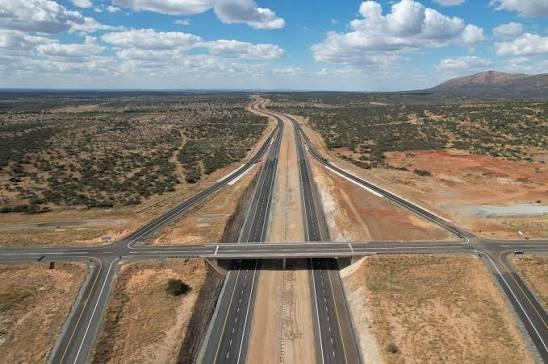
The Windhoek–Okahandja route, historically part of the B1, has been upgraded to freeway standard and sections are now designated the A1, with the B1 continuing north from Okahandja. The project has significantly improved the journey between Windhoek and the north. For motorists, that is unquestionably positive.
But Okahandja’s economy has historically benefited enormously from being on the route.
Its biltong shops, restaurants, craft markets, fuel stations, roadside businesses, guesthouses and other enterprises depend on one fundamental commodity: passing traffic.
The famous woodcarving and craft markets are not merely tourist attractions. They represent livelihoods.
A traveller who stops for fuel may buy biltong. A family stopping for refreshments may have lunch. A tourist may buy a carving. A truck driver may purchase supplies. A motorist looking for a place to rest may discover a guesthouse or restaurant.
But a motorist who never enters the town spends nothing there.
This is not a new concern. An Economic Association of Namibia analysis previously highlighted how the original bypass contributed to a dramatic reduction in traffic through Okahandja and the subsequent economic consequences for the town. It also pointed to the contrasting experience of Otjiwarongo, where the main route continues to support commercial activity within the town.
We should have learned from that experience.
Instead, Namibia risks repeating the same mistake elsewhere.
Look at Otavi. Its strategic position between central and northern Namibia gives it enormous potential as a transport, agricultural and logistics centre. But if increasingly efficient highways merely allow travellers and freight to pass without stopping, the town can lose precisely the commercial advantage that its geography provides.
The same concern applies to Otjiwarongo, one of Namibia’s most important northern commercial centres. Its location has historically helped sustain a vibrant service economy. But as road infrastructure becomes increasingly focused on uninterrupted north-south movement, planners must ensure that the town remains connected to the economic flows travelling along that corridor.
Further south, the issue becomes even more important.
Mariental sits on one of Namibia’s major north-south arteries. Its economy is closely tied to agriculture, tourism, transport and services. The town’s location is its greatest economic asset. A road system that allows thousands of motorists to pass without entering Mariental may improve journey times, but it can simultaneously weaken the businesses that depend on those motorists.
Then there is Keetmanshoop, whose location makes it a natural gateway between southern Namibia, the coast and the north. It is precisely the sort of town that should benefit from its position on a national transport corridor.
Instead, we must ask whether increasingly streamlined transport routes will eventually turn such towns into places people drive past rather than places they drive through.
And the concern extends to towns such as Usakos, where the relationship between the national road network and the local economy is particularly important because of the town’s position on the western transport corridor.
These towns are not obstacles that Namibia’s roads need to overcome.
They are economic assets that the roads should be designed to serve.
This requires a fundamental change in how we think about road planning.
Before constructing a major bypass, the government should ask not only how many minutes motorists will save, but also how much economic activity the town stands to lose.
What happens to the restaurant owner?
What happens to the fuel station?
What happens to the informal trader?
What happens to the craftsman, the butcher, the guesthouse owner and the small retailer?
And, most importantly, what happens to employment?
If the answer is that thousands of motorists will simply disappear from the town’s commercial ecosystem, then the road design requires more than an engineering solution. It requires an economic solution.
Bypasses should therefore be accompanied by deliberate strategies to pull traffic into towns where appropriate.
That could include attractive and highly visible town entrances, safe access points, properly designed service areas, tourism signage, fuel and food precincts, craft markets and rest facilities.
There should be no reason why a motorist travelling north cannot see clearly that there is a vibrant town a few kilometres away, and have a compelling reason to visit it.
The principle should be simple: separate dangerous through-traffic where necessary, but do not separate towns from economic opportunity.
This is particularly important for Namibia because many of our smaller towns do not have large industrial bases or diversified economies. They depend on tourism, agriculture, government services, small businesses and passing trade.
Take away the passing trade without replacing it with something else, and the economic consequences can be profound.
We cannot tell young Namibians to create businesses in small towns while simultaneously designing infrastructure that removes their potential customers.
Nor can we speak seriously about regional development while concentrating economic activity ever more heavily in Windhoek and a handful of major centres.
Our roads are among Namibia’s greatest national assets. But infrastructure must be judged by more than engineering standards and travel times.
It must also be judged by what it does to the communities along the route.
The Roads Authority, local authorities, tourism planners, regional councils and economic development agencies should therefore be sitting around the same table when major road projects are designed.
A highway is not simply a line connecting two points on a map.
It is a powerful economic instrument.
The question should not simply be: How quickly can we get people past Okahandja, Otavi, Otjiwarongo, Mariental, Keetmanshoop or Usakos?
It should be:
How do we make sure that the people travelling through Namibia also have a reason to stop, spend, explore and invest in the towns along the way?
Namibia needs faster roads.It needs safer roads. It needs modern roads.
But it also needs economically intelligent roads. Because the ultimate measure of a world-class road network should not be how efficiently it carries traffic away from our towns.It should be how effectively it connects our towns to prosperity.
We should build roads that move Namibia forward, without leaving its towns behind.