Renthia Kaimbi
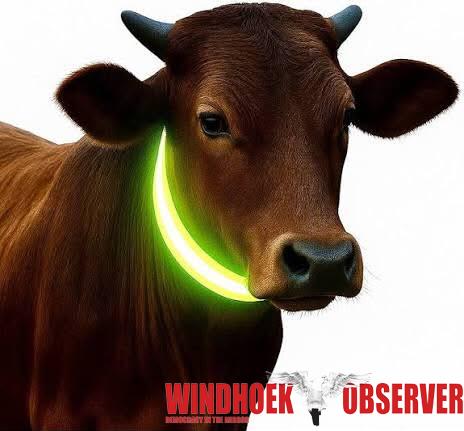
Stray animals along the B1 road in the Khomas region are set to receive reflective gear as part of the Animal Visibility Project, with priority given to the high-risk stretch near the Mix informal settlement.
The project that was launched in December 2025 aims to reduce nighttime collisions between motorists and free-roaming livestock, which is a leading cause of fatal accidents on Namibian roads.
While an official handover ceremony originally scheduled for Monday, 8 June at the Khomas Governor’s office has been indefinitely postponed, the Windhoek Observer understands that implementation plans for the region remain on track.
At the meeting, the National Road Safety Council (NRSC) intended to handover reflective collars and ear tags to mark the expansion of the Animal Visibility project along the B1 corridor in the Khomas region, where stray cattle and other animals frequently wander onto the tarmac after dark.
Minister of works and transport Veikko Nekundi confirmed the Khomas rollout and the decision to prioritise the Mix informal settlement area.
The project was first piloted in the Omusati and Oshana regions, just weeks before the festive season last year.
NRSC acting executive secretary Ambrosius Tierspoor, previously told the Windhoek Observer that a six‑month assessment period, ending in July 2026, was designed to test the durability and reflectivity of the gear under real conditions.
“Over the six months, we will do assessments in the evening to see the reflex ability of the material and engage those communities,” Tierspoor said in an earlier interview.
“The end user, which is the farmer, benefits because if animals are found in the road reserve, drivers can easily spot them.”
The long‑term goal, he added, is to make reflective ear tags for large livestock a legal requirement. Talks between the ministries of works and transport and agriculture are ongoing.
However, a mass government‑funded rollout remains unlikely. Tierspoor previously estimated that tagging 70% of Namibia’s 1.6 million livestock would cost the state about N$180 million annually – a figure he described as unsustainable.
Instead, the NRSC hopes to grow a private‑sector market for reflective gear, with farmers eventually bearing the cost if the devices become mandatory by law.
Tierspoor had pointed out that road accidents cost the government close to N$500 million annually, with collisions with animals accounting for hundreds of deaths each year in Namibia.
“If you institutionalise this, people along the main roads will be urged to buy reflective ear tags,” he said.
“And if they don’t, we’ll put it in the law to say it is now unlawful for those large livestock to be without reflective ear tags because they’re killing our people.”