
Allexer Namundjembo
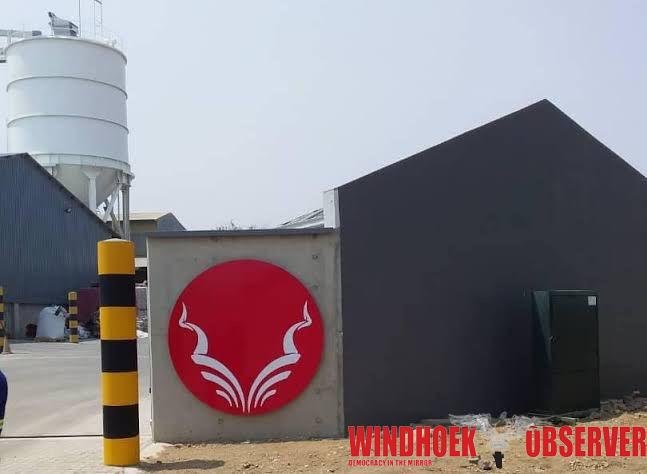
Cheetah Cement has said that it will not retrench employees following the approval of its merger with Schwenk Namibia’s Ohorongo Cement, although some operational changes, including staff relocation, are expected.
Spokesperson of Cheetah Cement, Tabby Moyo, said the conditions set by the minister of industries, mines and energy largely reflect proposals that were already made by the merging parties during their submissions to the Namibia Competition Commission (NaCC).
Speaking to the Windhoek Observer on Wednesday, Moyo said the merger will not result in job losses, but will lead to operational changes, including the relocation of staff from Otjiwarongo to Otavi, where Ohorongo operates.
“There will be no job losses but obviously there will be a change of conditions for some staff as the merger will result in the need for staff to relocate from Otjiwarongo to Otavi,” Moyo said.
He added that employees who are not willing to relocate will have the option to enter into separation negotiations with Whale Rock Cement.
Moyo further stated that the requirement to increase local ownership will be implemented, although timelines for achieving this will be communicated later.
“The increase in local ownership will happen but timelines for that will be given later,” he said.
Ohorongo’s current shareholding structure, noting that Schwenk Namibia holds 69.83%, the Development Bank of Namibia (DBN) 11.73%, the Industrial Development Corporation of South Africa (IDC) 14.28%, and the Development Bank of Southern Africa (DBSA) 4.17%.
On the future of the existing plant, Moyo said Whale Rock Cement will decide how the Otjiwarongo facility will be repurposed.
Addressing concerns about market capacity, Moyo said the domestic cement market can be adequately served by a single plant.
“The limited local market size has resulted in the two plants not being able to utilize their full production capacities and thereby affecting the economic viability of the two plants,” he said.
Moyo further said the merger would improve efficiency and profitability by consolidating production.
He added that the merger remains conditional and will be closely monitored by the competition authorities.
“This is a conditional merger, meaning the parties will adhere to the conditions set out by the Minister. The Competition Commission will monitor post-merger whether a monopoly has been created and whether a dominant position has been established,” Moyo said.
The NaCC has said the minister of industries, mines and energy’s decision followed a review application lodged by the main parties involved in the merger, including Oilrock and Ohorongo Cement.
Speaking to the Windhoek Observer on Thursday, NaCC spokesperson Dina Gowases-Pakote said the line minister exercised his legal powers under the Competition Act No. 2 of 2003 to review and make a determination on the matter.
She explained that the commission considers public interest factors when assessing mergers, including employment impacts and potential effects on market structure and competition.
“Dominance in itself is not a bad thing, but sometimes dominance leads to behaviours or conduct by some businesses in which they would then put excessive prices on certain goods and products or services,” she said.
She added that the concern is ultimately consumer choice and market access.
“And ultimately, that does not give the consumer any choice to then go to another business operator to acquire the same or similar product,” she said.
On the review process, she said the parties approached the minister after they were not satisfied with the commission’s initial decision.
She further explained that the minister has the authority to review such applications under the Act and must make a determination within a specified period, although additional information may sometimes be required.
She noted that once the minister has made a determination, the commission does not oppose it, as it falls within his legal mandate.
She confirmed that the commission will now focus on monitoring compliance with the imposed conditions.
“So we abide by the ruling of the minister and we are going to do due diligence with regard to monitoring compliance,” she said.
The merger between Ohorongo Cement and Cheetah Cement has been approved by the minister of industries, mines and energy, Modestus Amutse, subject to strict conditions aimed at safeguarding employment, competition, and local ownership in the cement sector.
According to the gazette, the minister confirmed that he had overturned the earlier decision of the NaCC following a formal review in terms of Section 49 of the Competition Act, 2003.
“I have made a determination overturning the decision of the Commission,” Amutse stated.
He further said: “I was guided by the Namibian Constitution, the Competition Act, the National Competition Policy 2020–2025 while also taking into consideration public policy.”
The minister acknowledged that while the commission acted within its legal mandate, its concerns could be addressed through conditions attached to the merger and, where necessary, post-merger investigations.
“The concerns raised by the commission can be remedied by attaching appropriate conditions to the proposed merger,” the gazette reads.
Among the conditions imposed is that the merger must not result in job losses. The commission has also been instructed to monitor the merged entity to assess whether it creates a monopoly or establishes a dominant market position.
The Gazette further states that the Cheetah Cement plant must remain operational and not be dismantled as a result of the merger.
Instead, options should be explored to ensure its continued existence and transformation into a productive facility capable of employing Namibians.
In addition, Whale Rock Cement and Schwenk Namibia are required to increase local ownership to at least 40%.


