CHAMWE KAIRA
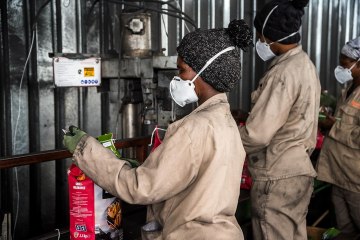
The NSX-listed beef processor Savanna Beef Processors has said the outbreak of the foot-and-mouth disease (FMD would affect farmers and producers, abattoirs and processors, workers and their families, and rural communities that depend on the livestock value chain.
Savanna said the outbreak confirmation came after rumours about the detection had circulated. The company said it would seek to weather the impact of the outbreak, which comes as the local beef industry remains dependent on access to domestic and international markets.
Cirrus Capital, had served as corporate adviser to Savanna since before its incorporation, worked on the company’s business plans and strategic structures and helped raise more than N$600 million in capital for the greenfield project.
Savanna has since developed from an initiative at the Beef Value Chain Forum into an EU-accredited export abattoir supplying Namibian beef to international markets, according to Cirrus Capital.
The government warned that the outbreak has serious implications for the national economy and livelihoods because of the suspension of livestock and livestock-product marketing locally and internationally.
It called for cooperation among government institutions, the livestock industry, stakeholders, the public and other relevant institutions to contain the disease.
The government confirmed that foot-and-mouth disease (FMD) had been detected in Namibia’s internationally recognised FMD-free zone, following the confirmation of an outbreak by the ministry of agriculture, fisheries, water and land reform.
The ministry confirmed on Wednesday that FMD was detected on a commercial farm in the Karasburg State Veterinary District in the //Kharas Region during routine disease surveillance by veterinary officials.
Samples were collected from 11 cattle showing clinical signs consistent with FMD on 22 September 2026. Laboratory analysis at the Central Veterinary Laboratory in Windhoek found that 10 of the 11 samples tested positive on 23 September.
“This state confirms an active FMD outbreak in Namibia’s World Organisation for Animal Health (WOAH) recognisedFMD Free Zone,” acting agriculture minister, Charles Mubita said.
The ministry has introduced immediate control measures under the Animal Health Act, No. 1 of 2011, including the suspension of the movement of cloven-hoofed animals and their products countrywide.
It has also suspended the import and export of all cloven-hoofed animals until further notice.
The Directorate of Veterinary Services is expected to issue a Veterinary Public Notification detailing the control measures.
Mubita called for cooperation among government institutions, the livestock industry, stakeholders, the public and other relevant institutions to contain the disease. He said restoring and normalising livestock marketing would remain a priority.
The Namibia Agricultural Union (NAU) has called on the government to declare a state of emergency following the confirmation of the FMD outbreak in Namibia’s FMD-free zone.
Namibia’s beef industry generated more than N$2.1 billion in foreign exchange in 2025, according to statistics by the agriculture ministry.
Before the FMD outbreak, Namibia had remained the only African country with concurrent beef export access to the United States, China, Norway and the European Union.
Simonis Storm said agricultural lenders should expect restructuring requests within a quarter, weaker collateral as livestock and farmland values soften, and a rise in loans flagged as higher risk by year end.
It said livestock insurance usually excludes notifiable diseases, so losses stay with farmers and their banks.
“Emerging and resettled farmers, with thin buffers, are most exposed. Agribank enters the shock with a heavy arrears book, reported at N$1.1 billion to N$1.2 billion in 2024,” Simonis said.