Sostenus Wilherm
Namibia recorded its lowest rhino poaching figures in more than a decade in 2025, however, environment minister Indileni Daniel has warned that criminal syndicates are adapting rapidly and new forms of environmental crimes, including illegal plant trafficking, are emerging.
Daniel said 43 rhinos were poached in 2025, down from 91 in 2024, while 24 rhinos had been poached so far in 2026.
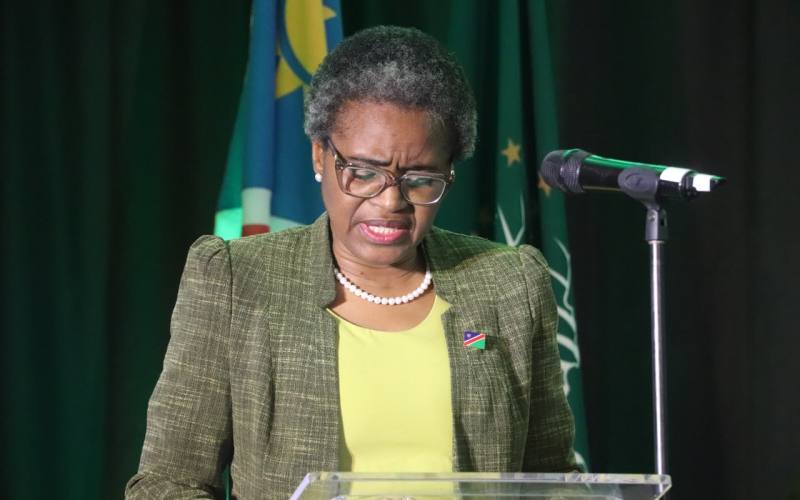
She made the remarks on Monday at the Third National Stakeholder Forum for Wildlife and Environmental Protection in Windhoek, where government, law enforcement agencies, conservationists, communities and other stakeholders gathered to discuss measures to combat wildlife and environmental crime.
Daniel attributed the decline in rhino poaching to concerted efforts by law enforcement agencies, national security forces, the judiciary, communal conservancies and rhino custodians.
“Yet, our concerted efforts are bearing fruit. Our findings show that wildlife crime is declining,” she said.
However, the minister warned that the decline should not create complacency, saying criminal networks involved in wildlife trafficking continue to adapt their methods.
“They say that in the wild, survival belongs to those who can adapt. Unfortunately, the criminals threatening our wildlife and natural resources have also learned to adapt and sometimes they adapt faster than our systems do,” Daniel said.
She said Namibia must therefore strengthen cooperation beyond its borders because wildlife crime is increasingly linked to international criminal syndicates and global markets.
“To address poaching and trafficking, we need to cut the demand by making sure we cut the line to the underworld market. Once the market is paralysed, poaching and illegal plant crimes will surely decline,” she said.
Daniel said the economic impact of environmental crime extends beyond the direct loss of wildlife and natural resources.
She warned that criminal activities threaten tourism, conservation hunting, local communities and the broader economy, while the government, the private sector and international funding agencies are forced to spend hundreds of millions of dollars protecting ecosystems and combating environmental crimes.
“These are much-needed resources that could, and should, be channelled into other vital national development priorities,” she said.
The minister also identified corruption as a major threat to efforts to protect Namibia’s natural resources.
“Closer to home, we cannot successfully address wildlife and environmental crimes without confronting corruption,” Daniel said.
She called for stronger internal controls to prevent individuals from compromising protected resources for personal gain, saying Namibia must eliminate what she described as the “corruption triangle” of opportunity, justification and action.
Daniel singled out illegal plant trafficking as an emerging concern, saying it has rapidly developed into a lucrative criminal enterprise.
The ministry expanded the focus of its national stakeholder forum after its inaugural meeting in 2022 to include flora and forestry crimes, reflecting the changing nature of environmental crime.
Daniel said Namibia had strengthened its legal and institutional response through tougher legislation and maximum penalties, as well as specialised structures such as the Wildlife Protection Services Division and the Environmental Crime Unit within the Office of the Prosecutor General.
She also pointed to progress by the ministry of justice and labour relations in finalising the long-awaited Wildlife and Protected Areas Management Bill, which she said would further support wildlife conservation and protection once enacted.
The minister said protecting Namibia’s natural resources was not only an economic or conservation issue but also a constitutional and moral responsibility.
“Our responsibility to preserve our environment is explicitly enshrined under Article 95(l) of the Namibian Constitution,” she said, also citing the Environmental Management Act of 2007, the Controlled Wildlife Products and Trade Act of 2008 and the National Strategy on Wildlife and Environmental Protection 2026–2035.
Daniel urged stakeholders to ensure that discussions at the forum translate into concrete action.
“Let us firmly protect our natural resources as a legal, ecological and development imperative,” she said.