Desmarius Hansen
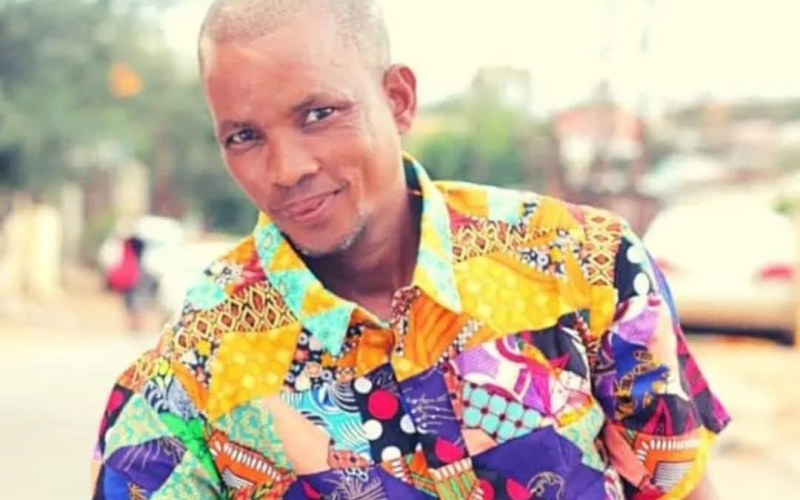
For five years, Jo-anne Kooper has been searching for answers about the disappearance of her partner, Harold “Sunny-Boy” Kinda, who left home to perform at a confirmation celebration in Windhoek and never returned.
Kinda, then 39, left home on 13 November 2021 for a performance in Soweto, Windhoek, during the busy November confirmation season.
He has not been seen since.
What initially appeared to be a late return home has since become a painful five-year ordeal for Kooper, who says she is still struggling to understand what happened to the musician and why his disappearance remains unresolved.
“When it got a bit late, I tried calling him to ask when he was coming home, but his phone was off. He was never the type of person who would sleep out, so I got genuinely worried,” Kooper, 41, recalled.
By Sunday morning, Kinda had still not returned.
Kooper contacted one of his friends and bandmates, who informed her that Kinda had decided to go home and left at around 21:00 the previous evening.
The family immediately began searching for him, but their efforts were unsuccessful.
Five days after his disappearance, Kooper opened a missing-person case at the Wanaheda Police Station.
She says she largely had to drive the search herself, as Kinda’s parents had died years earlier and there were no immediate family members actively pursuing his whereabouts.
However, Kooper believes the initial police investigation was inadequate, particularly because those who were last with Kinda were allegedly not questioned.
“What bothered me is that after I opened the missing-person case, the police did not interrogate his friends and bandmates who were with him that night. In actual fact, they were the last people to have seen him, but the police did not interrogate them,” she said.
“To be brutally honest, I don’t think the police did a thorough job with this case, and sometimes it usually makes the family demotivated and stop searching.”
Kooper says the family is not expecting police to immediately locate Kinda but wants investigators to demonstrate commitment to the case and keep them informed of any developments.
“Listen, we’re not saying the police should go out and come back with the missing person. We know it’s much more difficult than that, but all we’re asking for is effort and just constant feedback.”
Among the most devastating consequences of Kinda’s disappearance, Kooper says, is the impact on the daughter he left behind, who was just three years old at the time.
She says the two shared a close bond, with Kinda playing an active role in raising their daughter and taking care of her daily routine.
“Our daughter was a baby girl when he went missing. She was three when he went missing, but she remembers her father so well because we had a daily routine. Every day I would go to work and he would prepare her for school and take her to daycare, so they would spend most of the time together,” she said.
The little girl struggled to understand her father’s sudden absence, with Kooper recalling how she would cry repeatedly in the weeks after he disappeared.
“During the weeks her dad went missing, she would cry a lot as days went by, and we didn’t know what to do.”
Five years later, explaining his absence remains difficult, particularly during family celebrations and occasions that remind them of the role he played in their lives.
“It’s difficult, it’s really difficult, especially at special occasions. I try to avoid special occasions because that’s where her dad would always sing.”
Father’s Day is especially painful for the family, as their daughter continues to struggle with growing up without her father.
“It’s even more difficult on days like Father’s Day, where she would cry a lot and we don’t know what to say or how to comfort her.”
For Kooper, Kinda’s disappearance has also left her life suspended between hope and uncertainty.
The couple had been together for eight years before he disappeared, and she says the lack of answers has made it difficult to contemplate starting a new relationship.
“This is not something easy, especially as Sunny-Boy’s partner. Look, we were not married, but I was with him for eight years, so even starting a new relationship now is difficult. I just can’t.”
She says not knowing whether he is dead or alive has made it impossible to find closure.
“Because I don’t know what happened or where he is, I cannot move on and start a new life with a man because there’s not even Sunny-Boy’s grave.”
Beyond his role as a partner and father, Kinda was also a musician who had established himself in Windhoek’s entertainment circles.
Kooper describes him as a familiar face in the local music industry who performed alongside established Namibian musicians, including Timothy “Phura” Duwe and Jaliza Utsile.
She remembers him as a humorous but short-tempered person.
“Sunny-Boy was a light-skinned, short Nama man. He was very short-tempered but liked making jokes. He was a funny person.”
Five years after Kinda vanished, Kooper says the family has not given up hope of finding out what happened to him.
While the anniversary of his disappearance has renewed attention on the case, she says the search for answers has never stopped.
“So yeah, I still have hope. I will always have hope, and I will never lose hope.”
The investigating officer who handled the case, Nickodemus Nehale, had not responded to questions sent by the publication by the time of going to print.