CHAMWE KAIRA
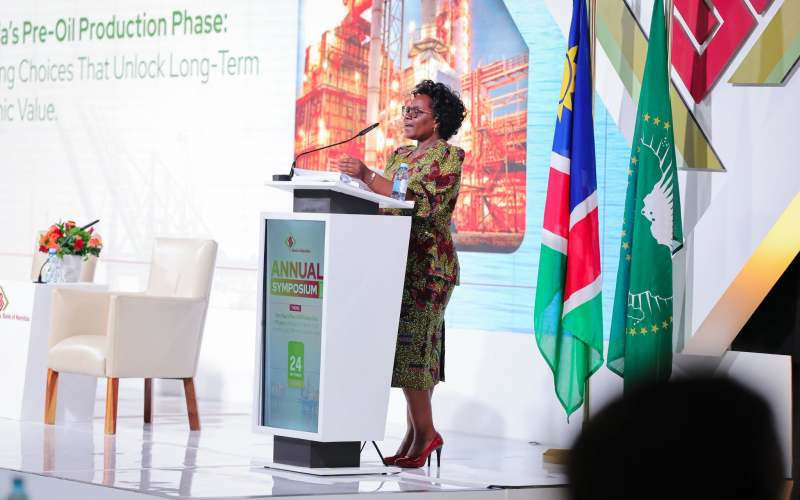
Recommendations to strengthen Namibia’s legal, institutional and economic preparedness have been placed at the centre of the Bank of Namibia’s assessment of the country’s transition to becoming a first-time oil producer.
The central bank has called for the immediate gazetting of the Petroleum (Exploration and Production) Amendment Bill, 2025 and the Sovereign Wealth Fund Bill, saying the measures are needed to clarify institutional mandates and strengthen petroleum revenue management.
The bank also recommended binding Local Content legislation, better alignment between local hiring targets and available skills, and the establishment of a specialised petroleum business development and support centre.
It further called for a targeted public-sector capacity-building programme, including a special remuneration framework to retain scarce technical expertise in areas such as petroleum law, reservoir engineering and fiscal modelling.
A coordinated public communication strategy was also recommended to improve understanding of petroleum project timelines and manage public expectations.
The recommendations come as oil and gas exploration has become a major driver of Namibia’s economy.
According to the bank, the sector attracted about N$74.4 billion in Foreign Direct Investment between 2021 and 2025, representing about 56% of total FDI inflows during the period.
Oil and gas exploration accounted for an average 30% of total Gross Fixed Capital Formation between 2022 and 2025.
The sector has also increased demand for imports, with oil and gas activities generating N$60.3 billion in services imports, equivalent to 36% of total services imports, and N$7.7 billion in goods imports since 2021.
The assessment warns that Namibia’s pre-production window is narrowing, with several institutional and regulatory gaps still requiring attention before commercial production begins.
Among the concerns are delays in finalising key statutory instruments, limited clarity over institutional mandates and weak enforceability of the country’s Local Content Policy.
The bank also highlighted a gap between local-content targets and the availability of domestic technical skills.
It said the state currently lacks a coordinated public communication strategy, contributing to limited public understanding of realistic petroleum development timelines.
Namibia’s first oil projects are progressing through exploration, appraisal and development planning.
TotalEnergies and its partners have reaffirmed plans to reach a Final Investment Decision on the Venus project by the end of 2026, subject to regulatory approvals.
Galp and its partners have also expanded appraisal activities on the Mopane project, with drilling confirming significant oil accumulations.
The bank said Namibia has an advantage because it established a Sovereign Wealth Fund before oil production begins, but cautioned that the country must avoid risks experienced by other first-time resource producers.
It noted that prospective oil producers have historically overestimated early petroleum revenues by an average of 37%.
With Namibia’s public debt at 64% of GDP, the central bank warned against pro-cyclical spending and aggressive borrowing during periods of high commodity revenues.
The assessment also identified the risk of Dutch Disease, where a resource boom can weaken the competitiveness of other sectors, as well as environmental risks associated with offshore oil spills.