Desmarius Hansen
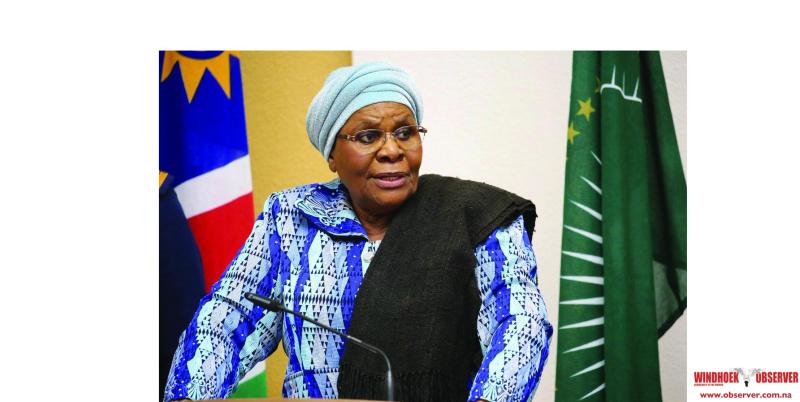
President Netumbo Nandi-Ndaitwah has challenged Namibia to move away from an economy that exports raw materials and imports finished products.
She said the country will continue struggling with unemployment unless it develops its own production and manufacturing capacity.
Addressing the inaugural National Youth Trade Forum in Windhoek yesterday, Nandi-Ndaitwah called on young entrepreneurs to look beyond simply selling locally available resources and instead focus on processing, packaging, branding and exporting finished products to regional and international markets.
“The country that only exports raw materials will always import finished products and have a high unemployment rate,” she said.
She urged young Namibians to identify business opportunities in the country’s minerals, fish, beef, horticulture, renewable energy and cultural industries, arguing that these sectors could provide a foundation for entrepreneurship, industrialisation and employment creation.
“Develop your product. Do not wait for perfect jobs to be created,” she said.
Her remarks come as Namibia seeks to strengthen its manufacturing sector and expand participation in the African Continental Free Trade Area (AfCFTA), which brings together a market of more than 1.3 billion people.
Nandi-Ndaitwah said the country’s young entrepreneurs should not limit their ambitions to Namibia’s population of approximately three million, but prepare their businesses to compete across the continent.
She said access to international markets, however, requires more than having a product to sell.
Businesses must understand foreign-market standards, certification requirements, export procedures and the costs associated with trading beyond national borders.
The President acknowledged that some Namibian entrepreneurs have developed products with the potential to reach international customers but remain constrained by a lack of market information, working capital, equipment and investment partners.
Others, she said, are unfamiliar with the procedures required to enter foreign markets.
She called for coordinated interventions to improve access to finance, business support, skills development and market opportunities, while urging entrepreneurs to formalise their businesses and maintain proper records.
“An informal business cannot get funding, be formal and professional,” she said.
The government’s efforts to address financing barriers include the National Youth Development Fund, which was capitalised with N$257 million and received a further N$165 million mobilised from the Namibia National Reinsurance Corporation.
According to Nandi-Ndaitwah, the fund offers loans without collateral requirements and has supported youth-led projects that generated more than 700 jobs during its first months of operation.
She also said more than 3 000 micro, small and medium enterprises across all 14 regions have benefited from Government support programmes, including equipment assistance and capacity-building initiatives.
Nandi-Ndaitwah said the country’s development aspirations under Vision 2030 and the Sixth National Development Plan require young people to become active participants in production, enterprise development and innovation.
Namibia has an estimated 40 000 small and medium enterprises, which collectively contribute approximately 12% of gross domestic product and provide livelihoods for more than 200 000 people, according to figures cited by Nandi-Ndaitwah.
Under NDP6, the government aims to increase manufacturing’s contribution to the economy from 10.6% to 18% by 2030.
The inaugural National Youth Trade Forum is being held under the theme “Empowering the youth to access local, continental and international markets“.