Sostenus Wilherm
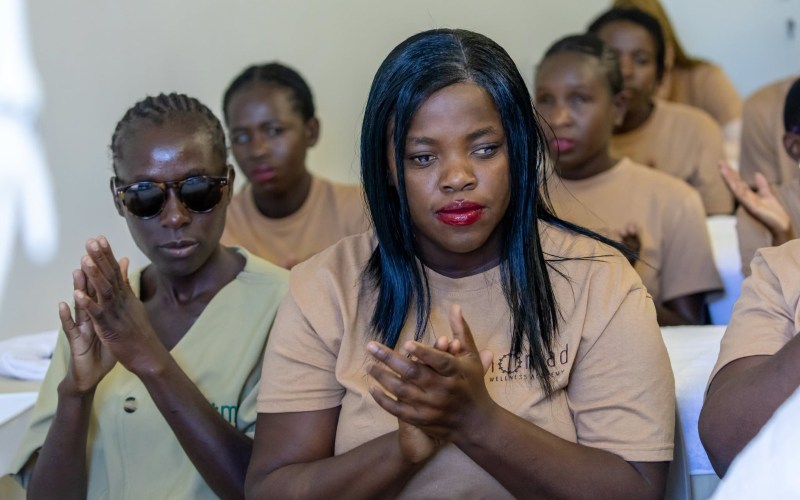
More than 100 Namibians with visual impairments have received remedial and medical massage training through Nomad Wellness Academy.
Vice President Lucia Witbooi says skills development must translate into employment, entrepreneurship and sustainable livelihoods.
Witbooi made the call during a site visit to the academy in Kleine Kuppe, Windhoek, urging employers, the private sector and development partners to remove barriers preventing persons with disabilities from participating meaningfully in the economy.
“I therefore call upon employers, the private sector and development partners to remove barriers and create inclusive economic opportunities for persons with disabilities,” she said.
The academy, founded in 2016 by Namibian entrepreneur Mariane Akwenye, started with four learners and has since grown into a centre focused on skills development, disability inclusion and economic empowerment for people with visual impairments.
According to Witbooi, the academy, in partnership with the Namibia Training Authority (NTA), offers the Remedial and Medical Massage Level 2 programme, which has trained more than 100 people with visual impairments over the years. Forty learners are participating in the 2026 cohort.
While commending the institution for expanding access to vocational training, Witbooi stressed that education alone would not be enough if graduates continued to face limited opportunities to earn a living.
“I commend this initiative for translating skills development into opportunities. However, training must also lead to tangible outcomes, including employment, entrepreneurship and sustainable livelihoods to our people,” she said.
Her remarks place the spotlight on the need to bridge the gap between vocational training and economic participation, particularly for people with disabilities who may encounter barriers when seeking jobs or starting businesses.
Witbooi said persons with disabilities possess valuable skills, talents and potential that could contribute to national development, adding that they should have equitable access to education, employment and entrepreneurship.
“Disability inclusion is a shared responsibility that requires coordinated action by the Government, the private sector, development partners and society,” she said.
She added that her office remained committed to advancing the rights, dignity and socio-economic empowerment of persons with disabilities through practical interventions and strategic partnerships.
Witbooi also linked disability inclusion to Pillar 2, Human Development and Community Resilience, of Namibia’s Sixth National Development Plan (NDP6), which prioritises human development and community resilience.
She said disability mainstreaming required a human rights-based approach that removed barriers, improved accessibility and ensured equal opportunities in education, employment, public services and community life.
“True inclusion is not about treating people with pity. It is about leveling the playing field and proving equal opportunities for everyone to thrive,” Witbooi said.
She commended the academy’s management and staff for providing training, mentorship and a supportive environment for learners with visual impairments, saying their work helped build confidence and promote equity.
Addressing the trainees, Witbooi encouraged them to remain committed to their studies and pursue their ambitions despite challenges and societal perceptions about disability.
“Your visual impairment does not define your potential or determine your future. Your skills, determination and ambition are what matter,” she said.
She urged learners to take their training seriously, strive for excellence and apply their skills with confidence and professionalism, describing vocational education as an important step towards independence and sustainable livelihoods.
“You are not just beneficiaries of development; you are active contributors to Namibia’s progress,” she said.
Witbooi further called for greater recognition of the abilities of persons with disabilities, warning against allowing social attitudes and inaccessible opportunities to limit their participation in the economy.
She said the responsibility to create an inclusive society extended beyond government and required employers, businesses, development partners and communities to work together.
“As I conclude, let us remember that disability inclusion is not charity; it is a matter of dignity, equal opportunity and social justice,” she said.
The visit highlighted the role of specialised vocational institutions in equipping people with disabilities with practical skills, while raising questions about whether the opportunities available after training are sufficient to support long-term economic independence.
Witbooi said Namibia must work towards a society where persons with disabilities can learn, work, earn a living and contribute meaningfully to national development.
“No one must be left behind, and no ability must go unrecognised,” she said.