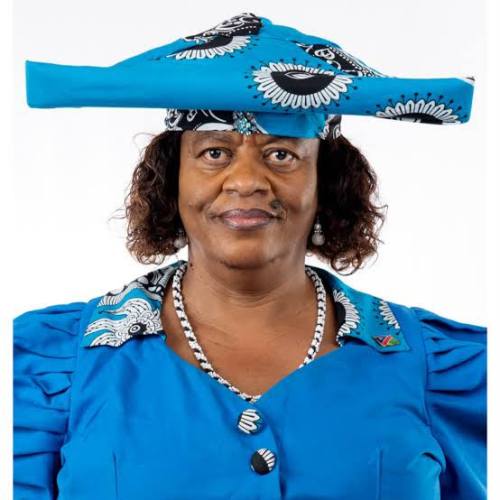
Patience Makwele
Members of parliament (MPs) have called for greater pay transparency, better support for working mothers and tougher enforcement of employment equity requirements, saying women must have fair opportunities to advance and take up leadership positions.
The calls were made during the National Assembly debate on the appointment of additional and replacement members of the 8th Employment Equity Commission, with MPs urging the incoming commissioners to address workplace inequalities beyond recruitment.
Deputy shadow minister for gender equality and child welfare Lucia Mbuti said young women and women living with disabilities continued to face barriers that could leave them in low-paying or unstable jobs.

“Fairness is not just about bringing women into the building. It is about paying them fairly, keeping them safe, and giving them equal room to lead,” she said.
Mbuti called for the commission to require employers to report on pay disparities, arguing that secrecy around salaries could conceal unfair treatment of women.
She also urged the commission to promote parental support and flexible working hours, saying having a child should not mean the end of a woman’s career.
Mbuti said the commission should go beyond reviewing documents and conduct physical workplace inspections to establish whether employers were complying with employment equity requirements.
“Good policies are useless if no one enforces them,” she said.
She also called for women to have greater opportunities in higher-paying fields such as technology, renewable energy, mining and engineering.
Meanwhile, Vilho Ihemba said employment equity should not end when a person secures a job, but should also provide opportunities for training, mentorship and promotion.
“Getting a job is one thing, being given a fair chance to build a career is another,” he said.
Ihemba urged the commission to establish measurable targets for tracking the employment, promotion and representation of women, persons with disabilities and previously disadvantaged Namibians.
He also questioned the commission’s accountability, citing reports that it had failed to publish annual reports for more than five years.
He called on the minister to explain when outstanding reports would be completed and how regular reporting would be restored.
Abed Hishoono equally called for employment equity reports to reflect actual workplace conditions rather than simply confirm that employers had submitted the required documents.
He urged the commission to publish annual results by sector and monitor whether designated employees received training and opportunities to advance into senior positions.
Hishoono also said government ministries, offices, agencies and state-owned enterprises should meet the same standards expected of private employers.
Armas Amukoto similarly argued that employment equity should be measured through fair access to training and promotion, rather than representation figures alone.
The 8th Employment Equity Commission’s term runs from 1 March 2025 to 29 February 2028.
The motion concerns additional nominees omitted from the initial appointments and replacements for members who have since ceased to serve.
Mbuti said the incoming commissioners would be expected to deliver tangible improvements for workers.
“When women and youth earn fair pay and work in safe environments, families prosper, businesses do better, and our whole national economy grows,” she said.