CHAMWE KAIRA
The oil and gas sector attracted approximately N$74.4 billion in foreign direct investment between 2021 and 2025, representing roughly 56% of total FDI inflows.
Exploration activities also accounted for an average of about 30 percent of Gross Fixed Capital Formation between 2022 and 2025.
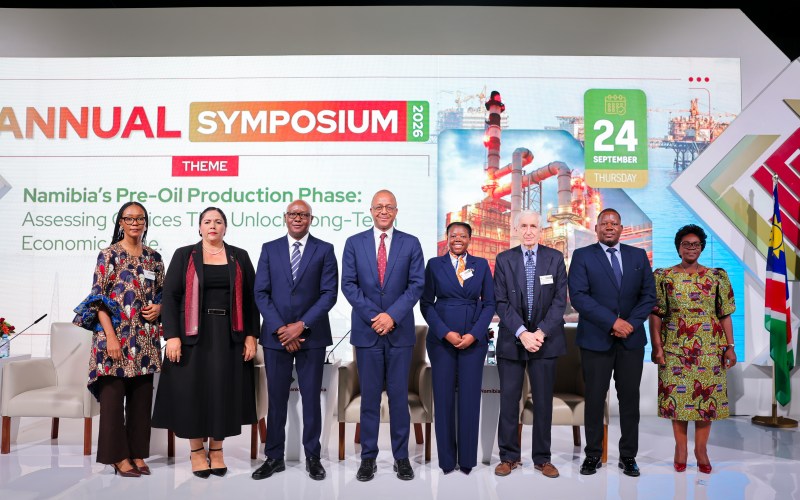
Emma Haiyambo, director of research and financial sector development at the Bank of Namibia, assessed Namibia’s institutional, regulatory and economic readiness for first oil in a presentation during the annual symposium under the theme “Namibia’s Pre-Oil Production Phase: Assessing Choices That Unlock Long-Term Economic Value” held in Windhoek last week.
The discussions focused on the policy, institutional, regulatory and economic measures required ahead of first oil, with particular emphasis on institutional capacity, revenue management, local participation, skills development, environmental safeguards and the integration of the emerging petroleum sector into the broader economy.
Governor of the Bank of Namibia, Ebson Uanguta, said the pre-production period provides Namibia with an important opportunity to strengthen the foundations required to maximise the long-term benefits of its petroleum resources.
He reflected on three priorities that should guide Namibia during the pre-production phase. At the forefront is building domestic capabilities, particularly the skills, expertise and entrepreneurship required for meaningful participation in the sector.
Alongside this is the need for strong institutions and an effective regulatory framework, supported by effective coordination and appropriate safeguards.
Completing these priorities requires deliberately building linkages between oil and gas and the wider economy, enabling Namibian enterprises to progressively compete for and capture opportunities created by the sector.
Uanguta further highlighted the potential implications of petroleum development for Namibia’s macroeconomic and financial environment, including the balance of payments, economic growth, inflation and financial sector risk.
He indicated that the central bank is strengthening its macroeconomic forecasting frameworks and financial stability surveillance to prepare for these developments.
“The opportunity before Namibia is therefore not only the petroleum beneath our waters. It is the opportunity we have today to prepare deliberately for the economy we want tomorrow,” Uanguta said.
Modestus Amutse, minister of industries, mines and energy, outlined the government’s priorities for converting petroleum discoveries into tangible national value.
He highlighted the need for fit-for-purpose legislation, capable institutions, a strong national petroleum company and effective environmental protection, while pointing to the Cabinet’s approval of the Local Content Policy framework as an important step towards increasing Namibian participation.
He stressed that local content must go beyond access to contracts and instead build Namibian businesses that can meet industry standards, invest, learn and compete.