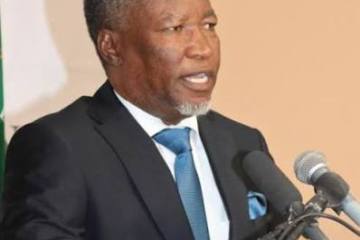
Allexer Namundjembo
Preparations for the 4th Namibia Oil & Gas Conference (NOGC) have gained momentum following an engagement between the conference delegation and the Upstream Petroleum Unit in Office of the President.
The delegation, accompanied by strategic partners of the conference, paid a courtesy visit to Kornelia Shilunga, special advisor and head of the Upstream Petroleum Unit in the Office of the President, as part of ongoing efforts to ensure that the conference remains aligned with Namibia’s national priorities in the oil and gas sector.
The delegation was led by Economic Association of Namibia (EAN) chairperson Jason Kasuto and included EAN chief executive officer Cons Karamata and Shakwa Nyambe, managing partner of SNC Incorporated, which is a strategic partner of the conference.
The engagement provided an opportunity for the delegation to brief the Upstream Petroleum Unit on the progress of preparations, the conference programme, expected international participation and the strategic discussions that will shape the 2026 event.
Scheduled for 18–20 August 2026 in Windhoek, the conference will be held under the theme, “From Decision to Dividend: Making Namibia’s Oil Work for Namibians.”
The theme reflects Namibia’s transition from petroleum discoveries towards value creation, as the country advances its upstream petroleum agenda and prepares for first oil.
The conference will bring together government leaders, industry executives, investors, development partners and local businesses to discuss key issues including investment opportunities, policy development, local content, infrastructure development and sustainable economic transformation.
With more than 1 400 delegates expected from over 35 countries, as well as 29 sponsors and 42 exhibitors, the Namibia Oil & Gas Conference has established itself as a leading platform for dialogue on the future of Namibia’s energy sector.
During the meeting, the delegation highlighted the participation of international oil companies, global energy executives, investors and industry associations, while seeking strategic guidance to ensure that the conference programme supports Namibia’s vision for responsible petroleum development.
Shilunga welcomed the update on preparations and confirmed her attendance at the conference, emphasising the importance of collaboration between government, industry and strategic partners.
“The conference presents an important platform to bridge the information gap between industry and local businesses by facilitating practical discussions on supplier readiness, certification requirements and opportunities for greater local participation,” Shilunga said.
She further stressed that empowering Namibian businesses must remain a priority as the country develops its oil and gas sector.
“Namibian entrepreneurs are eager to participate in the sector but often lack practical information on how to access opportunities within the industry,” she said.
“There is a need to equip local businesses with a clearer understanding of the goods and services required by oil and gas operators, the certification and compliance standards expected by international companies, and the pathways to supplying offshore operations and vessels.”
Shilunga added that local enterprises must be supported to become competitive and capable participants throughout the petroleum value chain.
“It is important to empower Namibian enterprises to become competitive, investment-ready and capable of participating meaningfully across the petroleum value chain,” she said.
Kasuto said the engagement with the Upstream Petroleum Unit was important in ensuring that the conference remains connected to Namibia’s broader development objectives.
“The Namibia Oil & Gas Conference is one of the country’s premier platforms for dialogue on the oil and gas sector. The scale of the conference reflects the growing interest in Namibia’s energy industry,” Kasuto said.
He noted that local participation remained central to the conference’s objectives and that engagement with government was critical in guiding discussions.
“We have placed significant emphasis on local participation, making it important to engage with the Office of the President to receive strategic guidance and ensure that the conference aligns with the national vision for the sector,” Kasuto said.
The Namibia Oil & Gas Conference continues to serve as a platform for investment promotion, strategic partnerships and constructive dialogue as Namibia seeks to transform its petroleum potential into sustainable economic growth and broad-based development.