Sostenus Wilherm
President Netumbo Nandi-Ndaitwah has called for Rundu to position itself as a regional economic hub. She urged businesses to harness technology, expand into regional markets and drive local value addition to unlock the town’s economic potential.
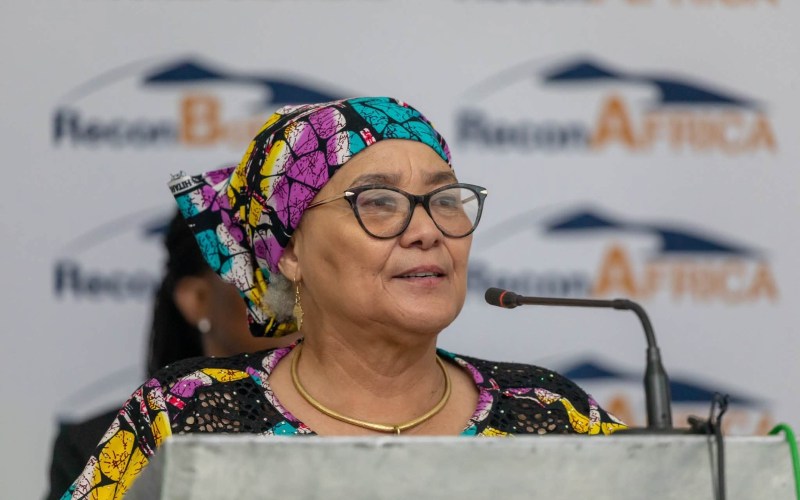
This was delivered by the Vice President Lucia Witbooi on her behalf at the gala dinner of the 9th Rundu Annual Trade Fair on Saturday.
Nandi-Ndaitwah said Rundu’s strategic location gives it the potential to become a centre for trade, transport, logistics, agriculture, agro-processing, tourism and manufacturing.
“The Kavango East Region and Rundu, in particular, are strategically positioned as a gateway to different countries across the Southern African Development Community (SADC) and, by extension, to wider regional and global markets,” Nandi-Ndaitwah said.
She said improved road, rail, port, transport and other connectivity networks could unlock Rundu’s potential and strengthen its position as an economic hub serving markets beyond Namibia.
The President’s remarks were made under the theme, “Embracing Technology for Sustainable Business Growth”, which she described as timely as Namibia seeks to modernise and diversify its economy.
Nandi-Ndaitwah said technology was transforming how businesses operate, produce, market, trade and communicate, while providing small and emerging enterprises with opportunities to access information, reach new customers, improve productivity and reduce costs.
“As we continue to modernise and diversify our economy, we must ensure that our businesses are equipped to take advantage of these opportunities,” she said.
She challenged Namibian businesses to stop focusing only on their immediate markets and instead develop products and services capable of competing across the region and continent.
“We must therefore encourage our businesses to think beyond producing for a single market, town or region,” she said.
The President urged businesses to use technology to access wider markets, meet appropriate standards and build enterprises capable of competing within the region and beyond.
She further called on investors to support Namibia’s development ambitions by creating jobs, transferring skills and technology, partnering with Namibians and contributing to value addition and industrialisation.
“As I always say, Namibia is open for investment. However, that investment must contribute to our national development objectives and comply with Namibian laws and regulations,” Nandi-Ndaitwah said.
She identified critical minerals, energy, infrastructure, logistics, oil and gas, tourism and manufacturing among the sectors where Namibia wants investors to build meaningful partnerships with Namibians.
Nandi-Ndaitwah also renewed the call for Namibia to stop relying heavily on exporting raw natural resources while importing finished products.
She said the country must move towards processing its resources locally and developing industries that create employment and strengthen local enterprises.
“I expect discussions in schools, universities, trade fairs, and boardrooms to be about how we move from exploration and extraction of our natural resources to local value addition, production, and competitive participation in regional and global economic markets,” she said.
The President further urged businesses to take advantage of the African Continental Free Trade Area (AfCFTA), saying the agreement provides an opportunity to expand markets for African products and strengthen intra-African trade.
She said businesses should develop products that can compete beyond Namibia’s borders rather than limiting themselves to single towns or regions.
“We must develop products and services that meet appropriate standards, use technology to access wider markets and build enterprises that can compete within the region and beyond,” she said.
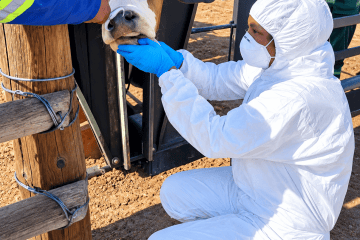
Nandi-Ndaitwah also warned that Namibia’s economic ambitions face threats, including the ongoing Foot-and-Mouth Disease (FMD) outbreak.
She called on farmers, consumers and other stakeholders to remain vigilant and cooperate with measures aimed at containing and eradicating the disease.
“FMD has the potential to disrupt our agricultural sector and wider economy,” she said.
She said protecting livestock and supporting farmers was a collective responsibility, adding that the government remained focused on containing the disease, protecting livelihoods and strengthening the national economy.
The 9th Rundu Annual Trade Fair is scheduled to take place from October 23 to 31, 2026.
Nandi-Ndaitwah also called on stakeholders to support the Kavango East Local Authority’s initiative linked to the trade fair, saying contributions of any size would support the cause.
She said building the Namibia envisioned under the Sixth National Development Plan would require the participation of Government, the private sector, workers, communities, financial institutions, development partners, entrepreneurs and small and medium enterprises.
“The Namibia we want cannot be built by the government alone,” she said.
The President urged stakeholders to collectively build an economy that is “inclusive, innovative, competitive and resilient”, and commended the organisers of the Rundu Annual Trade Fair for their contribution to national development.