Elvis Mboya
Namibia’s gambling industry is generating hundreds of millions of dollars in estimated market activity, but much of the business remains concentrated in betting, casinos and gaming machines.
The sector’s next growth phase could increasingly depend on technology, equipment servicing, digital payments, hospitality and other services that support gambling operations.
The commercial opportunity lies in how much of this spending can be retained locally through investment, skills development and domestic suppliers.
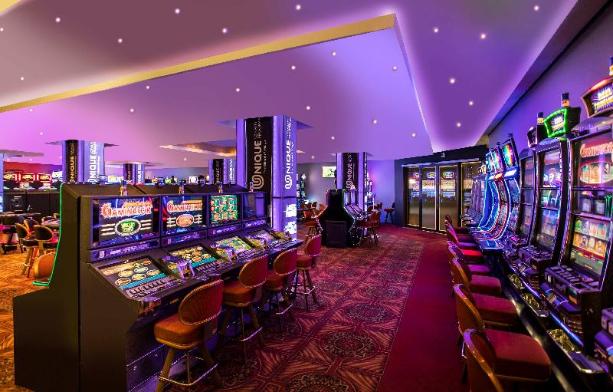
Windhoek provides a starting point. Gambling houses, casinos and betting outlets operate across the capital, including the central business district, Independence Avenue, Katutura and Khomasdal.
Similar businesses operate in other commercial centres, including Swakopmund, Walvis Bay, Oshakati, Ongwediva and Rundu.
However, the exact number of active establishments remains unclear.
The Gambling Board of Namibia’s website currently lists more than 28 gambling houses and 106-plus licences issued.
The ministry of environment, forestry and tourism has previously reported 254 gambling house licences and six casino licences, based on figures dated November 2016.
A market assessment published in December 2025 also reported 254 gambling establishments operated by approximately 260 approved operators, alongside six licensed casinos.
These figures are not directly comparable. The ministry’s figure is historical, the market assessment does not provide a current regional register, and the Gambling Board’s website does not explain the scope of its 28-plus figure.
The regulator needs to clarify the number of active premises, licence categories, operators and gaming machines. Without that information, investors and policymakers lack a reliable picture of the industry’s geographical and commercial footprint.
Market size and revenue
Statista estimated that Namibia’s gambling market would generate approximately N$948 million in 2025, equivalent to US$55.79 million.
Traditional casinos were projected to account for N$373.8 million, while online gaming was estimated at N$26.7 million.
The market assessment also put the number of active players at approximately 450 000 and reported 2 845 registered gaming machines across six casinos and gambling establishments.
These estimates indicate the scale of commercial activity, but they should not be confused with government collections or the earnings retained by operators.
The Sixth National Development Plan records gaming industry revenue of about N$32 million in 2024/25, compared with N$9.3 million in 2022/23. Separately, the Gambling Board reported revenue of N$49.5 million in 2025.
The figures cover different reporting periods and may reflect different revenue definitions. They should not be treated as equivalent measures of total gambling turnover.
The difference between the estimated N$948 million market and the much smaller public revenue figures makes transparent reporting on gross gaming revenue, operator income, levies and taxes particularly important.
The government has set a target of increasing gaming revenue to N$76.5 million. The 2026/27 budget also provides N$26.8 million for digitalisation of the tourism and gaming industry.
The equipment supply chain
One potential investment area is gaming equipment.
Casinos and gambling houses require machines, electronic components, software, security systems and regular technical maintenance.
Where these are sourced from foreign suppliers, a portion of operators’ expenditure leaves the domestic economy.
Local businesses could enter the market through machine maintenance, refurbishment, spare-parts distribution, testing, calibration and technical support.
The Gaming and Entertainment Control Act of 2018 provides for licensing manufacturers, suppliers and testing agents.
This creates a regulatory route for specialised businesses to participate in the supply chain.
The commercial case would depend on the number of machines in operation, replacement cycles, maintenance costs and the ability of local firms to meet technical and regulatory standards.
Namibia may not initially have sufficient demand to support large-scale machine manufacturing. Equipment servicing, software support and regional distribution could offer more realistic entry points.
Digital services and payments
Online gaming is another developing segment.
Statista estimated online gaming revenue at N$26.7 million in 2025 and projected average annual growth of 7.68% through to 2030.
Smartphone penetration and wider access to digital payments are supporting the expansion of mobile platforms.
This creates demand for software development, cybersecurity, identity verification, payment processing, data management and fraud prevention.
Namibian technology companies could compete for contracts to develop and maintain these systems.
Financial institutions and telecommunications operators could also provide payment and connectivity services to licensed businesses.
The investment opportunity is not limited to gambling operators. It extends to companies supplying the technology and infrastructure that allow the sector to function.
In April 2026, environment, forestry and tourism minister Indileni Daniel said the government had allocated N$26.8 million towards digitalising tourism and gaming.
“The programme will digitalise the tourism and gaming sectors to improve data collection, revenue collection and regulatory oversight,” she said.
The budget includes plans for a central gaming monitoring system. Such infrastructure could improve the recording of transactions, support compliance and give authorities more reliable information on industry activity.
Tourism and hospitality linkages
Casinos also form part of the hospitality and entertainment market.
In Windhoek and coastal tourism centres, casino operations can generate demand for hotels, restaurants, transport, security, events and conference facilities.
These linkages create opportunities for local suppliers and service providers.
The wider tourism sector contributed approximately 1.6% to Namibia’s GDP in 2024, equivalent to about N$4 billion, according to NDP6. International tourist arrivals reached 863,872 in 2023.
The government’s target is to increase international arrivals to 1.8 million by 2030.
The contribution of casinos to this growth will depend on their ability to attract visitors, encourage longer stays and generate spending beyond gambling.
Integrated hospitality investments could therefore have a wider economic impact than standalone betting outlets.
Regulation and investment risk
The industry’s growth is also constrained by regulatory capacity.
In a recent parliamentary response, Daniel acknowledged that the Gambling Board was not yet fully operational.
She said staff shortages were limiting consumer education and rehabilitation programmes, while online gambling presented additional regulatory challenges.
“Effective regulation, especially for online gambling, is currently a challenge at the moment, not only in Namibia but globally,” she said.
The Board’s proposed central monitoring system and licensing reforms are intended to strengthen oversight. But their effectiveness will depend on staffing, implementation and the regulator’s ability to monitor both physical and digital operators.
For investors, regulatory uncertainty creates costs. Licensing delays, unclear compliance requirements and competition from illegal operators can affect the viability of new businesses.
The government must also ensure that growth does not increase gambling-related harm. Consumer protection, age restrictions and responsible gambling measures remain essential to the sector’s long-term sustainability.
Measuring the industrial opportunity
The economic contribution of gambling should be assessed beyond the money wagered by customers.
Relevant indicators include local procurement, equipment imports, employment, wages, taxes, licence fees, operator investment and expenditure on technology and maintenance.
NDP6 records approximately 4,140 jobs in the gaming industry in 2020/21. Updated employment figures would help establish whether the sector’s expansion is translating into more formal jobs and higher domestic value addition.
For investors, the most immediate opportunities are likely to be in technical maintenance, digital platforms, payment systems, cybersecurity, compliance services and hospitality.
More capital-intensive ventures, such as equipment assembly, would require evidence of sufficient domestic and regional demand.
Namibia already has an established gambling market, licensed operators and legislation governing the sector.
The outstanding question is how much of the industry’s supply chain can be developed locally.
A clearer register of gambling establishments, audited industry statistics and an operational monitoring system would provide a stronger basis for investment decisions.
The sector’s economic performance should ultimately be measured not only by gambling turnover, but also by the jobs, businesses, technology and tax revenue generated around it.