
Patience Makwele
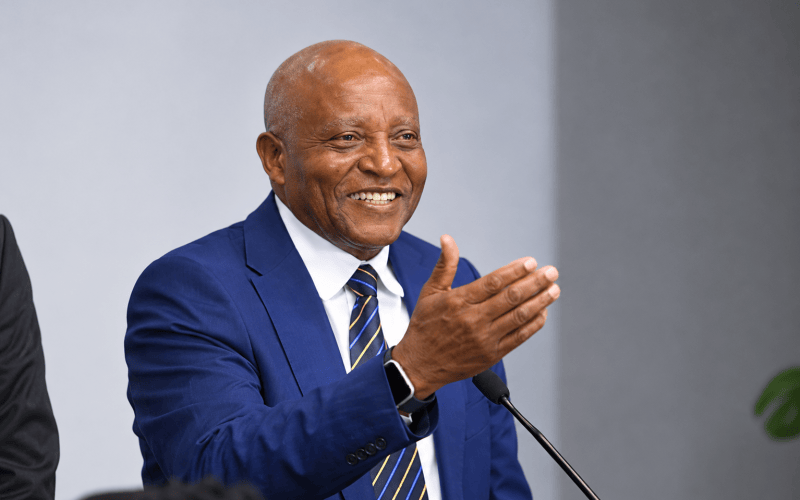
Prime Minister Elijah Ngurare has criticised State-Owned Enterprises (SOEs) for their reluctance to support national sporting events, questioning how Namibia expects private and international partners to invest in sport when some of its own public institutions are unwilling to contribute.
Speaking at the 22nd Namibia Annual Sport Awards Gala in Windhoek on Saturday, Ngurare called on SOEs and private companies to enter into sponsorship agreements spanning at least three to five years, arguing that dependence on annual sponsorship requests creates uncertainty and undermines long-term planning.
“However, it is disappointing that some institutions, including our own State-Owned Enterprises, remain reluctant to support an important national sporting occasion despite having the capacity to contribute,” he said.
He challenged institutions to demonstrate their commitment to local sport before expecting support from external partners.
“We cannot expect external partners to invest in Namibian sport if we are unwilling to demonstrate our own commitment. Nor can we ask the international community to take Namibia seriously as a sporting nation if we fail to support the platforms that recognise and celebrate our athletes,” Ngurare said.
The Prime Minister urged SOEs and corporate organisations to consider multi-year title partnerships, category sponsorships, technical support, travel assistance and athlete development programmes.
He said the proposed arrangements should be formalised through agreements or memoranda of understanding, providing stability for planning, securing venues, production and improving the experience for athletes and guests.
Ngurare stressed that the call was not simply about financing an annual awards ceremony.
“This is not simply a request to sponsor a dinner or awards ceremony. It is an invitation to invest in a national institution that recognises sporting excellence,” he said.
He further called on the Namibia Sports Commission (NSC) to engage potential partners early, present clear sponsorship proposals and conclude agreements outlining responsibilities, benefits, accountability and impact.
The Prime Minister said the approach should extend beyond the awards ceremony to sporting programmes, facilities, federations and athlete development pathways.
“We must move from transactional sponsorship to strategic partnerships, isolated contributions to sustained investment, and annual uncertainty to shared responsibility,” he said.
Ngurare also highlighted the need to broaden the financing of sport beyond government funding, pointing to private-sector investment, philanthropy, development partners and communities as important contributors.
He welcomed the NSC’s work towards structured resource mobilisation and the proposed National Sports Foundation, subject to the necessary approvals and governance arrangements.
On athlete development, Ngurare called for resources to fast-track the Podium Performance Programme, a regional initiative under the African Union Sports Council Region Five framework aimed at preparing elite athletes for major international competitions, including World Championships and Paralympic Games.
He called on corporate Namibia to support the initiative, saying sustained investment was essential to produce podium finishers.
Meanwhile, minister of education, innovation, youth, sports, arts and culture Sanet Steenkamp said N$5 million had been allocated towards the Podium Performance Programme through the Namibia Sports Commission.
“In this regard, the allocation of N$5 million towards the Podium Performance Programme, through the Namibia Sports Commission under the African Union Sports Council Region 5 framework, represents an important commitment to supporting our athletes and their competitive ambitions,” Steenkamp said.
She said the funding must be implemented responsibly and reach its intended purpose.
Steenkamp also emphasised the need for stronger governance, institutional accountability and improved support systems for athletes, including coaching, sports science, medical support and appropriate sporting facilities.
“Our responsibility is to strengthen these elements so that athletes are not expected to carry the entire burden of sporting success on their own,” she said.
The minister said her ministry would continue to review the Namibia Sports Act, 12 of 2003, and the National Sports Policy to ensure the frameworks remain relevant to the needs of the sporting sector.
Ngurare further said the Sixth National Development Plan (NDP6) targets an increase in sport’s contribution to employment from 1% to 3.5% by 2030, alongside improvements in physical activity participation, sporting infrastructure and professionalisation.
He said opportunities extended beyond athletes to coaches, trainers, physiotherapists, sports scientists, event managers, administrators, officials, media professionals, facility managers, tourism operators and entrepreneurs.
“We must therefore treat sport as an economic and social sector with genuine potential to create jobs and livelihoods,” Ngurare said.


