Staff Writer
Namibia’s youth employment discourse is increasingly shifting from qualifications alone toward workplace readiness, as government and private sector initiatives place greater emphasis on practical skills and structured work experience.
The approach positions workplace learning as a core component of Namibia’s development strategy, integrating apprenticeships and internships into national planning frameworks.
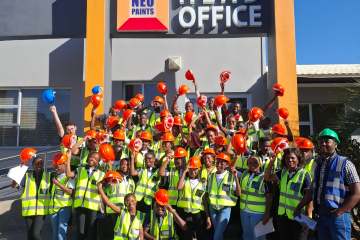
In the private sector, institutions are also responding to the shift. Nedbank Namibia says the challenge is no longer only about producing graduates, but about enabling young people to translate academic qualifications into workplace capability.
The bank’s Graduate Training and Internship Programme is designed to bridge the gap between academic learning and professional demands within the financial services sector.
The intake reflects diverse academic backgrounds, including accounting, industrial psychology, applied mathematics and statistics, information technology, data science, financial mathematics, quantitative finance, mining engineering, media studies, and property studies.
Participants are drawn from Namibian tertiary institutions such as the University of Namibia, the Namibia University of Science and Technology, and the International University of Management.
Of the 15 current participants, 33.3% are bursary holders, highlighting the link between educational support and workplace integration within the programme.
The initiative aligns with Namibia’s National Work Integrated Learning Policy 2025–2030, which seeks to embed workplace experience within higher education and technical and vocational training.
The policy aims to strengthen the transition from theoretical learning to practical application, helping students develop discipline, applied skills, professional behaviour and confidence before entering full employment.
According to Bianca Muller, Executive of Human Capital at Nedbank Namibia, the focus is on developing job-ready graduates.
“Young Namibians are increasingly educated, and that is encouraging. The next step is to help them translate education into workplace confidence, values-led decision-making and client-centred contribution. For Nedbank Namibia, this is part of building money experts who do good,” she said.
The programme is structured around mentorship and continuous feedback, which stakeholders say is essential for long-term impact.
With Afrobarometer data indicating that 83% of young Namibians have at least secondary education and 23% hold post-secondary qualifications, the focus is increasingly on converting educational attainment into employment outcomes.